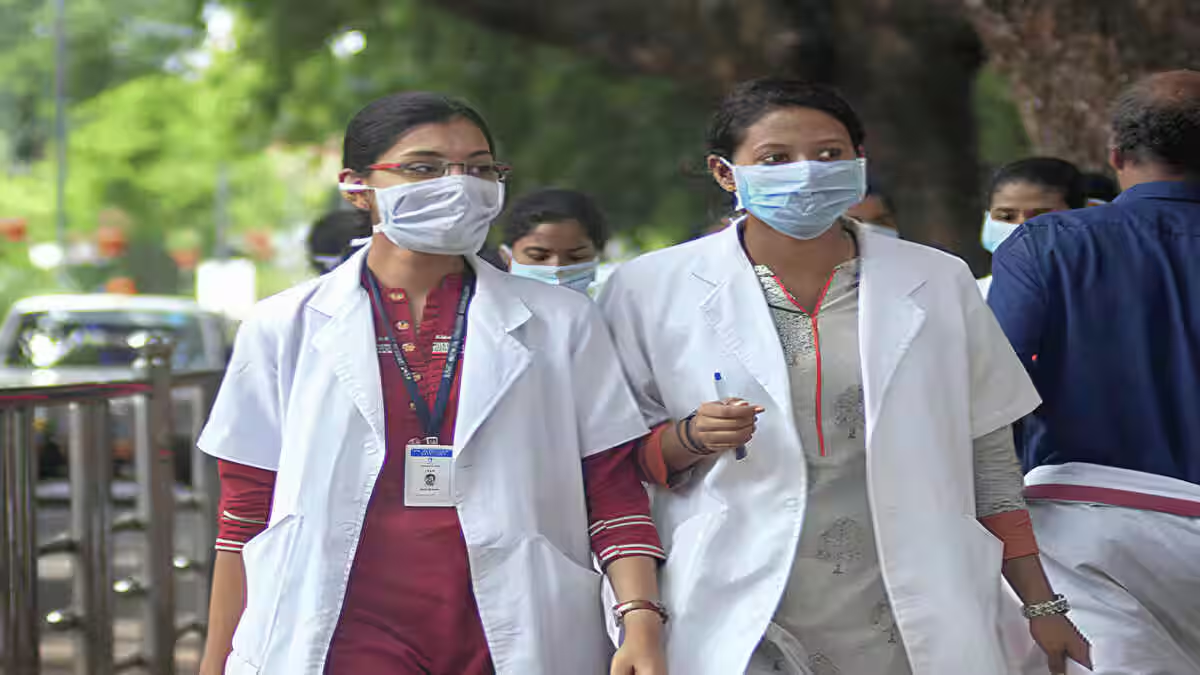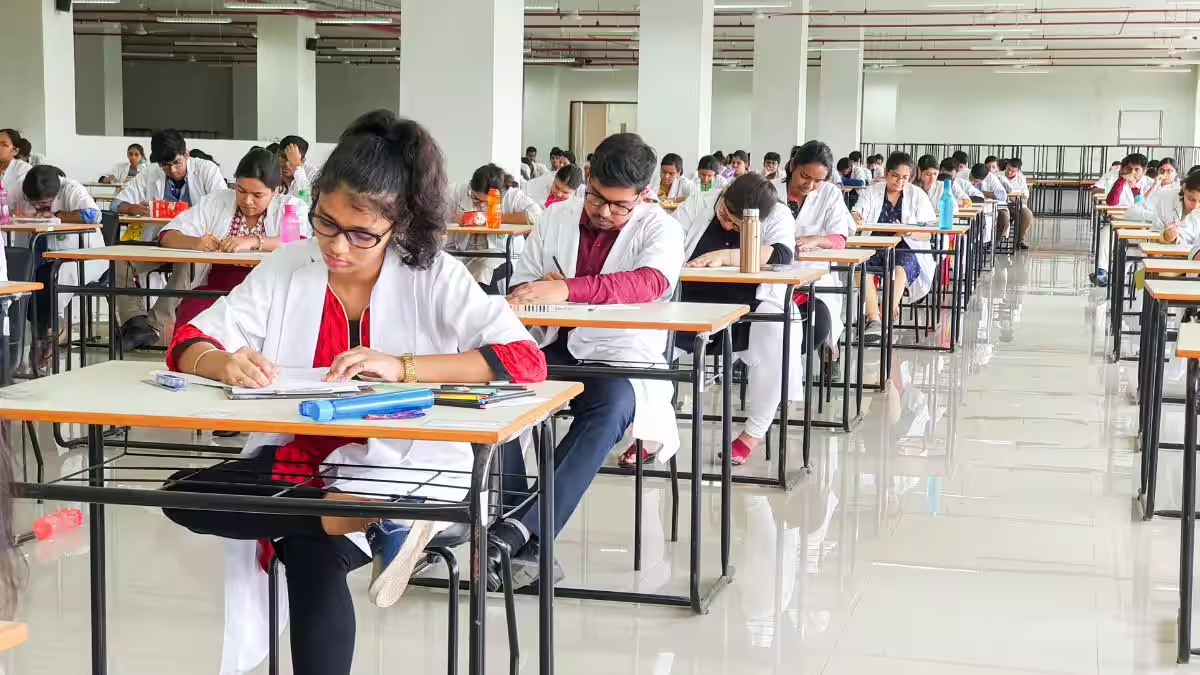
Data from the Ministry of Social Justice and Empowerment shows that fewer than one in four students who qualify the UGC NET or Joint CSIR-UGC NET exams have enrolled in the National Fellowship for Scheduled Castes (NFSC) over the past three years. This fellowship supports SC students pursuing PhDs in sciences, humanities, and social sciences. The information was shared with the parliamentary standing committee on social justice and empowerment, which expressed concerns about the scheme’s limited reach and the government’s handling of related programs.
Understanding the National Fellowship for Scheduled Castes
The NFSC is designed to assist students from Scheduled Castes, a historically marginalized community in India, by providing financial support to pursue doctoral research. Each year, 2,000 fellowship slots are available—500 for science disciplines and 1,500 for humanities and social sciences. Candidates must qualify through the National Eligibility Test (NET) Junior Research Fellowship or the Joint CSIR-UGC NET, exams now conducted by the National Testing Agency (NTA).
The fellowship covers a critical gap by enabling SC students to undertake advanced studies leading to PhDs, aiming to promote higher education and research within this community. However, the scheme’s fixed number of slots has remained unchanged since its inception in 2005-06, despite growing demand and population.
Key Data on Fellowship Participation and Related Schemes
- Between 2023 and 2025, a total of 6,250 fellowship slots were allotted, but only 1,234 students joined, representing just 22.7% of selected candidates.
- In 2023, 27.32% of selected candidates joined; in 2024, the figure dropped to 23.33%, and in 2025, it fell further to 8.04%.
- The lowest participation rates were seen in the Joint CSIR-UGC NET cycle, with less than 10% joining in 2024.
- The parliamentary committee noted that many slots remain unfilled, leading the government to conclude that increasing the number of fellowships is unnecessary at this time.
- The committee also criticized the ‘Free Coaching for SCs and OBCs’ scheme, which aims to prepare students for competitive exams but has consistently underperformed financially and in terms of student participation.
- Budget utilization for the Free Coaching scheme has been poor, with only a small fraction of allocated funds spent annually—Rs 7.76 crore out of Rs 47 crore in 2023-24, for example.
- Similarly, the Eklavya Model Residential Schools (EMRS), intended to provide quality education to tribal children, have faced budget cuts and underutilization of funds, with only Rs 4,011.25 crore spent out of a revised Rs 4,900 crore budget for 2025-26.
Implications of Low Fellowship Enrollment and Scheme Performance
The low rate of enrollment in the NFSC raises questions about the scheme’s accessibility and effectiveness. The parliamentary committee highlighted that the fellowship’s fixed slot number has not increased in over two decades, limiting opportunities for SC students to pursue doctoral studies. Yet, the government argues that since many slots remain unfilled, expanding the program is not currently justified.
Meanwhile, the poor financial and physical performance of the Free Coaching scheme suggests systemic challenges in reaching and supporting SC and OBC students preparing for competitive exams. Delays in scholarship disbursal and limited participation by central universities have been cited as contributing factors.
These issues reflect broader concerns about the implementation of educational initiatives aimed at marginalized communities. Without improvements in outreach, funding utilization, and administrative efficiency, these programs risk failing to meet their goals of promoting social equity through education.
Frequently Asked Questions
Q: What is the National Fellowship for Scheduled Castes (NFSC)?
A: The NFSC is a government fellowship that supports SC students pursuing PhD degrees in sciences, humanities, and social sciences, providing financial assistance to encourage advanced research.
Q: Why are so few selected candidates joining the NFSC?
A: Various factors contribute, including possible lack of awareness, administrative delays, or other barriers. The government notes many fellowship slots remain unfilled, suggesting limited demand or challenges in the joining process.
Q: What issues affect the Free Coaching scheme for SCs and OBCs?
A: The scheme has faced poor financial utilization, low participation rates, and delays in scholarship disbursal. Limited involvement by central universities and administrative hurdles have also hampered its effectiveness.