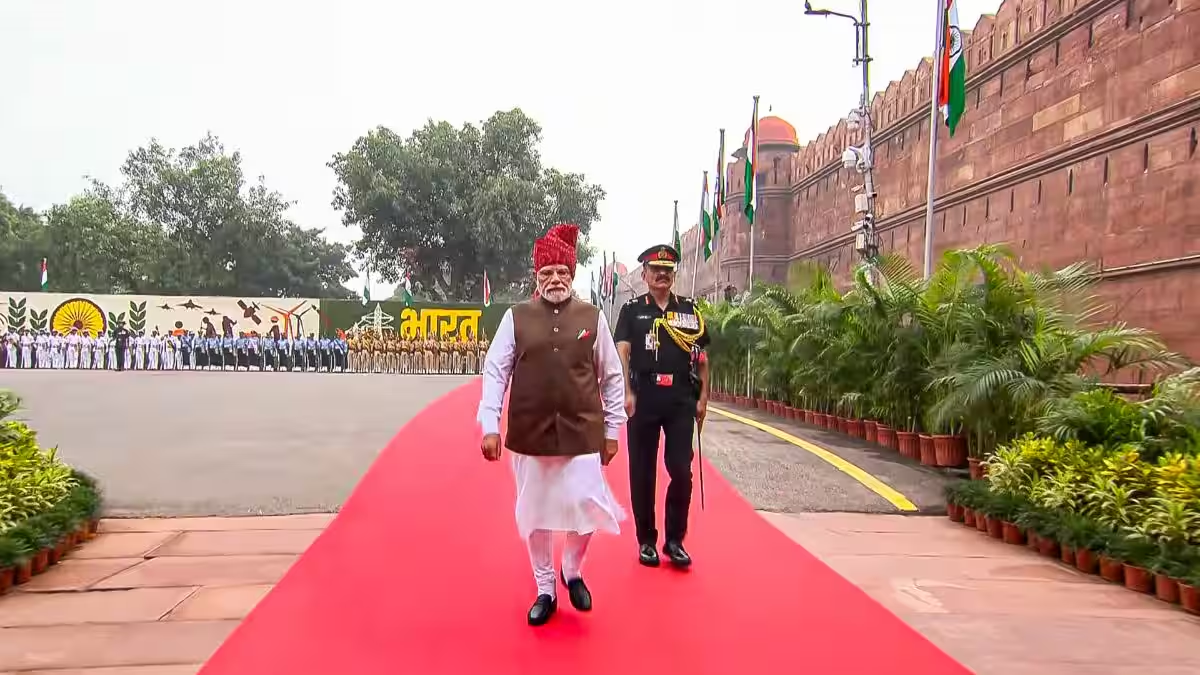
Prime Minister Narendra Modi announced significant growth in India's higher education sector during his 80th Independence Day speech. He highlighted that the country has added 650 new universities over the past decade and nearly doubled the number of medical seats since 2014. These developments come alongside the introduction of a new education policy aimed at modernizing and expanding educational opportunities across India.
Transforming India's Higher Education Landscape
For decades, India’s education system operated without a comprehensive policy update. Modi pointed out that for 35 years, the country lacked a new education policy, which was finally introduced after 2014. This policy aims to address long-standing challenges and align India’s education system with global standards. The expansion of universities and medical seats is a direct result of these reforms, designed to increase access to higher education and improve quality.
Before 2014, India had fewer than 350 universities. The addition of 650 new institutions in just over a decade marks a dramatic increase, effectively tripling the number of universities. This expansion reflects the government’s focus on making higher education more accessible to a growing population and supporting the country’s ambitions in research, innovation, and skilled workforce development.
Key Facts on Medical Education and International Collaboration
- Medical seats increased from approximately 400 before 2014 to nearly 850 today, nearly doubling the capacity for medical education.
- India is becoming an attractive destination for foreign universities, with arrangements allowing international institutions to establish campuses within the country.
- New policies enable Indian students to earn foreign degrees without leaving the country, broadening educational opportunities and global exposure.
Why These Changes Matter for India’s Future
The expansion of universities and medical seats addresses critical shortages in higher education infrastructure and healthcare professionals. Increasing medical seats is particularly important for a country with a large population and growing healthcare needs. By facilitating foreign universities’ entry into India, the government is encouraging international collaboration and raising educational standards.
These initiatives also aim to retain Indian students who might otherwise study abroad, keeping talent within the country and reducing financial burdens on families. The new education policy and increased capacity are expected to support India’s economic growth by creating a more skilled workforce and fostering innovation.
Frequently Asked Questions
Q: How many new universities have been added in India since 2014?
A: Approximately 650 new universities have been established since 2014, significantly increasing higher education access.
Q: What changes have been made to medical education seats?
A: The number of medical seats has nearly doubled, rising from about 400 before 2014 to nearly 850 today.
Q: How is India attracting foreign universities?
A: The government has made arrangements for foreign universities to open campuses in India, allowing students to earn international degrees domestically.