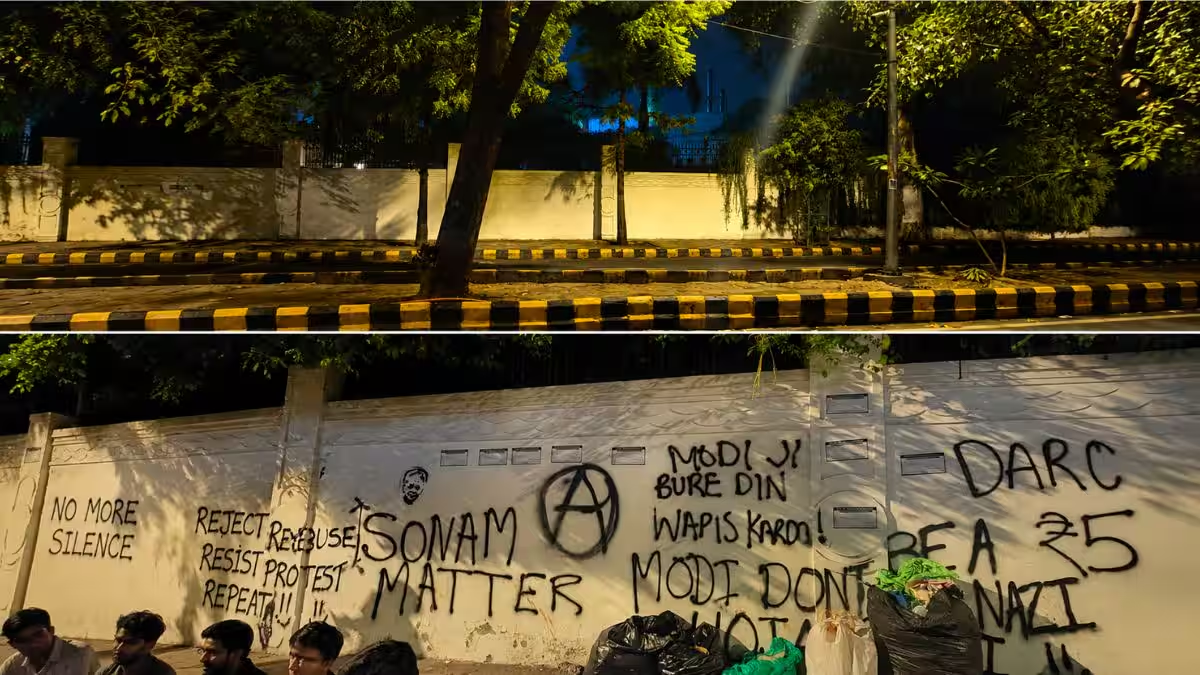
On July 26, Delhi saw the aftermath of a month-long protest by the Cockroach Janta Party (CJP) at Jantar Mantar, where thousands of students gathered to demand action against exam paper leaks. When police cleared the area with tear gas and force, many protesters lost their belongings and found themselves stranded in the capital without money or means to return home.
Among those who stepped up to help was Meghnad Sathpathy, a former journalist and YouTuber, who encountered a fainting 19-year-old student in need of food and shelter. Realizing the scale of the problem, Sathpathy and other volunteers launched a relief effort to support the displaced protesters.
Understanding the CJP Protest and Its Impact
The Cockroach Janta Party protest began as a response to recurring exam paper leaks that have affected students across India. For over a month, students camped at Jantar Mantar, demanding accountability and reforms. The protest drew attention from media and authorities alike, culminating in the resignation of former education minister Dharmendra Pradhan on July 25.
Following the minister's resignation, Delhi Police moved to disperse the protesters, using tear gas and force. This sudden clearance left many students vulnerable, as they lost phones, wallets, and identification documents during the chaos. Without access to their belongings or funds, numerous protesters were stranded far from home.
How Volunteers Raised Funds and Provided Aid
- Volunteers, including Sathpathy and Rajiv Choudhary, began by providing food, water, and medical aid during the protest.
- After the police cleared the site, the support system vanished, prompting volunteers to create a relief network.
- They crowdfunded nearly Rs 2.7 lakh to cover train tickets, food, temporary accommodation, clothes, footwear, and phones for stranded protesters.
- A help desk was set up at a coffee shop near Janpath, where volunteers connected with students from states like Tripura, Maharashtra, Kerala, and West Bengal.
- In total, 127 students and protesters were assisted in returning home safely.
- Volunteers verified requests by contacting families to ensure genuine need before providing aid.
- Some donors contributed directly by sponsoring train tickets, while others provided funds through trusted contacts.
Why This Volunteer Effort Matters
This grassroots relief initiative highlights the challenges faced by young protesters who risk everything to stand up for their rights. Many of those helped were students aged 18 to 23, including unemployed youth, farmers, laborers, and even runaway children escaping difficult home situations. Sathpathy himself relates to these stories, having been a runaway in his youth.
The volunteers acted as a vital bridge between stranded protesters and supporters willing to help, filling a gap left by official channels. Their work extended beyond immediate aid, providing shelter at places like Gurudwara Bangla Sahib and the Indian Youth Congress office for those unable to leave Delhi immediately.
However, the volunteers also faced surveillance and intimidation, with some reporting being followed or watched while assisting protesters. Despite these challenges, the collective effort underscored the power of community support in times of crisis.
Frequently Asked Questions
Q: What triggered the CJP protest at Jantar Mantar?
A: The protest was sparked by repeated exam paper leaks affecting students, leading them to demand accountability and reforms from authorities.
Q: How did volunteers assist the stranded protesters?
A: Volunteers raised funds to provide train tickets, food, shelter, clothes, and phones, helping 127 protesters return home safely after police cleared the protest site.
Q: Were the volunteers connected to the CJP leadership?
A: No, the relief effort was independent and not supported by the CJP leadership. It was a spontaneous initiative by concerned individuals and groups.