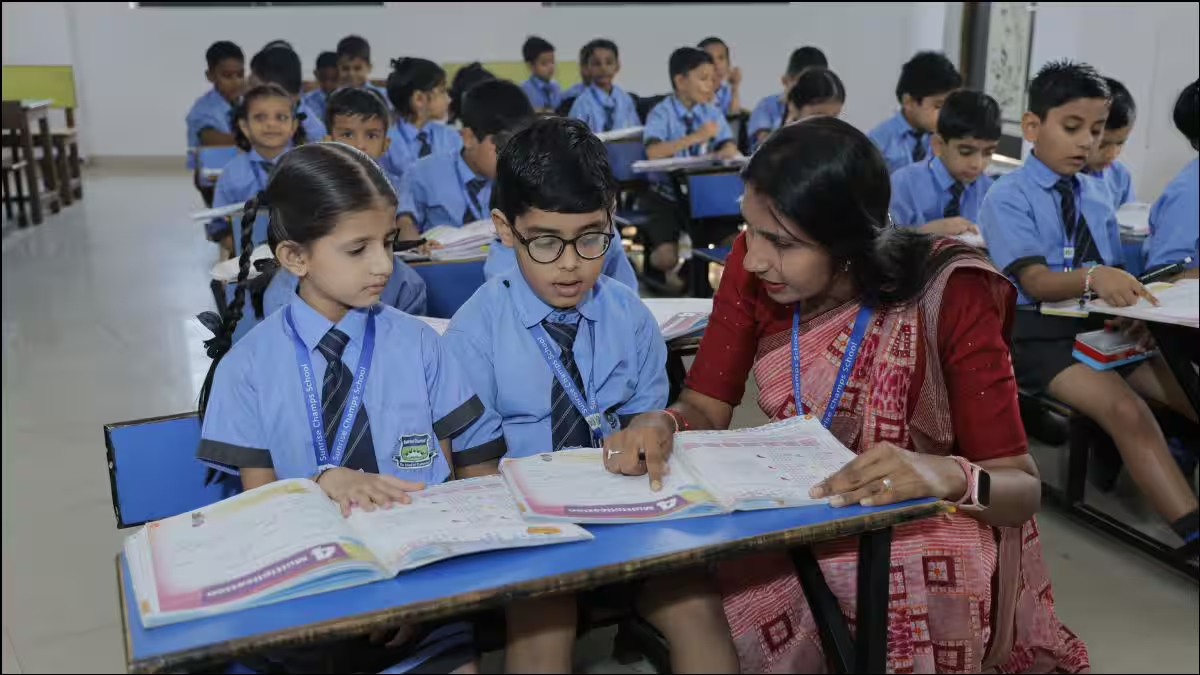
The Allahabad High Court has directed the Uttar Pradesh Special Task Force (STF) to verify the educational certificates of all teachers posted in basic schools across the state. This directive targets teachers teaching Classes 1 to 8 and aims to ensure the authenticity of their qualifications.
- Teachers must submit legible copies of appointment letters and educational documents within a week.
- Documents will be collected by Basic Shiksha Adhikari (BSA) and forwarded to the STF.
- The STF will develop a verification mechanism with police assistance if needed.
- Teachers must also file notarised affidavits about relatives in education department positions.
- Strict supervision and accountability measures have been ordered by the court.
Why is the Allahabad High Court ordering certificate verification?
The court took this step after discovering that many teachers had obtained jobs using forged or duplicated certificates. In some cases, a single certificate was used to appoint ten or more teachers. This fraudulent practice undermines the quality of education and the integrity of the recruitment process in Uttar Pradesh's basic schools.
What are the specific instructions given to teachers and officials?
All teachers teaching Classes 1 to 8 must submit clear copies of their appointment letters and educational certificates to their respective Basic Shiksha Adhikari (BSA) within one week. The BSAs will then forward these documents to the STF's range office for verification.
Additionally, teachers are required to file notarised affidavits detailing any immediate relatives who have held positions at or above the BSA level in the education department. This measure aims to identify potential conflicts of interest or nepotism.
How will the verification process be supervised?
The state director of education will oversee the submission process conducted by the BSAs and may appoint an officer for daily supervision. The Additional Director General of Police (ADGP) of the STF will supervise the verification and investigation process and can also nominate an officer for day-to-day oversight. The court has warned that any negligence or failure to perform duties will result in personal accountability for the officers involved.
What prompted the court to take such strict measures?
During the hearing of a writ petition filed by a teacher named Kusumlata, the STF reported that she had secured employment fraudulently by using another person's educational documents. Further investigations revealed widespread use of forged documents or misuse of certificates among teachers in the state. The court noted that the decline in student numbers and closure of many primary schools is linked to poor education quality and inadequate teacher performance, rather than lack of resources.
When will the court review the progress of this verification?
The court has scheduled a follow-up hearing on November 4 to review compliance with its orders and consider further actions.
Frequently Asked Questions
Q: Who must submit their educational documents for verification?
A: All teachers teaching Classes 1 to 8 in basic schools across Uttar Pradesh must submit their appointment letters and educational certificates.
Q: What happens if officers fail to supervise the verification properly?
A: The court has warned that any laxity or dereliction of duty will be taken seriously, and responsible officers may be held personally accountable.
Q: Why are affidavits about relatives required?
A: To identify any relatives who have held influential positions in the education department, which could indicate conflicts of interest or nepotism.
Q: What is the role of the STF in this process?
A: The STF is responsible for verifying the authenticity of the submitted educational documents and investigating any fraudulent cases.
This initiative reflects the court's commitment to improving education quality by ensuring that only qualified and genuine teachers serve in Uttar Pradesh's basic schools.