The Lok Sabha concluded a lengthy debate on the Public Examination (Prevention of Unfair Means) Amendment Bill 2026 after nearly eight hours of discussion. Opposition members questioned the government's handling of recent protests and the bill's ability to prevent exam paper leaks. The bill, which proposes harsher penalties for cheating and paper leaks, has sparked controversy over its effectiveness and the government's broader approach to education and youth unrest.
Understanding the Paper Leak Bill and Its Context
The Public Examination (Prevention of Unfair Means) Amendment Bill 2026 aims to strengthen laws against exam paper leaks by increasing minimum jail terms to seven years and raising fines up to Rs 10 crore. It also mandates that a Special Task Force complete investigations within two months and fast-track courts handle related cases. This bill follows earlier efforts, including the original 2024 law, which have yet to result in any convictions for paper leaks.
Prime Minister Narendra Modi has also established a high-powered committee led by Nandan Nilekani to examine exam leaks and the functioning of the National Testing Agency (NTA), which oversees major entrance exams. Despite these measures, opposition MPs argue that systemic issues remain unaddressed.
Key Points Raised During Parliamentary Debate
- Opposition MPs highlighted police brutality against youth involved in the Cockroach Janta Party protests, questioning the use of force such as lathicharge, water cannons, and pellet guns.
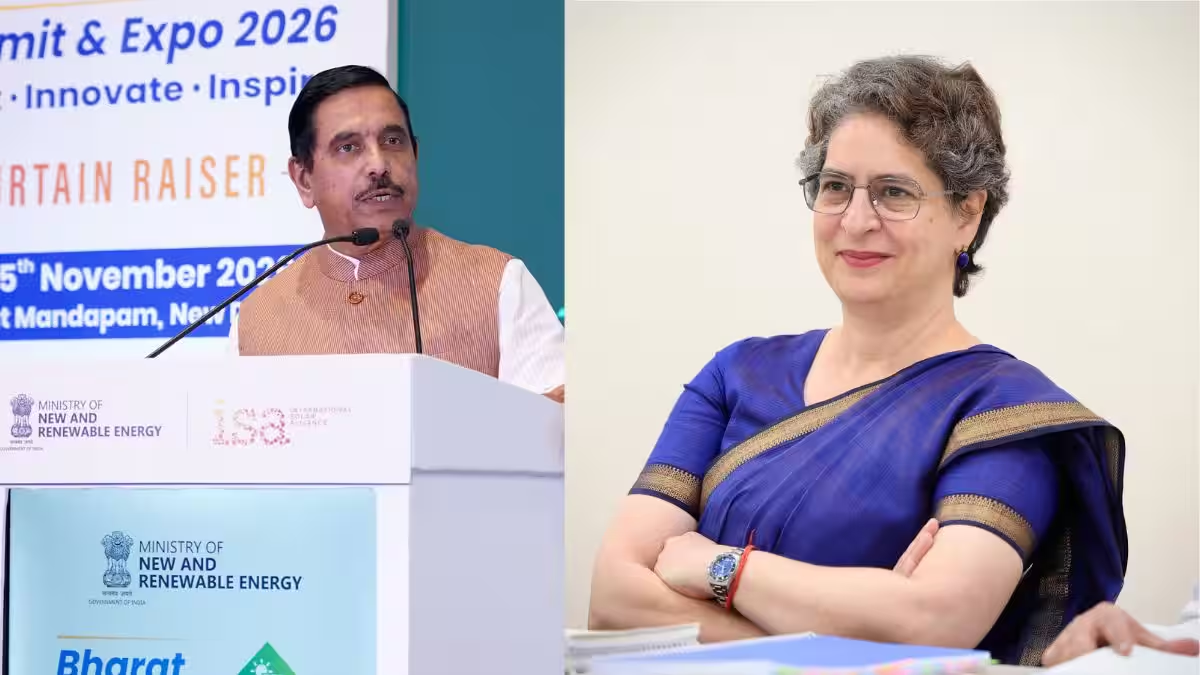
- Congress MP Priyanka Gandhi Vadra criticized the bill for lacking concrete measures to stop leaks and questioned Education Minister Prahlad Joshi’s appointment, citing allegations of his support for controversial figures.
- Supriya Sule of the Nationalist Congress Party proposed forming a joint parliamentary committee with diverse stakeholders to draft a more effective bill.
- Samajwadi Party leader Akhilesh Yadav pointed to ongoing issues like school closures and poor teacher quality, expressing skepticism about the government's ability to prevent leaks.
- Trinamool Congress’s Abhishek Banerjee supported the bill but called it an admission of government failure, emphasizing the need for accountability beyond harsher punishments.
- Concerns were raised about the outsourcing and suspension of NTA officials amid the ongoing probe into exam leaks.
Why the Debate Matters for Education and Youth
The discussion reflects deeper frustrations with the education system and governance. Critics argue that simply increasing penalties will not fix the root causes of exam fraud or restore trust in institutions. The protests by young people, met with police force, underscore a disconnect between the government and the concerns of students and youth. The opposition’s call for inclusive policymaking and accountability highlights the demand for transparent reforms rather than punitive measures alone.
Moreover, the debate touches on broader issues such as unemployment, student suicides, and the centralization of power within bodies like the NTA. The government’s reliance on committees and task forces has yet to translate into meaningful change, according to critics. This ongoing struggle over exam integrity and education policy signals a critical moment for India’s youth and the future of its academic institutions.
Frequently Asked Questions
Q: What does the Public Examination Amendment Bill 2026 propose?
A: The bill increases minimum jail terms for exam paper leaks to seven years, raises fines up to Rs 10 crore, requires investigations to be completed within two months by a Special Task Force, and mandates fast-track courts to handle cases.
Q: Why are opposition MPs critical of the bill?
A: They argue the bill lacks effective measures to prevent leaks, does not address systemic problems in education, and fails to hold officials accountable. They also raised concerns about police actions against protesting youth.
Q: What role does the National Testing Agency play in this issue?
A: The NTA conducts major entrance exams and has been criticized for its handling of exam leaks. A government committee led by Nandan Nilekani is reviewing its functioning, and some NTA officials have been suspended amid investigations.