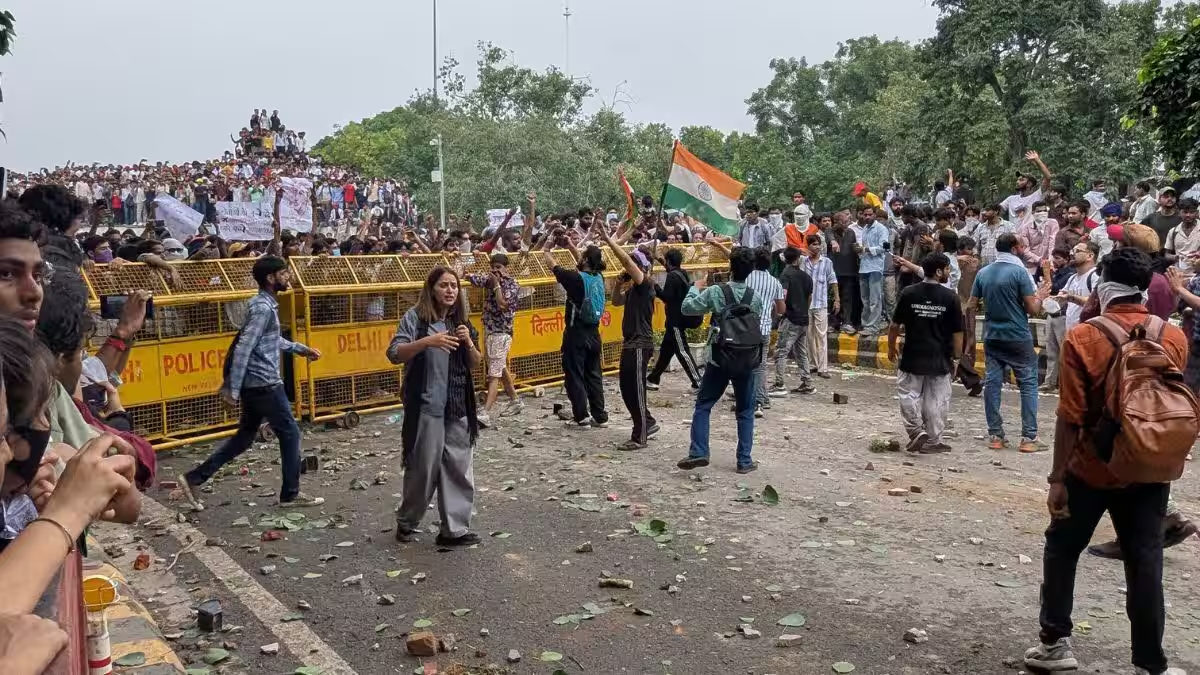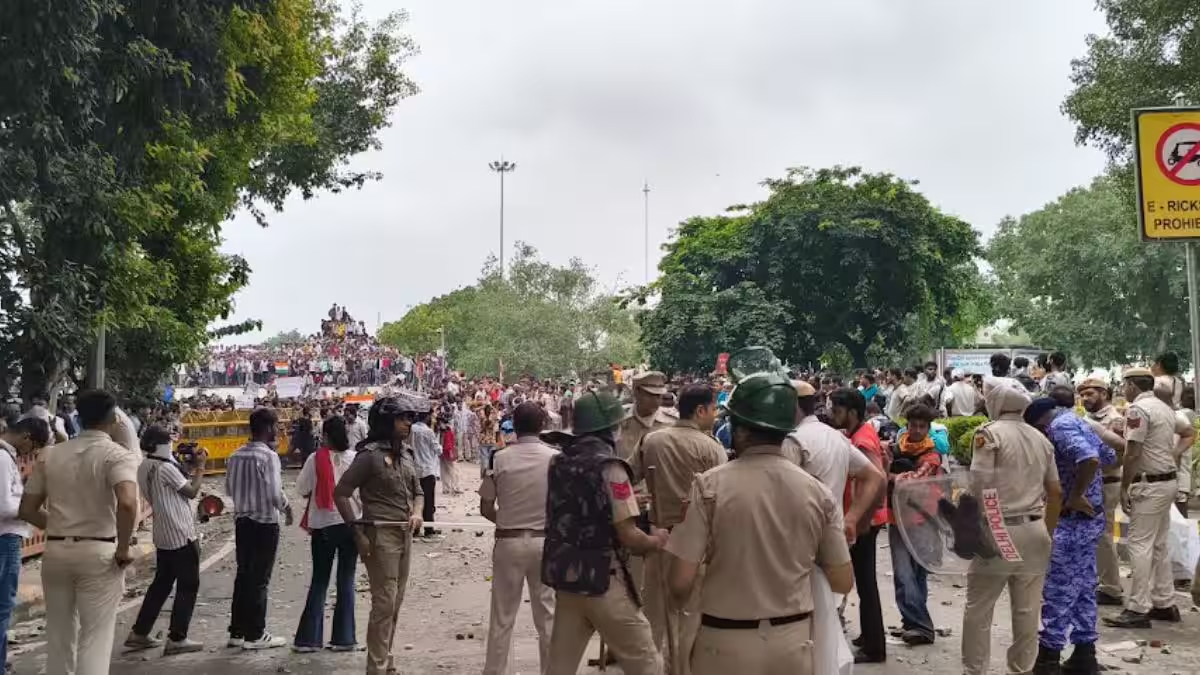
Hundreds of protesters assembled at Jantar Mantar in New Delhi on Friday to voice their opposition to the current caste-based reservation system in India. The demonstrators called for affirmative action policies to be restructured so that economic hardship, rather than caste, becomes the primary factor in determining eligibility for government support. The protest was organized by the Instagram group "Reservation Hatao Andolan," which urged people to join the physical demonstration despite police denying permission for the gathering.
Understanding Reservation and Its Current Framework
India's reservation system is designed to provide historically disadvantaged groups, such as Scheduled Castes (SC), Scheduled Tribes (ST), and Other Backward Classes (OBC), with access to education, employment, and other opportunities. This affirmative action aims to address centuries of social discrimination and economic deprivation. However, the system has been criticized for benefiting individuals within these groups who may not be economically disadvantaged, while some poor individuals outside these categories remain unsupported.
One key concept in reservation debates is the "creamy layer" provision, which excludes the more affluent members of OBCs from reservation benefits. Currently, this criterion does not apply to SCs and STs, leading to calls for its extension to ensure that only those truly in need receive assistance.
Key Points Raised by Protesters
- The protestors demanded that economic status should be the primary criterion for government aid, including scholarships, coaching, and educational support.
- They argued that the existing reservation system does not always reach the most disadvantaged individuals at the grassroots level.
- Calls were made for a comprehensive review of reservation policies to reflect current social and economic realities, decades after their introduction.
- Some participants requested the introduction of the "creamy layer" concept for SCs and STs to prevent wealthier individuals from monopolizing benefits.
- Concerns were also raised about the Scheduled Castes and Scheduled Tribes (Prevention of Atrocities) Act and higher education policies, including those governed by the University Grants Commission (UGC).
- Security was heightened around the protest site, with police and paramilitary forces deploying barricades and restricting access, as no official permission was granted for the demonstration.
- Protesters reported internet jammers in the area, which hindered communication and social media use, although this could not be independently confirmed.
Why This Protest Highlights Ongoing Debates on Reservation
The demonstration at Jantar Mantar reflects a broader national conversation about the effectiveness and fairness of India's reservation system. While caste-based affirmative action has played a crucial role in uplifting marginalized communities, critics argue that it sometimes overlooks economic disadvantage, allowing relatively affluent individuals within reserved categories to benefit disproportionately.
Advocates for reform emphasize the need to balance social justice with economic equity, suggesting that assistance should target those facing genuine financial hardship regardless of caste. This approach could potentially reduce social tensions and ensure that government resources are distributed more equitably.
However, opponents of changing the system caution that caste remains a significant factor in social discrimination and that economic criteria alone may not address the deep-rooted inequalities faced by marginalized groups. The debate continues to be complex, involving legal, social, and political dimensions.
Frequently Asked Questions
Q: What is the current basis for reservation in India?
A: Reservation policies primarily focus on caste categories such as Scheduled Castes, Scheduled Tribes, and Other Backward Classes to address historical social discrimination and provide opportunities in education and employment.
Q: What does the "creamy layer" mean in the context of reservation?
A: The "creamy layer" refers to the relatively wealthier and better-educated members within the OBC category who are excluded from reservation benefits to ensure that assistance reaches the economically weaker sections.
Q: Why are protesters demanding economic criteria instead of caste-based reservation?
A: Protesters argue that economic hardship should be the main factor for government support, as some individuals from reserved categories may not be economically disadvantaged, while poor people from other groups remain unsupported.