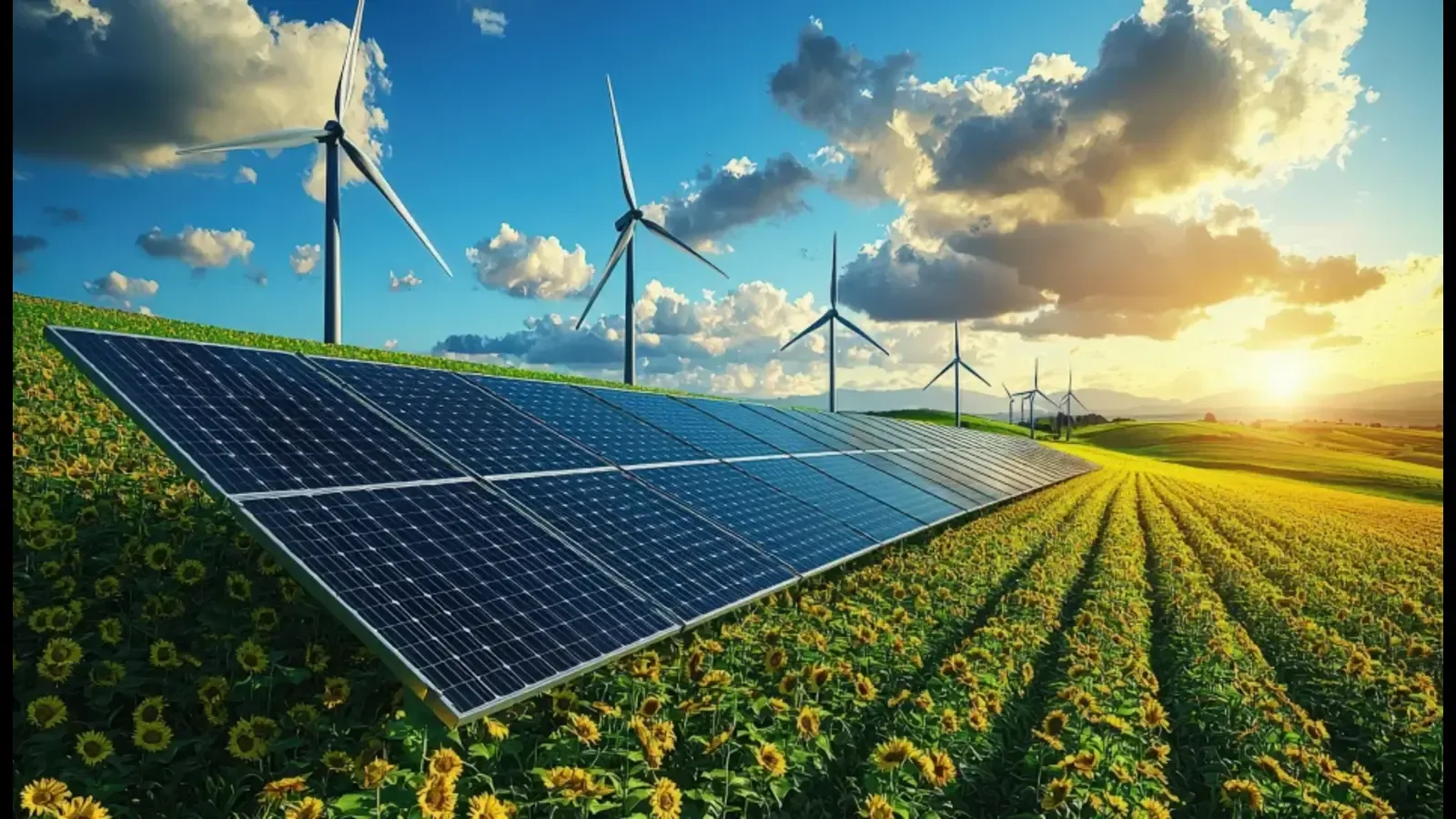
The Indian government has approved the ₹1.86 lakh crore PM-DHARA Scheme to improve the country's power transmission system and support renewable energy growth. This scheme aims to strengthen intra-state transmission networks and deploy 50 GWh of battery energy storage to help evacuate up to 135 GW of renewable energy. It is a key step towards India's target of 500 GW renewable energy capacity by 2030.
- The scheme focuses on upgrading intra-state transmission infrastructure.
- It allocates ₹50,000 crore for battery energy storage systems (BESS) to manage renewable energy fluctuations.
- Supports evacuation of 135 GW of renewable power across states and union territories.
- Expected to boost demand for transmission equipment and grid infrastructure.
- Targets completion by fiscal year 2032-33 with central financial assistance to reduce power costs.
What is the PM-DHARA Scheme?
PM-DHARA stands for PM-Developing Harmonized and Accelerated Renewable-energy Access. It is a government initiative approved by the Union Cabinet, chaired by Prime Minister Narendra Modi, to strengthen India's intra-state power transmission system. The scheme supports the expansion and modernization of transmission infrastructure to handle increased renewable energy generation.
How does the scheme support renewable energy?
The scheme helps evacuate up to 135 GW of renewable energy by improving transmission networks within states. It also includes a significant investment of ₹50,000 crore for 50 GWh of Battery Energy Storage Systems (BESS). These storage systems address the intermittent nature of solar and wind power by storing surplus energy and supplying it when generation is low, thus enhancing grid flexibility and reliability.
Which companies are expected to benefit from the PM-DHARA Scheme?
The scheme is likely to impact companies involved in power transmission, equipment manufacturing, and battery storage. Key companies include:
- Power Grid Corporation of India: Major player in transmission infrastructure development.
- Adani Energy Solutions: Active in transmission projects and competitive bidding.
- GE Vernova T&D India: Supplier of transformers, substations, and grid equipment.
- Hitachi Energy India: Provides high-voltage equipment and grid integration solutions.
- CG Power and Industrial Solutions: Manufactures transformers and switchgear.
- Transformers & Rectifiers India: Supports demand for power transformers.
- KPI Green Energy: Renewable energy developer benefiting from improved grid evacuation.
- Suzlon Energy: Wind energy company supported by grid integration and storage.
- Waaree Energies: Solar energy company benefiting from grid improvements.
- Exide Industries: Battery manufacturer positioned to benefit from BESS deployment.
- Amara Raja Energy & Mobility: Battery and energy storage solutions provider.
What is the financial scope and timeline of the scheme?
The PM-DHARA Scheme has a total project outlay of ₹1,86,405 crore. This includes ₹1,36,378 crore for developing intra-state transmission systems and ₹50,000 crore for battery energy storage systems. The government will provide ₹54,082 crore as central financial support to offset transmission charges and help keep power costs low for consumers. The scheme aims for completion by the fiscal year 2032-33.
How will the scheme affect power costs and consumers?
By improving transmission infrastructure and adding battery storage, the scheme will reduce power congestion and curtailment. Central financial assistance will help lower intra-state transmission charges, which can lead to more affordable electricity for end users. Enhanced grid flexibility will also support the integration of more renewable energy into the power system.
Frequently Asked Questions
Q: What does PM-DHARA stand for?
A: PM-DHARA stands for PM-Developing Harmonized and Accelerated Renewable-energy Access.
Q: Why is battery energy storage important in this scheme?
A: Battery storage helps manage the intermittent nature of solar and wind power by storing excess energy and supplying it when generation is low, making the power grid more reliable.
Q: Which sectors will see increased demand due to this scheme?
A: The transmission sector, power equipment manufacturers, and battery storage companies are expected to see increased demand.
Q: When is the PM-DHARA Scheme expected to be completed?
A: The scheme targets completion by fiscal year 2032-33.
Note: This article is for informational purposes only and does not constitute investment advice. Readers should consult financial advisors before making investment decisions.