Avenue Supermarts shares have fallen about 22% in the past six months, mainly due to concerns over the company's store growth and valuation. Although the company showed healthy revenue growth in the second quarter of fiscal year 2027 (Q2 FY27), the slower pace of new store openings has made investors cautious about its near-term growth.
- Avenue Supermarts added 18 new stores in the first half of FY27, similar to 17 stores added in the previous year.
- The company reported an 18.4% increase in standalone revenue to ₹19,206.18 crore in Q2 FY27.
- Its price-to-earnings (P/E) ratio remains high at 81.34, indicating premium valuation.
- Analysts have mixed views on the company’s future growth and valuation.
Why have Avenue Supermarts shares declined recently?
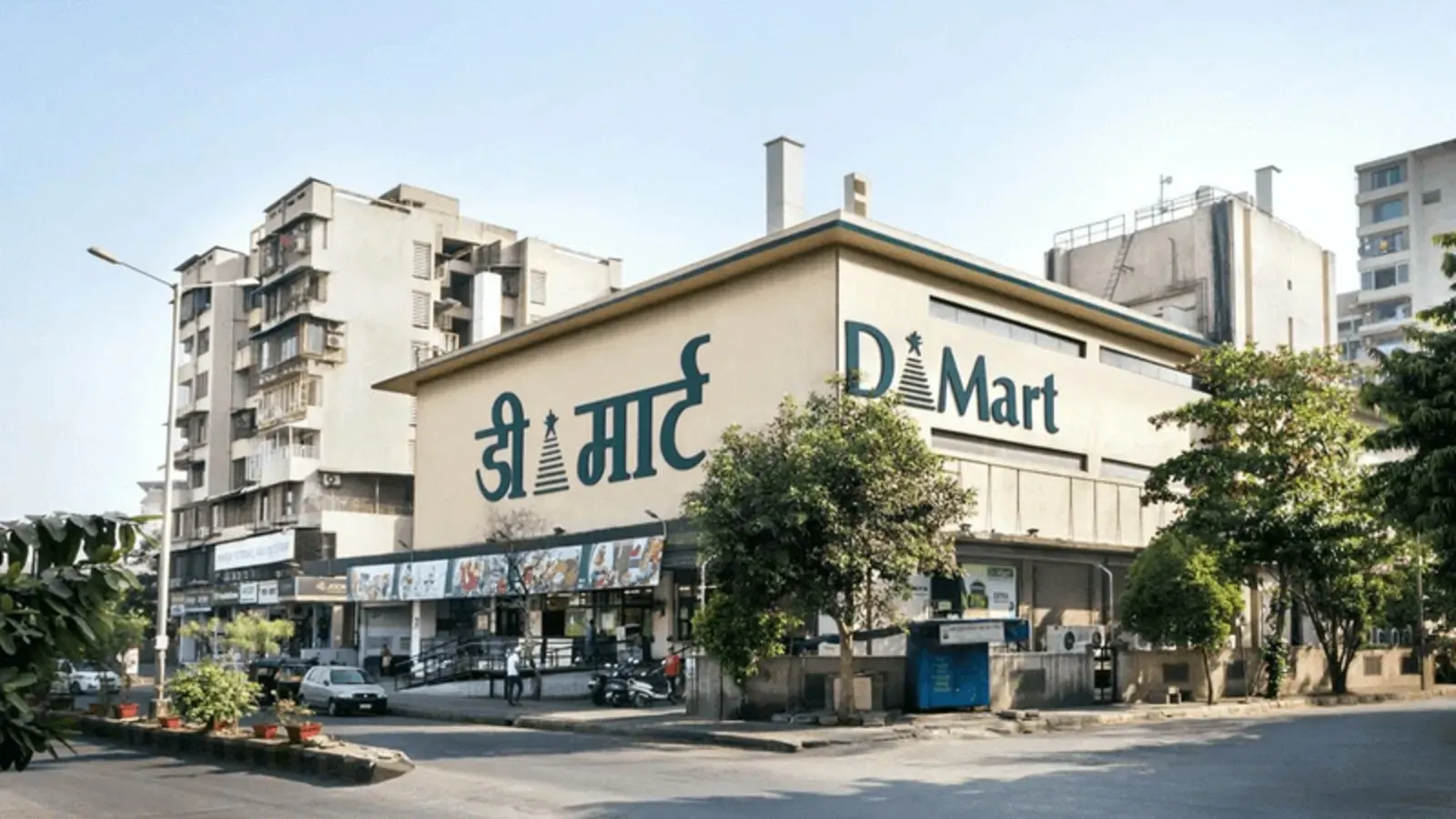
The shares of Avenue Supermarts, which operates the retail chain D-Mart, have dropped around 22% over six months. This decline comes despite steady revenue growth because the pace of opening new stores has slowed. Investors see store expansion as a key driver of the company’s revenue growth, so a flat store addition rate raises concerns about future earnings.
How many stores did Avenue Supermarts add recently?
In the first half of fiscal year 2027, Avenue Supermarts added 18 stores. This is almost the same as the 17 stores added in the same period last year. The total number of stores reached 518 by September 30, 2026. One store in Sanpada, Navi Mumbai, is currently closed for reconstruction.
What was the company’s revenue performance in Q2 FY27?
Avenue Supermarts reported standalone revenue from operations of ₹19,206.18 crore for the quarter ending September 30, 2026. This is an 18.4% increase compared to ₹16,218.79 crore in the same quarter the previous year. On a quarter-to-quarter basis, revenue rose by 4.7% from ₹18,343.49 crore in the June quarter.
What do analysts say about Avenue Supermarts’ valuation and growth?
Analysts have differing opinions. CLSA maintains a positive outlook, citing the company’s strong topline and growth drivers such as private label products, store expansion, and inflation. On the other hand, CITI expresses caution about the company’s high valuation. The stock’s adjusted P/E ratio is 81.34, meaning investors pay ₹81 for every ₹1 of earnings, reflecting expectations of strong future growth.
What challenges does Avenue Supermarts face going forward?
The key challenges include maintaining store expansion amid competition from quick-commerce players and justifying the premium valuation with future earnings growth. The slower pace of new stores in H1 FY27 compared to past years has raised questions about the company’s growth trajectory.
How does Avenue Supermarts fit into the retail market?
Promoted by Radhakishan Damani and his family, Avenue Supermarts operates D-Mart stores that sell basic home and personal products across multiple Indian states. The retail sector saw strong double-digit revenue growth in the July-September quarter of 2026, even though the festive season shifted to the next quarter. Other retailers like V-Mart Retail and V2 Retail also expanded their store networks during this period.
Frequently Asked Questions
Q: Why is store growth important for Avenue Supermarts?
A: Store growth drives revenue expansion for Avenue Supermarts. More stores mean more sales and higher overall revenue.
Q: What does a high P/E ratio indicate?
A: A high P/E ratio shows that investors expect strong future earnings growth and are willing to pay a premium for the stock.
Q: How did Avenue Supermarts perform in Q2 FY27?
A: The company reported an 18.4% increase in standalone revenue to ₹19,206.18 crore, showing healthy business performance.
Q: What are the main concerns for investors?
A: Investors are concerned about the slower pace of store openings and whether the company’s future growth can justify its high valuation.
Note: This article is for informational purposes only and does not constitute investment advice. Please consult a financial adviser before making investment decisions.