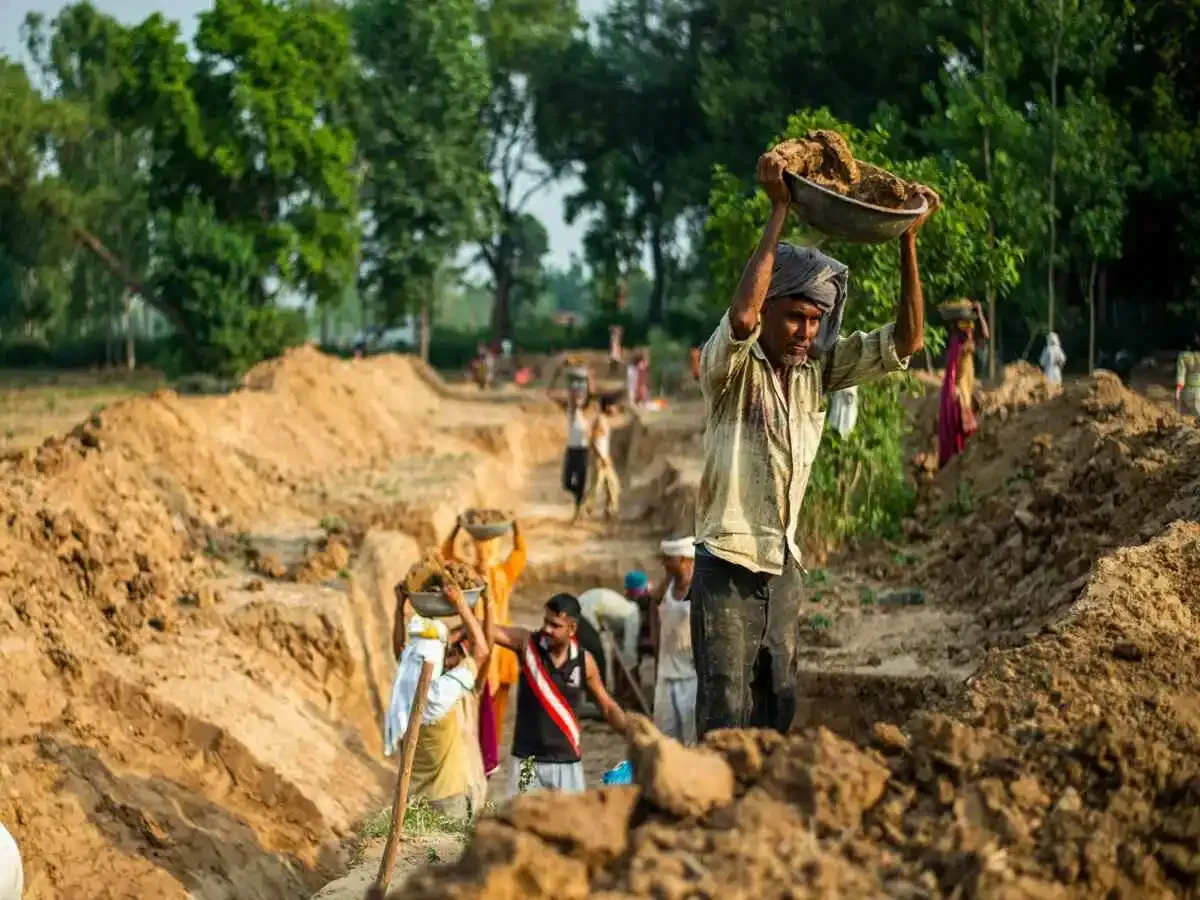
The Indian government has officially notified 375 permissible works under the Viksit Bharat–Guarantee for Rozgar and Ajeevika Mission (Gramin), or VB-G RAM G scheme. This new schedule replaces the previous framework under MGNREGA and focuses on water security, core rural infrastructure, livelihood-related infrastructure, and disaster preparedness. The notification was issued by the Ministry of Rural Development on October 5, 2026.
- The schedule includes 128 water-security works.
- There are 111 core rural infrastructure projects.
- It covers 98 livelihood-related infrastructure works.
- It adds 38 projects for extreme weather and disaster preparedness.
- The new list expands permissible works by 41% compared to the previous 266 works.
What types of water-security works are included?
The largest category in the new schedule is water-related works, with 128 permissible activities. These include construction and maintenance of canals, flood and diversion channels, check dams, gully plugs, and underground dykes. The schedule also covers rejuvenation of rivers, rivulets, nallahs, ponds, and traditional water bodies.
Other water-security works include building percolation tanks, recharge pits and shafts, injection wells, and water harvesting structures. Innovative methods like ice stupas or artificial glaciers for water conservation and irrigation are also part of the list.
Irrigation infrastructure such as drip and sprinkler systems, field water-distribution channels, and reclamation of waterlogged land are included. Afforestation and plantation works linked to soil and moisture conservation are covered too, including bamboo, mangrove, coconut, rubber, and agro-forestry plantations.
What core rural infrastructure projects are permitted?
The schedule lists 111 core rural infrastructure works. These include construction and maintenance of rural roads, culverts, footpaths, and other village connectivity facilities. It also covers gram panchayat buildings, anganwadi centres, rural libraries, and health and veterinary centres.
School infrastructure projects such as additional classrooms, laboratories, toilets, kitchen sheds, compound walls, and playgrounds are part of the permissible works. Waste management and renewable energy infrastructure are also included, with recycling plants, segregation sheds, compost pits, greywater treatment units, solar street lighting, and biogas plants.
Other projects include rural parks, bus stands, parking sheds, drinking water kiosks, seed banks, multipurpose youth centres, and emergency evacuation and relief shelters in border areas. The schedule also allows construction of stairs and ramps for persons with disabilities in government buildings and rural housing works under central and state schemes like PMAY-Gramin.
What livelihood-related infrastructure is covered?
The livelihood-related infrastructure category includes 98 works. These cover training and skill development centres, worksheds for self-help groups, rural haats and market yards, food grain and agricultural produce storage facilities, and cold storage units.
Additional permissible works include SHG and federation buildings, compost structures, dairy and livestock infrastructure, fisheries-related facilities, nurseries, poly-houses, horticulture, and medicinal plantations. Infrastructure for cattle, goat, piggery, and poultry shelters, fish drying yards, and aquaculture structures for shrimp, fish, crab, and pearl farming are also included.
Processing units such as mini flour mills, cashew and oilseed processing units, integrated agro-processing facilities, forest produce and handloom processing units, bamboo craft, and biodegradable product processing units are part of the schedule.
How does the scheme address extreme weather and disaster preparedness?
For the first time, the schedule includes a separate category of 38 works focused on mitigating extreme weather events and disaster preparedness. These works include cyclone and flood shelters, embankments, spurs, flood protection walls, and retaining walls.
It also covers stabilisation ponds, post-disaster restoration of rural roads and community assets, windbreak and shelterbelt plantations, and forest-fire management works such as firebreaks, forest fire lines, fuel buffer zones, and animal protection trenches.
What is the overall goal of the new VB-G RAM G framework?
The Ministry of Rural Development explained that the new framework aims to move beyond a conventional list of asset types. It seeks to align wage employment with the creation of durable rural assets and measurable development outcomes. Every work will originate through a bottom-up, decentralized planning process under the Viksit Gram Panchayat Plan, approved by the Gram Sabha.
Additionally, all works will be tracked through the Viksit Bharat National Rural Infrastructure Stack, ensuring transparency and accountability in implementation.