How much do Indian workers spend on commuting each month? According to India's first National Household Travel Survey (NHTS), workers spend an average of ₹785 monthly on travel to fixed workplaces. This survey, conducted by the National Statistics Office (NSO) from July 2025 to June 2026, provides detailed insights into travel habits across urban and rural India.
- Average monthly commute cost is ₹785 per worker nationwide.
- Urban workers spend ₹1,044 monthly, 70% more than rural workers at ₹612.
- Male workers spend ₹835 on average; female workers spend ₹533.
- Two-wheelers are the most common transport mode, especially in cities.
- Most workers reach workplaces within 30 minutes.
What is the National Household Travel Survey?
The NHTS is the first comprehensive survey focused on household travel patterns across India. It covered 4,92,023 households and 20,34,371 individuals from 14,274 villages and 10,377 urban blocks. The survey defines travel as any trip over one kilometre and aims to support transport planning and policy making by providing reliable data on how people travel.
How much do workers spend on commuting in urban versus rural areas?
The survey found a significant difference between urban and rural commute costs. Urban workers spend an average of ₹1,044 per month on travel to fixed workplaces, which is 70% higher than the ₹612 spent by rural workers. This difference reflects the higher cost of transport and longer distances often faced in cities.
Which modes of transport do workers use most?
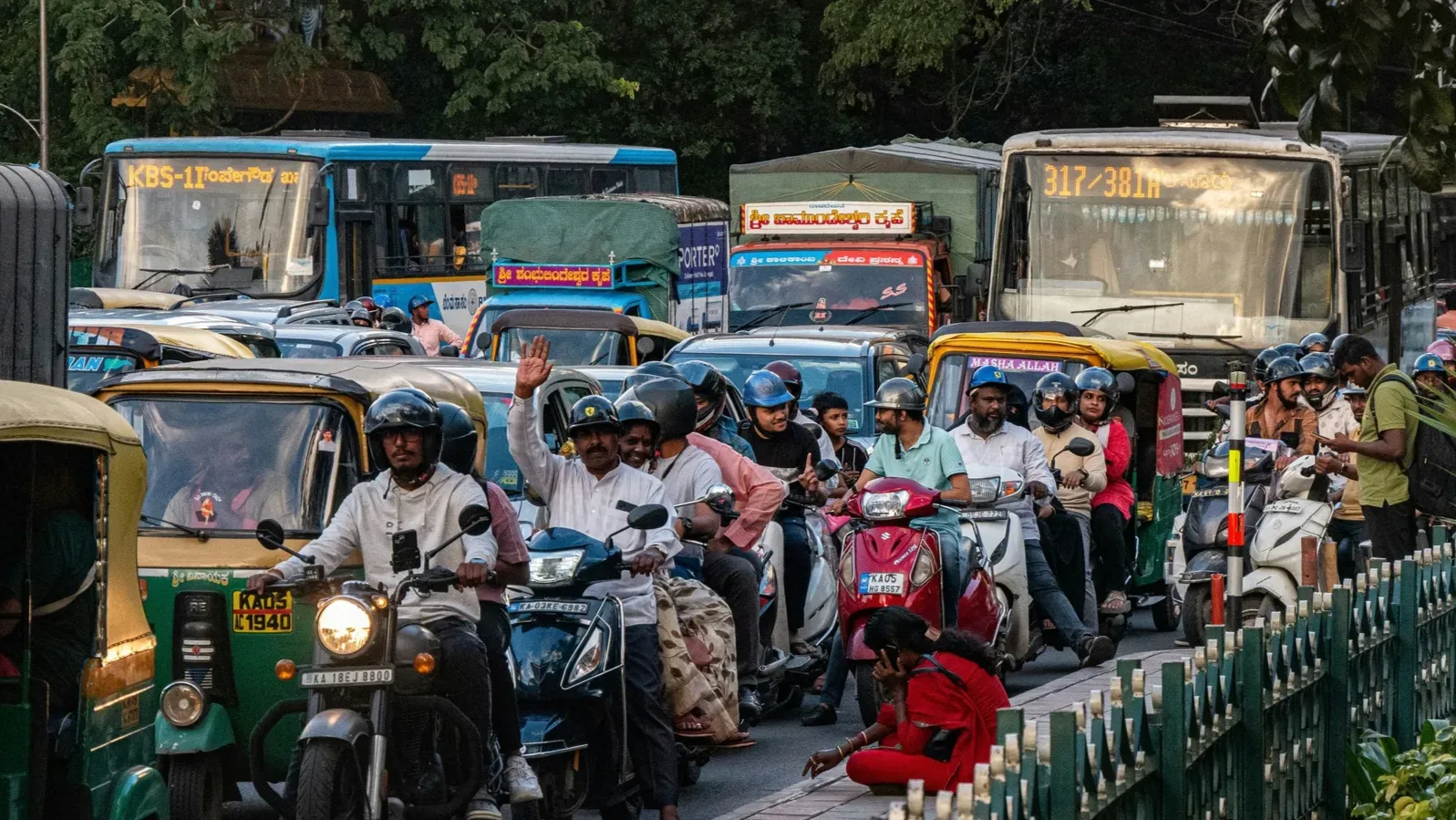
Two-wheelers are the most popular mode of transport for commuting workers, accounting for 42.6% of trips nationwide. Their usage is even higher in urban areas at 52.3%, compared to 37.1% in rural regions. Walking is the second most common mode, making up 28.3% of commutes, followed by bicycles (10.7%), buses (6.7%), and auto-rickshaws (6.4%).
Are there differences in travel patterns between men and women?
The survey highlights a gender gap in commuting. Male workers spend more on travel, averaging ₹835 per month, while female workers spend ₹533. Additionally, 61.9% of male workers undertake trips to workplaces over one kilometre, compared to 41.9% of female workers. This gap may reflect differences in employment types, safety concerns, or social factors affecting women's mobility.
How long do workers spend traveling to their workplaces?
The average journey time for workers traveling to fixed workplaces is 25 minutes. Most workers (83.4%) reach their workplace within 30 minutes. This percentage is higher in rural areas (86.1%) than in urban areas (79.3%), likely due to traffic congestion and longer distances in cities.
What about overnight travel and other trip purposes?
The survey also examined overnight household travel. Buses and inter-city railways account for 73.5% of these trips, with buses alone making up 55.8% and railways 17.7%. Social and religious activities are the main reasons for overnight travel, comprising 70.2% of trips. Other purposes include culture, leisure, sports, and tourism, which make up 7.4%.
Why is this survey important?
The NHTS provides a benchmark for understanding travel behavior across India’s diverse regions. Its data helps policymakers and planners design better transport infrastructure and services that meet the needs of both urban and rural populations. By highlighting cost differences, gender gaps, and preferred transport modes, the survey supports evidence-based decisions to improve commuting experiences nationwide.