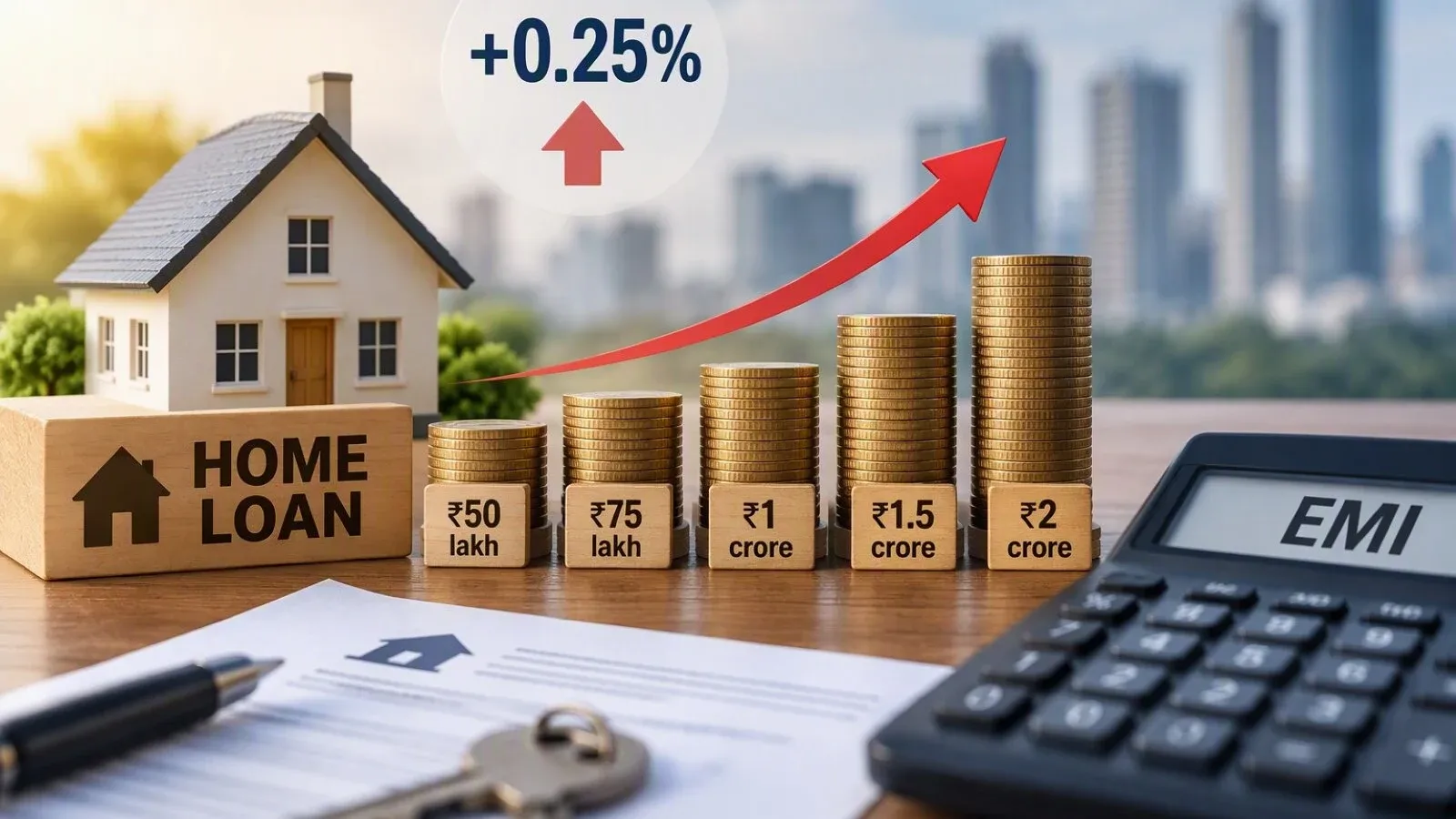
The Reserve Bank of India (RBI) has increased the repo rate by 25 basis points, raising it to 5.5%. This decision, made by the six-member Monetary Policy Committee (MPC) led by Governor Sanjay Malhotra, is the first rate hike since February 2023. The move aims to address the rising inflation that has been above the RBI's upper tolerance limit of 4% since June 2026.
- The repo rate was increased by 25 basis points to 5.5%.
- This is the first rate hike in nearly three years.
- The RBI changed its policy stance from neutral to calibrated tightening.
- Inflation has been trending above the 4% upper tolerance level since June 2026.
- The decision was unanimous among the MPC members.
What is the repo rate and why does RBI change it?
The repo rate is the interest rate at which the RBI lends money to commercial banks. By changing this rate, the RBI influences borrowing costs in the economy. When inflation rises above the target level, increasing the repo rate makes borrowing more expensive. This helps reduce spending and slows down inflation.
Why did the RBI increase the repo rate now?
Inflation in India has been above the RBI’s upper tolerance limit of 4% since June 2026. To control this spiraling inflation, the RBI decided to raise the repo rate. This is intended to cool down the economy by making loans costlier, which can reduce demand and help bring inflation back to target levels.
What does 'calibrated tightening' mean in RBI's policy stance?
The RBI changed its policy stance from 'neutral' to 'calibrated tightening.' This means the RBI plans to gradually increase interest rates to control inflation while carefully monitoring economic growth. It signals a cautious approach to tightening monetary policy to avoid harming the economy.
How does this rate hike affect the general public?
When the repo rate increases, banks often raise their lending rates. This means loans such as home loans, car loans, and personal loans may become more expensive. While this can slow down inflation, it also means borrowing costs rise for individuals and businesses.
What was the decision-making process behind this hike?
The Monetary Policy Committee, consisting of six members and headed by Governor Sanjay Malhotra, unanimously agreed to increase the repo rate. The committee meets regularly to assess economic conditions and decide on monetary policy actions to achieve price stability and support growth.
Frequently Asked Questions
Q: What is the current repo rate after the hike?
A: The repo rate is now 5.5% after the 25 basis points increase.
Q: How long has it been since the last rate hike?
A: This is the first rate increase since February 2023, nearly three years ago.
Q: Why is controlling inflation important?
A: Controlling inflation helps maintain the purchasing power of money and ensures stable economic growth.
Q: Will this rate hike affect savings interest rates?
A: Typically, higher repo rates can lead to banks offering better interest rates on savings, but changes may vary.
Q: What is the RBI's inflation target?
A: The RBI aims to keep inflation around 4%, with a tolerance band of plus or minus 2%.