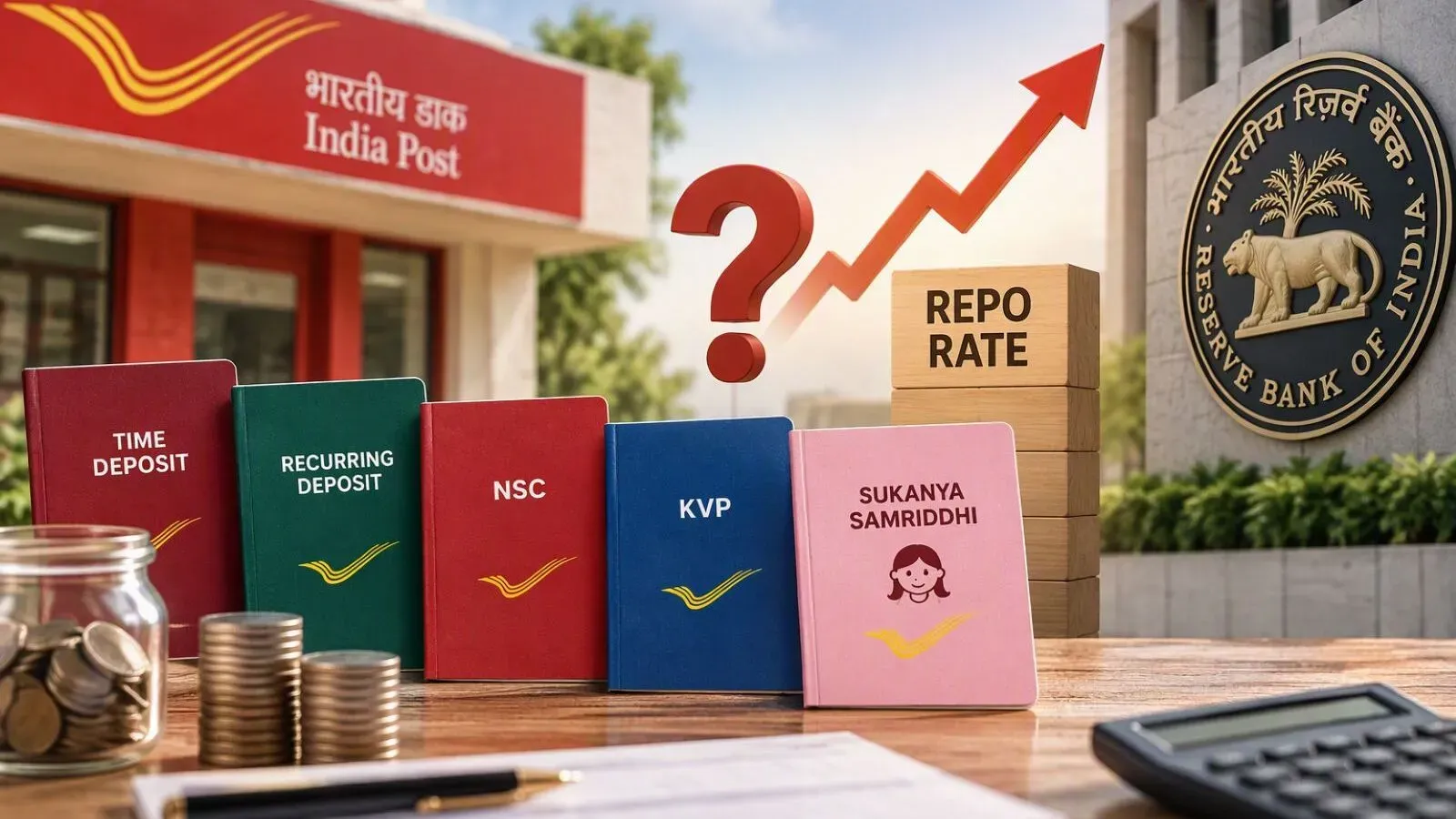
The recent hike in the Reserve Bank of India's (RBI) repo rate can affect small savings interest rates, including popular schemes like Post Office Time Deposits and Sukanya Samriddhi Yojana. This change happens because higher repo rates often lead to increased government bond yields, which in turn create pressure to adjust small savings rates to stay competitive.
- Small savings rates are influenced by government bond yields and inflation.
- Not all small savings schemes adjust rates the same way.
- The Finance Ministry decides the rates, considering economic factors and real returns.
- Inflation plays a key role in maintaining attractive returns for savers.
How does the RBI repo rate hike affect small savings interest rates?
The RBI's repo rate is the rate at which it lends money to commercial banks. When the repo rate increases, it generally causes yields on government securities (G-secs) to rise. Since small savings interest rates are linked to these government bond yields, an increase in the repo rate can lead to higher interest rates on small savings schemes during their periodic review.
What are the current interest rates on popular small savings schemes?
According to the Department of Economic Affairs' notification dated September 30, 2026, the interest rates on various small savings schemes are as follows:
| Scheme | Interest Rate (%) |
|---|---|
| Public Provident Fund (PPF) | 7.1 |
| Senior Citizens Savings Scheme (SCSS) | 8.2 |
| Sukanya Samriddhi Yojana | 8.2 |
| National Savings Certificate (NSC) | 7.7 |
| Kisan Vikas Patra (KVP) | 7.5 |
| Post Office Monthly Income Scheme | 7.4 |
| Post Office Time Deposits (1 year) | 6.9 |
| Post Office Time Deposits (5 years) | 7.5 |
| Five-year Recurring Deposit | 6.7 |
| Post Office Savings Account | 4.0 |
Do all small savings schemes change interest rates the same way?
No, the impact of rate changes varies by scheme. For example, NSC, Kisan Vikas Patra, Post Office Time Deposits, and the Monthly Income Scheme lock in the interest rate at the time of purchase or account opening. This means their rates do not change for existing investments. On the other hand, schemes like PPF and Sukanya Samriddhi Yojana apply the new quarterly interest rate to the outstanding balance, so their returns adjust more frequently.
How does inflation influence small savings interest rates?
Inflation affects the real returns that savers earn. Consumer price inflation rose to 4.82% in August 2026 from 3.48% in April 2026. The RBI projects inflation at 5.2% for the fiscal year 2026-27 and expects economic growth of 7.1%. To keep real returns attractive for small savers, the government may prefer to maintain higher interest rates on small savings schemes rather than cut them, especially when inflation is elevated.
Who decides the small savings interest rates?
While government bond yields provide a reference point, the Finance Ministry has the final say in setting small savings interest rates. The existing framework recommends aligning small savings rates with G-sec yields, but this is not a binding rule. The Finance Ministry considers multiple factors, including inflation and economic growth, before announcing any changes.