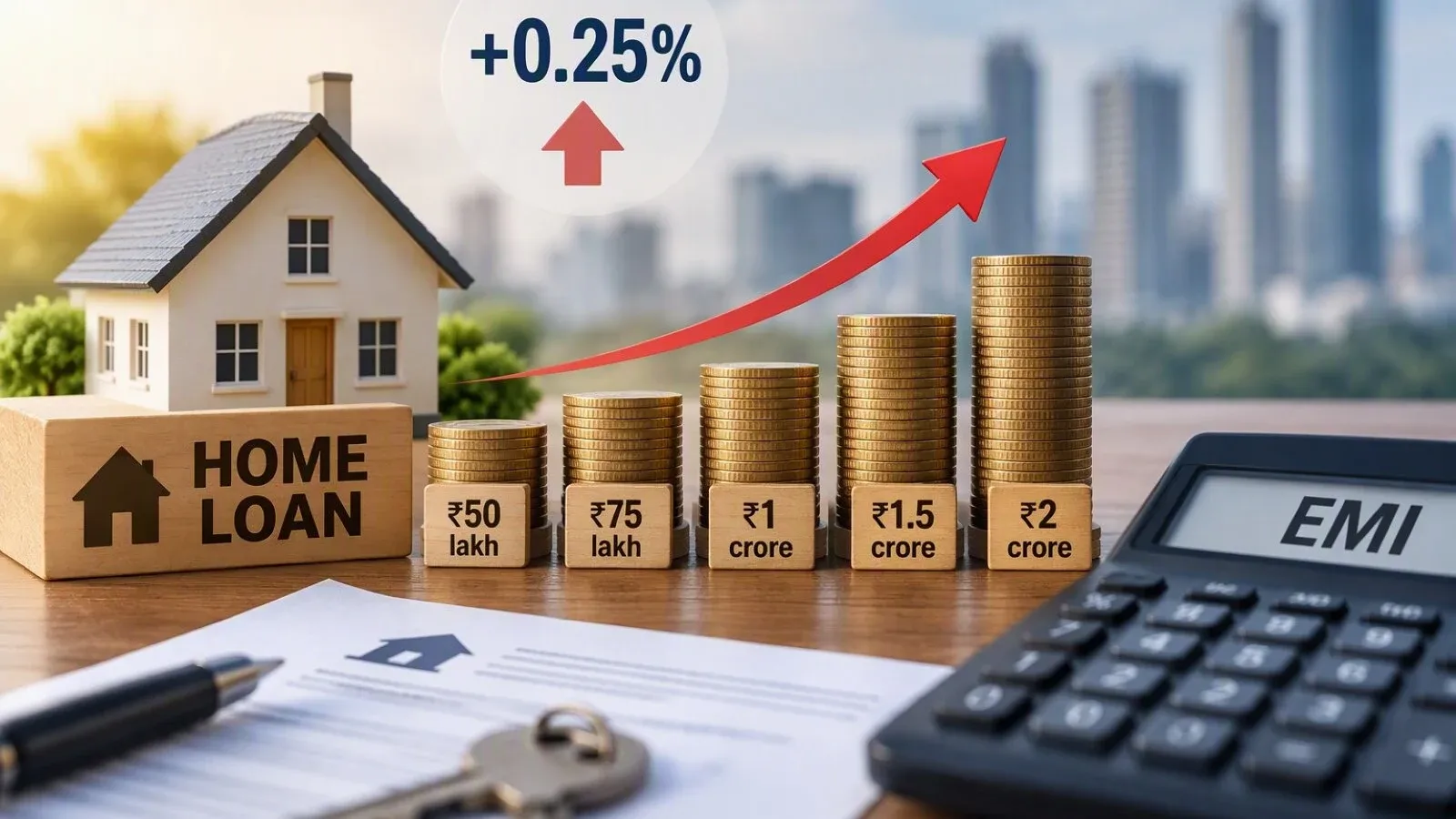
The Reserve Bank of India (RBI) recently increased the repo rate by 25 basis points to 5.50%. This change raises an important question for car buyers and current car loan borrowers: will car loans become more expensive? The answer is potentially yes, but it depends on the type of loan and the bank's policies.
- Borrowers with floating-rate or repo-linked car loans are most affected by repo rate hikes.
- Fixed-rate car loans usually remain unchanged during the fixed period despite RBI rate changes.
- EMI increases depend on the bank's benchmark rate, spread, and loan terms.
- For a ₹10 lakh, five-year car loan, a full 25-bps rate hike could raise monthly EMIs by about ₹117 to ₹126.
- Borrowers should review loan agreements and compare loan offers carefully before buying a car.
How does the RBI repo rate affect car loan interest rates?
The repo rate is the interest rate at which the RBI lends money to commercial banks. When the RBI raises this rate, banks may increase their benchmark lending rates. Car loans linked to these benchmarks, especially floating or repo-linked loans, can see their interest rates rise. This can lead to higher EMIs or longer repayment tenures for borrowers.
Are fixed-rate car loans affected by the repo rate hike?
No, fixed-rate car loans generally do not change immediately after an RBI repo rate hike. The interest rate remains the same during the fixed-rate period. Borrowers with fixed-rate loans are protected from short-term fluctuations in the repo rate until their fixed period ends.
What is the impact of a 25-basis-point increase on monthly EMIs?
Consider a ₹10 lakh car loan for five years. Punjab National Bank (PNB) currently offers a floating rate of 7.65% for borrowers with a good credit score. At this rate, the EMI is about ₹20,137. If the bank passes the entire 25-bps increase to borrowers, the rate would rise to 7.90%, increasing the EMI to roughly ₹20,254. This is an increase of about ₹117 per month.
Similarly, Canara Bank's current rate of 7.90% could rise to 8.15%, Bank of Baroda's 7.60% to 7.85%, and ICICI Bank's 9.15% could also increase depending on the borrower's profile. The exact EMI increase varies based on the loan amount, tenure, and bank policies.
Do all banks immediately increase car loan rates after a repo rate hike?
No, a 25-bps increase in the RBI repo rate does not automatically mean every bank will raise car loan rates by the same amount immediately. Each bank decides how and when to adjust its benchmark and loan rates. Some may pass the increase fully, partially, or delay it based on their lending strategy and market conditions.
What should borrowers do if they plan to buy a car or have an existing car loan?
Potential car buyers should compare effective interest rates, loan tenure, processing fees, prepayment options, and the benchmark used for floating-rate loans before choosing a lender. Existing borrowers should check their loan agreements to understand if their loan is fixed or floating rate and when the interest rate resets.
Since even a small increase in interest rates can raise the total repayment cost significantly for large loans, borrowers should plan accordingly. The RBI's move to 'Calibrated Tightening' means interest rates may change further depending on inflation and economic growth.
Frequently Asked Questions
Q: Will my fixed-rate car loan EMI increase after the RBI repo rate hike?
A: No, fixed-rate car loans are not affected immediately by changes in the RBI repo rate during the fixed-rate period.
Q: How much can my EMI increase if I have a floating-rate car loan?
A: For a ₹10 lakh, five-year loan, a full 25-bps increase in interest rate could raise your EMI by approximately ₹117 to ₹126, depending on the bank.
Q: Do all banks increase car loan rates immediately after the RBI raises the repo rate?
A: No, banks adjust their rates based on their policies and may not pass on the full increase immediately.
Q: What factors should I consider before taking a car loan now?
A: Compare interest rates, loan tenure, processing fees, prepayment terms, and whether the loan is fixed or floating rate. Also, check the benchmark rate linked to your loan.