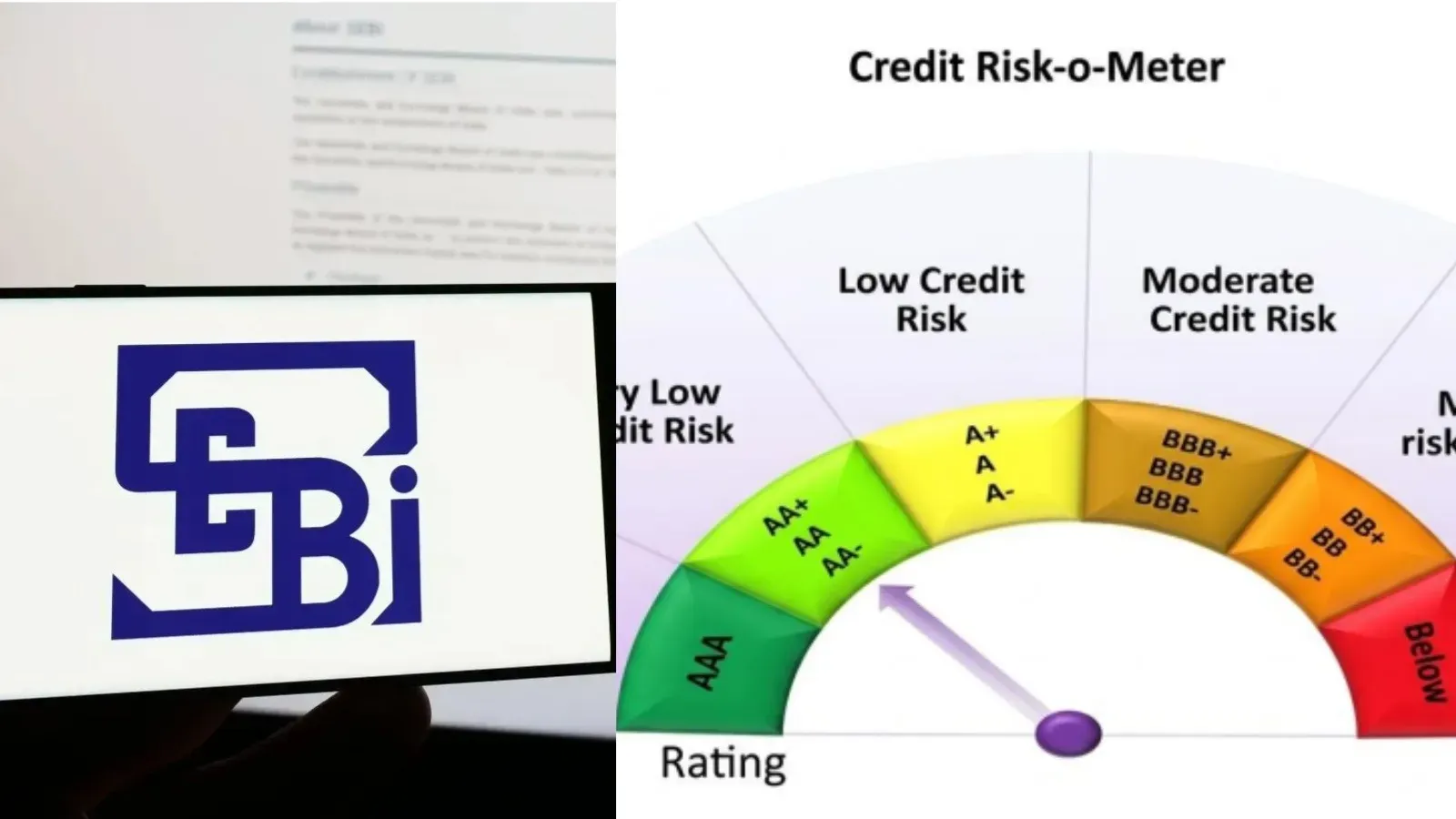
The Securities and Exchange Board of India (SEBI) has introduced a new mandatory tool called the Credit Risk-o-Meter to help investors understand the credit risk associated with debt securities before investing. This colour-coded meter visually represents the level of credit risk, making it easier for investors to assess the safety of their investments.
- The Credit Risk-o-Meter uses six colour-coded risk categories ranging from green (lowest risk) to red (highest risk).
- It applies to all listed and proposed-to-be-listed non-convertible securities, commercial papers, securitised debt instruments, security receipts, and structured debt/market-linked debentures.
- Issuers and online bond platform providers must display the meter in offer documents, prospectuses, advertisements, and digital platforms.
- The meter reflects the lowest credit rating when multiple ratings exist, with all ratings disclosed alongside.
- Unsecured debt instruments must be clearly marked with bold red text stating "unsecured."
What is the Credit Risk-o-Meter introduced by SEBI?
The Credit Risk-o-Meter is a visual tool that represents the credit risk of debt securities using colours and categories. It helps investors quickly understand the risk level associated with a particular debt instrument. SEBI has made this meter a mandatory part of disclosures related to debt securities to promote transparency and informed decision-making.
How are credit ratings mapped to the risk categories?
SEBI has mapped existing credit ratings into six risk categories, each linked to a specific colour on the meter:
| Credit Rating | Risk Category | Colour |
|---|---|---|
| AAA | Lowest credit risk | Green |
| AA+, AA, AA- | Very low credit risk | Light Green |
| A+, A, A- | Low credit risk | Yellow-Green |
| BBB+, BBB, BBB- | Moderate credit risk | Yellow |
| BB+, BB, BB- | Moderate risk of default | Orange |
| B+ to D | High to very high risk of default | Red |
Where must the Credit Risk-o-Meter be displayed?
The meter must appear in all offer documents, abridged prospectuses, private placement memorandums, advertisements by issuers, and on the web and mobile platforms of online bond platform providers (OBPPs). This ensures that investors have easy access to credit risk information across multiple channels.
How does the Credit Risk-o-Meter handle multiple credit ratings?
If a debt security has ratings from multiple credit rating agencies, the Credit Risk-o-Meter will display the lowest rating to reflect the highest risk level. However, all credit ratings must be disclosed alongside the meter to provide complete information.
What additional disclosures are required?
The name of the credit rating agency and the actual credit rating must be shown below the meter. For unsecured debt instruments, the word "unsecured" must be displayed in bold red text to alert investors to the additional risk.
By introducing the Credit Risk-o-Meter, SEBI aims to enhance transparency and help investors make better-informed decisions when investing in debt securities. This visual tool simplifies complex credit rating information into an easy-to-understand format, promoting safer investment practices.