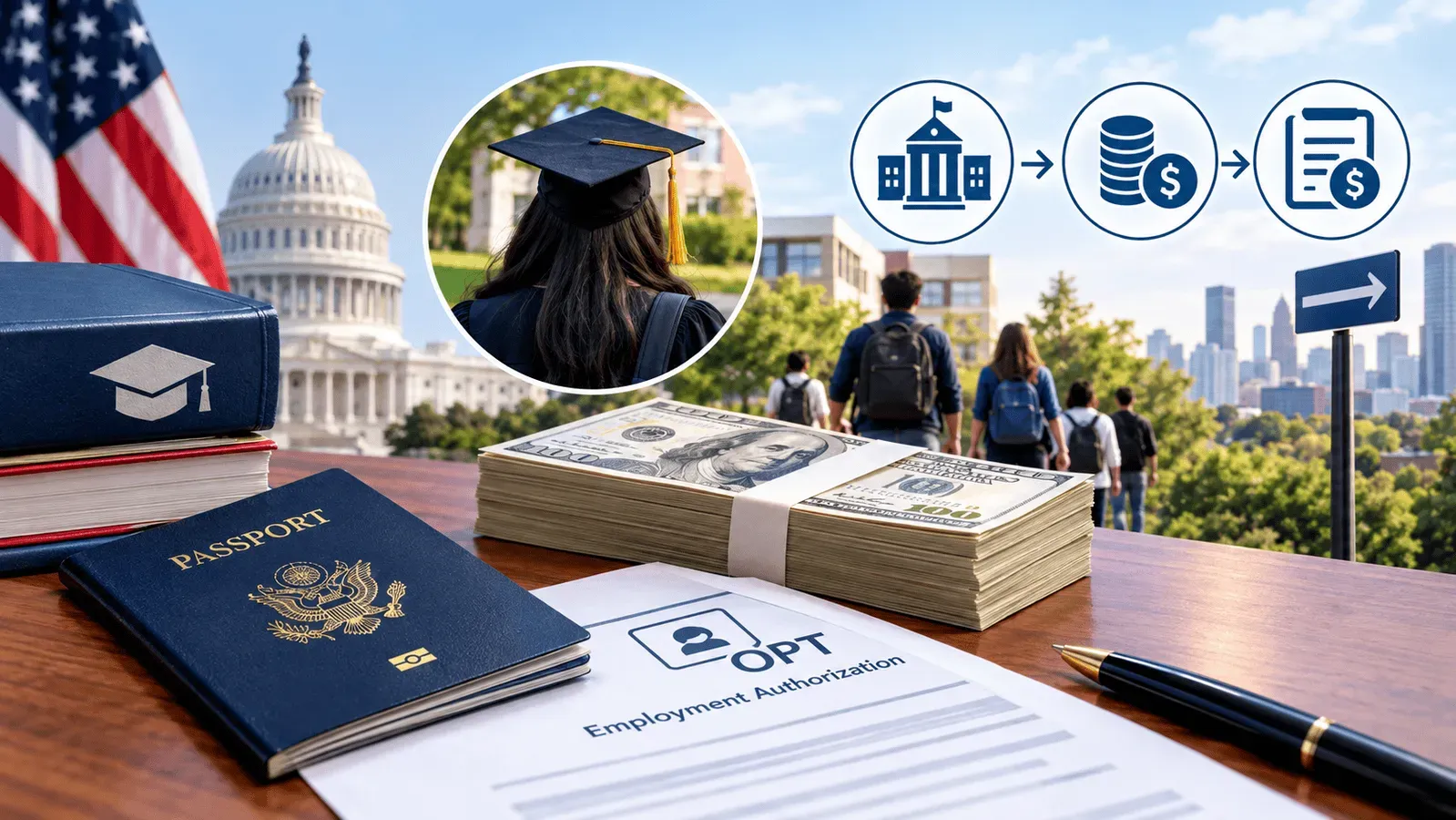
The Trump administration has proposed a new $70,000 fee for Optional Practical Training (OPT), a program that allows international students in the United States to work temporarily in their field of study. This fee would apply to both pre-completion and post-completion OPT, including STEM OPT extensions under certain conditions. But who actually pays this fee, and what could happen next?
- The $70,000 fee is charged to SEVP-certified schools, not directly to students or employers.
- Schools must pay the fee before recommending a student for OPT in the government system.
- A $30,000 fee applies for subsequent OPT recommendations for the same student.
- The Department of Homeland Security (DHS) aims to reduce fraud and protect U.S. workers with this fee.
- DHS is accepting public comments before finalizing the rule.
What is the OPT program and why is a fee being proposed?
OPT allows eligible F-1 international students to work temporarily in the U.S. in jobs related to their studies. The Department of Homeland Security (DHS) proposed the fee to combat fraud, strengthen immigration system integrity, and protect U.S. workers. DHS said it might have to shut down OPT without additional fees because it lacks resources to operate the program safely.
Who is responsible for paying the $70,000 OPT fee?
The proposed rule states that the fee must be paid by SEVP-certified educational institutions. Before a school’s designated school official (DSO) can recommend a student for OPT in the Student and Exchange Visitor Information System (SEVIS), the school must pay the $70,000 fee for the first OPT recommendation. For any subsequent OPT recommendation for the same student, the school must pay $30,000.
The rule does not require students or employers to pay the fee directly to the government. However, schools may choose to recover the cost from students, employers, or other sources through separate arrangements.
How might this fee affect students and schools?
The fee is very high, and DHS expects it to influence schools’ decisions about recommending students for OPT. Schools might be less willing to pay $70,000 for students eligible for only one year of OPT but more willing to pay for students eligible for the 24-month STEM OPT extension.
DHS estimates that the fees could generate between $8.4 billion and $16.5 billion annually. The department also believes the fee structure may discourage some students from using pre-completion OPT, as schools and students might prefer to pay $70,000 for post-completion OPT rather than $100,000 total for splitting OPT between pre- and post-completion.
What is the timeline and next steps for this proposal?
DHS published the proposal and is accepting public comments for 30 days after its publication in the Federal Register. After reviewing comments, DHS will decide whether and how to implement the fee.
If finalized, the fee would take effect after a transition period. Schools would pay $70,000 for OPT recommendations dated 60 days or more after the final rule’s publication. Subsequent recommendations for students who have already paid the initial fee would require the $30,000 fee.
Frequently Asked Questions
Q: Does the $70,000 fee mean students must pay that amount?
A: No. The fee is charged to the educational institution. However, schools may choose to pass the cost to students or employers through separate agreements.
Q: Will changing employers during OPT trigger a new fee?
A: No. The fee is triggered only when a school recommends a student for OPT, not when a student changes employers.
Q: What happens if a school does not pay the fee?
A: USCIS would not grant employment authorization for the student if the school fails to pay the required fee.
This proposal marks a significant change in how OPT is funded and managed. Students, schools, and employers should stay informed and consider submitting comments during the public review period.