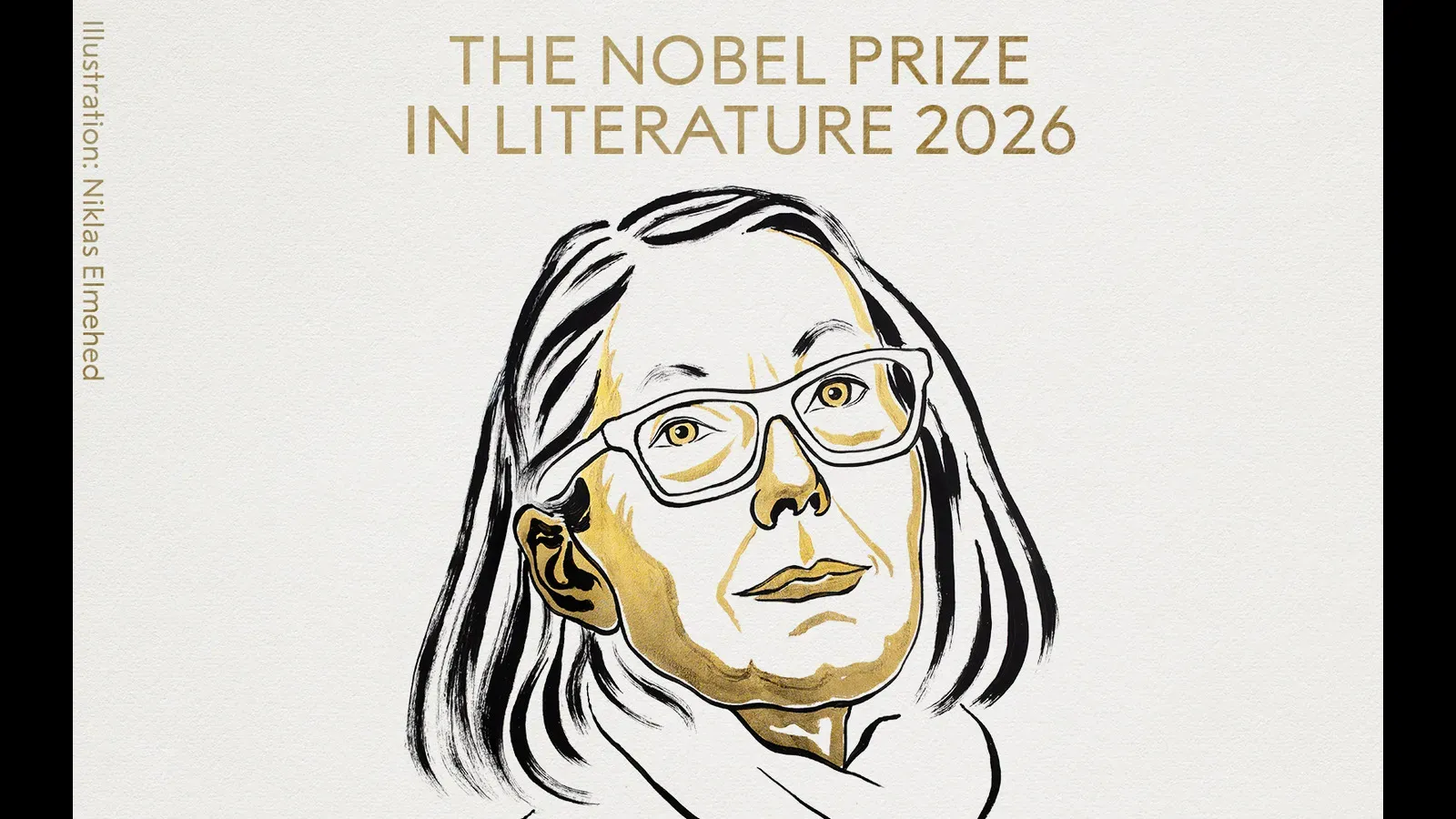
Canadian author and poet Anne Carson won the 2026 Nobel Prize in Literature for her bold and inventive contributions to contemporary literature. The Nobel committee recognized her unique ability to blend classical traditions with new literary forms, creating works that challenge and expand the boundaries of poetry and prose.
Born in Toronto in 1950, Anne Carson has built a distinguished career that spans poetry, translation, classical studies, and other literary genres. Her work is known for its deep engagement with language, combining the precision of a philologist with the creativity of a poet. This intersection allows her to explore words in new and meaningful ways.
- Anne Carson was awarded the 2026 Nobel Prize in Literature.
- The Nobel committee praised her for creating new forms in contemporary literature through dialogue with classical tradition.
- Her notable works include Eros the Bittersweet, Autobiography of Red: A Novel in Verse, The Glass Essay, and Nox.
- Carson’s career bridges poetry, translation, and classical studies.
Who is Anne Carson?
Anne Carson is a Canadian poet, essayist, translator, and professor born in 1950 in Toronto. She has been recognized for her innovative approach to literature, often blending genres and styles. Her academic background in classical studies heavily influences her writing, allowing her to incorporate ancient themes and languages into modern works.
What are some of Anne Carson's notable works?
Some of Anne Carson’s most famous books include Eros the Bittersweet, which explores the concept of love through classical texts; Autobiography of Red: A Novel in Verse, a poetic retelling of a Greek myth; The Glass Essay, a long poem reflecting on personal loss and history; and Nox, a unique book-length poem that combines translation and memoir.
Why did Anne Carson receive the Nobel Prize?
The Nobel committee awarded Anne Carson the prize for her "bold and inventive oeuvre that, in playful dialogue with classical tradition, has created new forms for contemporary literature." They highlighted how her work merges the philologist’s focus on words with the poet’s search for new meaning, resulting in literature that is both intellectually rigorous and emotionally powerful.
How has Anne Carson influenced contemporary literature?
Anne Carson’s work has expanded the possibilities of literary form by mixing poetry, prose, translation, and classical scholarship. Her innovative style challenges traditional boundaries and encourages readers and writers to think differently about language and storytelling. She has inspired many contemporary poets and authors to experiment with form and content.
Frequently Asked Questions
Q: What is the significance of Anne Carson’s use of classical tradition?
A: Carson’s use of classical tradition connects ancient themes and texts with modern issues, enriching contemporary literature with historical depth and new perspectives.
Q: Has Anne Carson won other major awards?
A: Yes, Anne Carson has received several prestigious awards throughout her career, including the Griffin Poetry Prize and the MacArthur Fellowship.
Q: Where can I read Anne Carson’s works?
A: Her books are available in libraries and bookstores worldwide. Many of her poems and essays are also published in literary journals.