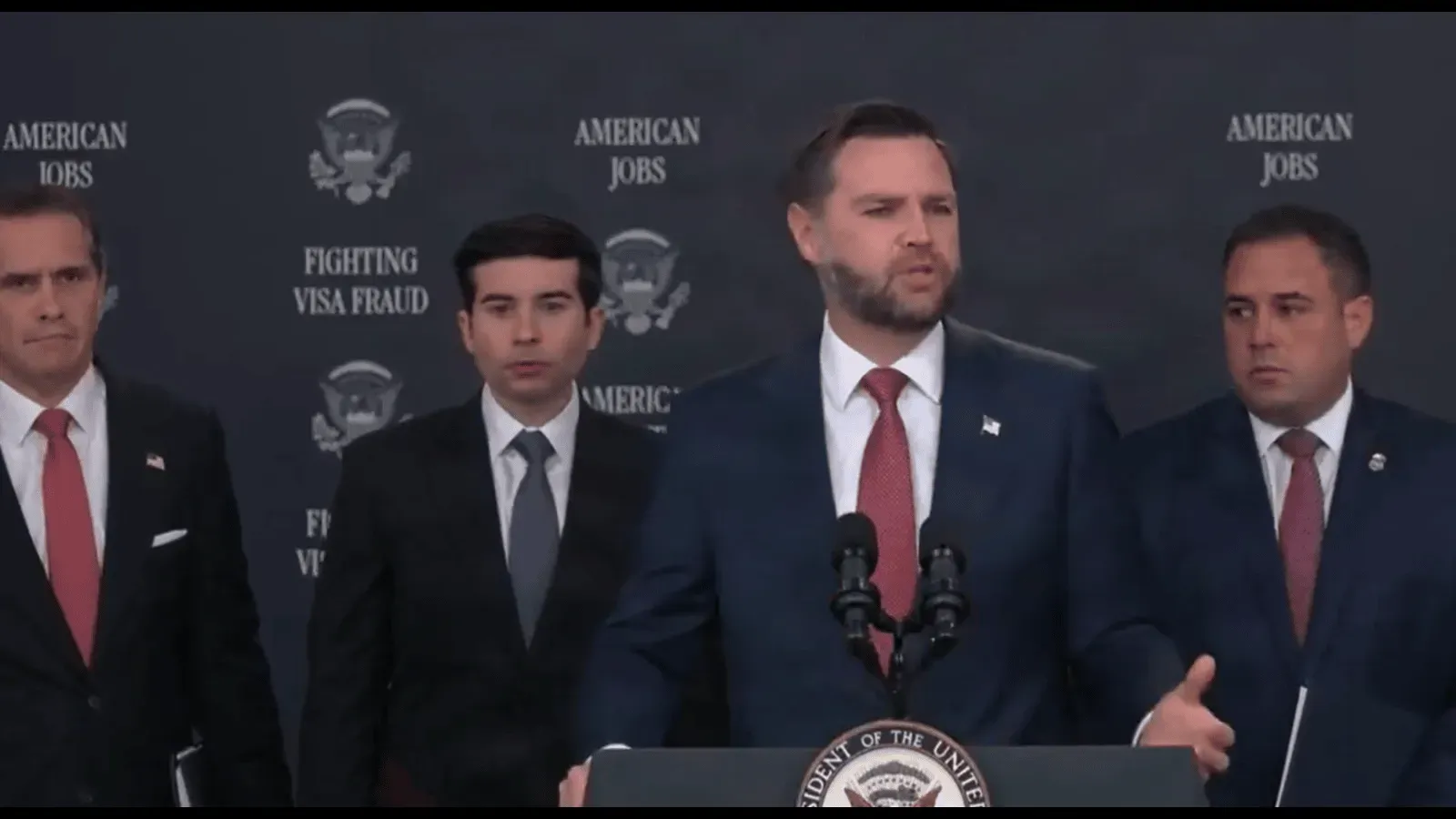
India has strongly condemned the recent remarks made by US Vice President J D Vance, who described foreign workers on H-1B visas as "foreign indentured servants." The Ministry of External Affairs (MEA) called this description "deeply offensive" and emphasized the significant contributions of Indian professionals to the US economy and innovation.
- India rejects the term "indentured servants" for H-1B visa holders as offensive.
- The US suspended Permanent Labour Certification (PERM) applications for eight IT companies.
- Suspension affects green card applications but not current visa validity.
- MEA highlights the mutual benefits of talent mobility between India and the US.
- India urges appreciation of Indian professionals' role in US economic growth.
Why did India find the US Vice President's remark offensive?
The MEA stated that the term "foreign indentured servants" carries painful historical and colonial connotations that are inappropriate and disrespectful. Indian professionals working in the US are highly skilled and have made valuable contributions to the country's economy and innovation ecosystem. The ministry emphasized that such terminology ignores these positive contributions and is unwarranted.
What action did the US take against IT companies?
On October 8, 2026, the US Department of Labor suspended eight technology companies—including Microsoft, Adobe, Tata Consultancy Services, Infosys, Wipro, Cognizant, HCL, and Capgemini—from the Permanent Labour Certification (PERM) program. This suspension means these companies cannot submit new PERM applications or have pending applications processed. The US government cited concerns about alleged abuse of the system and the impact on employment opportunities for American workers.
How does the suspension affect Indian professionals?
The MEA clarified that the suspension does not affect the validity of existing H-1B visas or the status of visa holders and their dependents. However, it may impact the permanent residency or green card process for eligible employees of the affected companies. This could delay or complicate their path to obtaining permanent residency in the US.
Why is talent mobility important between India and the US?
The ministry highlighted that the movement of skilled professionals benefits both countries. Indian talent helps US companies innovate, increase productivity, and remain competitive, which in turn creates jobs and drives economic growth. The MEA expressed hope that all stakeholders recognize the mutual advantages of this collaboration and work towards maintaining it.
What is the overall stance of India on these developments?
India views the US actions and remarks as counterproductive to the shared ambitions of both countries. The MEA continues to monitor the situation closely and advocates for respectful dialogue and policies that support the contributions of Indian professionals in the US.
Frequently Asked Questions
Q: Does the US suspension affect current H-1B visa holders?
A: No, the suspension does not affect the validity of current H-1B visas or the status of visa holders and their dependents.
Q: Which companies are affected by the US suspension?
A: Eight companies are suspended from the PERM program: Microsoft, Adobe, Tata Consultancy Services, Infosys, Wipro, Cognizant, HCL, and Capgemini.
Q: What is the Permanent Labour Certification (PERM) program?
A: PERM is a US Department of Labor program that allows employers to apply for permanent residency on behalf of foreign workers by certifying that there are no qualified US workers available for the position.
Q: Why did the US suspend these companies from the PERM program?
A: The US government alleges that these companies abused the program and that their practices negatively impacted employment opportunities for American workers.
Q: How does India view the contributions of its professionals in the US?
A: India recognizes Indian professionals as highly skilled contributors who have played a significant role in the US economy, innovation, and research.