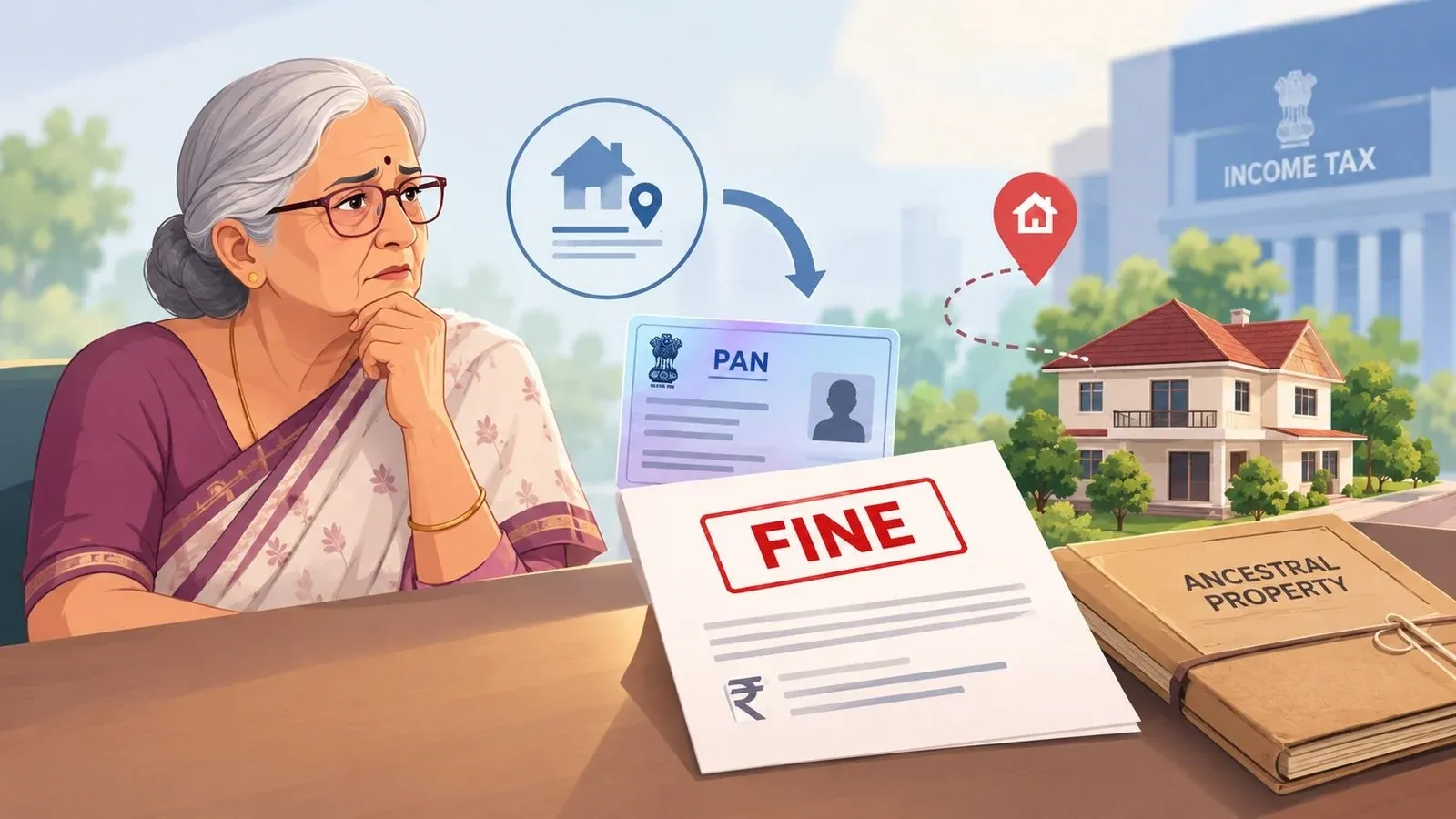
Why did not updating her PAN address cause a senior citizen to face a penalty, and how did the Income Tax Appellate Tribunal (ITAT) respond? This article explains the case of Waheda Malek, a senior citizen who inherited ancestral property and faced tax issues due to an outdated PAN address. The ITAT gave her another chance despite a late appeal, emphasizing the need for taxpayers to keep their address information current.
- Waheda Malek inherited ancestral property and sold her share.
- The tax department reopened her assessment due to undervaluation of the property.
- Malek missed notices sent to her old address and filed a late appeal.
- The CIT(A) rejected her appeal for delay, but ITAT condoned the delay.
- ITAT ordered a fresh hearing on the merits but imposed a ₹5,000 cost.
- The case highlights the importance of updating PAN addresses for co-heirs and senior citizens.
What happened in Waheda Malek's ancestral property tax case?
Waheda Malek, a senior citizen, inherited a 25% share of ancestral property. She and other co-heirs sold the property by executing a Deed of Conveyance on June 20, 2016, for ₹1,15,00,000. However, the Stamp Valuation Authority valued the property at ₹4,35,97,000, much higher than the sale consideration.
Based on this information, the assessing officer reopened Malek's income tax assessment under section 147 and issued notices under sections 148, 148A, and 142(1). Malek could not respond to these notices because they were sent to her old address in Wadala, Mumbai. She had moved to Andheri (West) but did not update her PAN address.
Due to non-compliance, the officer completed the assessment ex parte on May 26, 2023, adding income based on the higher valuation. Malek filed an appeal with the Commissioner of Income Tax (Appeals) [CIT(A)] but was 136 days late. She explained that as an elderly housewife unfamiliar with tax procedures, she was unaware of the notices and only learned of the assessment order later.
The CIT(A) rejected her appeal due to the delay without examining the merits. Malek then approached the ITAT.
Why did the ITAT condone the delay in filing the appeal?
Malek's counsel argued that the delay was unintentional and that her share of the sale consideration was ₹28,75,000. The tax department insisted that taxpayers must keep their addresses updated and that the delay should not be condoned.
The ITAT referred to Supreme Court rulings emphasizing a liberal and justice-oriented approach to delays. It noted that the delay was not due to mala fide intent or deliberate tactics to delay proceedings. Although Malek was at fault for not updating her address, this lapse alone should not deny her the right to a hearing on the merits.
The tribunal therefore condoned the 136-day delay, allowing the appeal to proceed.
What was the outcome of the ITAT's decision?
The ITAT set aside the CIT(A)'s order that dismissed the appeal without merit consideration. It restored the case for a fresh hearing on the substantive tax issues, giving Malek a reasonable opportunity to present her case and submit documents.
However, the tribunal imposed a cost of ₹5,000 on Malek, to be paid to the Prime Minister's National Relief Fund within 30 days, as a consequence of the delay.
What lessons can co-heirs and senior citizens learn from this case?
This case highlights the everyday problem of tax notices and orders being sent to outdated addresses. For co-heirs selling inherited property and senior citizens who have moved, it is crucial to update the PAN address and e-filing profile promptly.
Failing to update contact details can lead to missed notices, late appeals, and penalties. However, the ITAT's decision shows that courts may still allow a hearing on the merits if the delay is not intentional or malicious.
Keeping tax records current is a simple but effective way to avoid complications and protect legal rights.
Frequently Asked Questions
Q: Why is it important to update the PAN address?
A: Updating the PAN address ensures that all tax notices and communications reach the taxpayer promptly, helping avoid missed deadlines and penalties.
Q: What happens if a taxpayer misses a tax notice due to an outdated address?
A: The taxpayer may face penalties or have assessments completed without their input. However, tribunals may condone delays if the taxpayer shows a reasonable cause and no deliberate delay.
Q: Can senior citizens get relief if they miss tax deadlines due to address issues?
A: Yes, courts may take a liberal view and allow appeals to proceed if the delay is not intentional and the taxpayer acts promptly after learning of the issue.
Q: What is an ex parte assessment?
A: An ex parte assessment is completed by the tax officer without the taxpayer's participation, usually when the taxpayer fails to respond to notices.