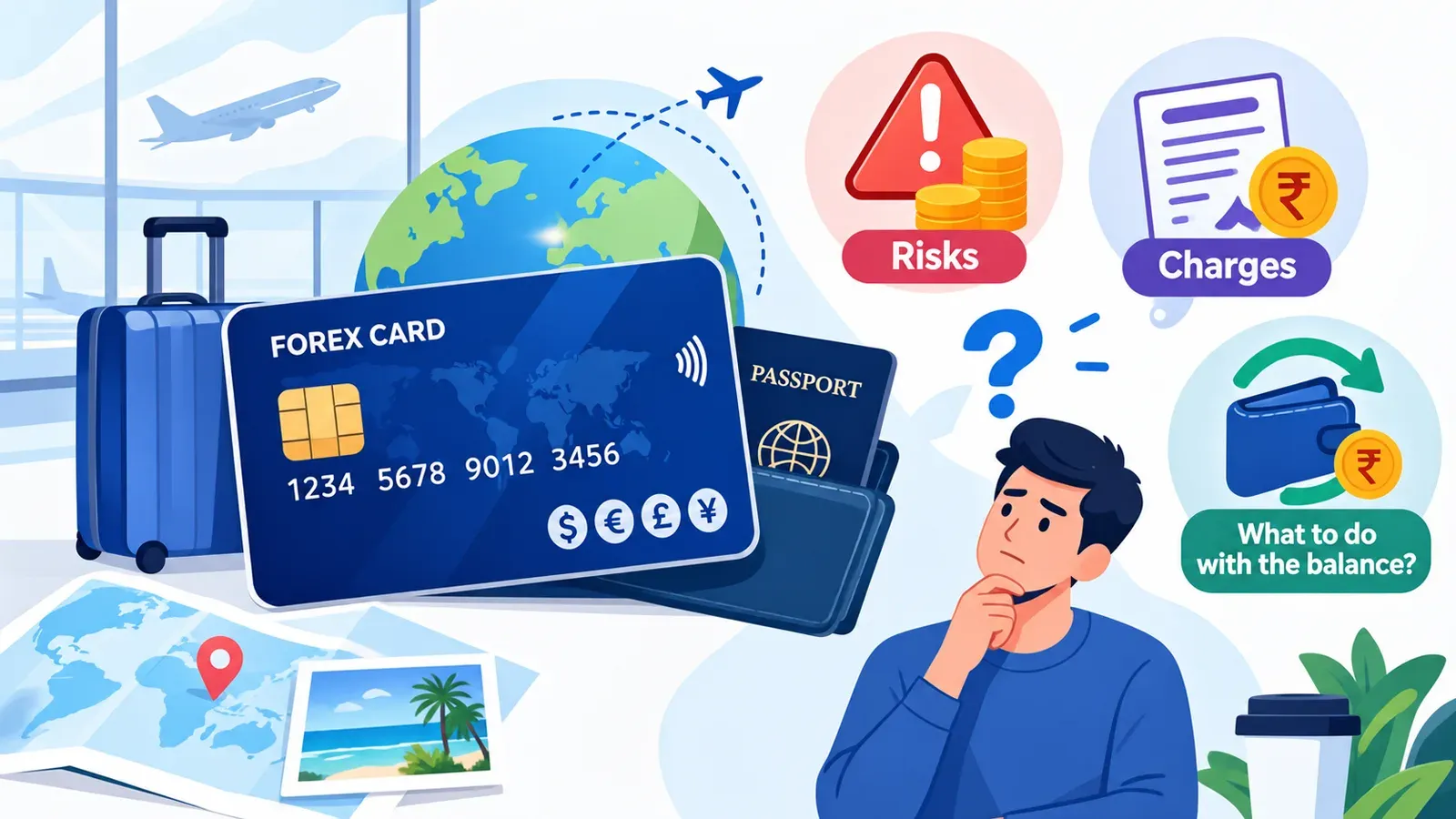
If you have money left on your forex card after returning from a trip, you might wonder whether to convert it into rupees or hold on to it for your next journey. The best choice depends on your future travel plans, the card's validity, and any charges imposed by the card issuer.
- Forex cards are prepaid cards loaded with foreign currency for use abroad.
- Unused balances can be kept for future trips or converted back to rupees.
- Card validity and issuer fees affect the decision.
- Reload fees can be avoided by keeping the balance if you plan to travel again soon.
- Encashing leftover funds is advisable if you have no immediate travel plans.
What is a forex card and how does it work?
A forex card is a prepaid card that travellers load with foreign currency before going abroad. It allows you to pay at shops, restaurants, and other merchants, and withdraw cash from ATMs in the foreign country. Using a forex card can be safer and more convenient than carrying cash.
Should you convert your unused forex card balance into rupees?
If you do not plan to travel abroad soon, converting the leftover balance into rupees is usually the better option. This way, you avoid fees related to card inactivity or currency conversion later. However, before converting, check the charges and rules set by the card issuer or authorised providers.
When is it better to keep the forex card balance?
If you have another overseas trip planned in the near future, keeping the balance on your forex card can be practical. It may help you avoid reload fees and save time. But remember to check the card's validity period and any inactivity charges that might apply.
What charges should you watch out for?
Forex card issuers may charge fees for various services, including:
- Card replacement
- Inactivity
- ATM withdrawals
- Reloading the card
- Currency conversion
- Encashing the remaining balance
These charges vary between providers, so reading the card's terms and conditions is important before making a decision.
How can you decide what to do with your forex card balance?
Consider your travel plans first. If you have a genuine upcoming trip, retaining the balance could be useful. If not, encashing the balance through an authorised provider is advisable. Always verify the applicable fees and card validity to avoid unexpected costs.
Key takeaways
- Forex cards hold foreign currency for travel expenses.
- Unused balances can be converted or kept based on travel plans.
- Check card validity and issuer fees before deciding.
- Reload fees can be avoided by keeping the balance if traveling soon.
- Encash leftover funds if no travel is planned to avoid inactivity charges.
Source: Pavan Kumar Kavad, Managing Director, Prithvi Exchange, October 2026