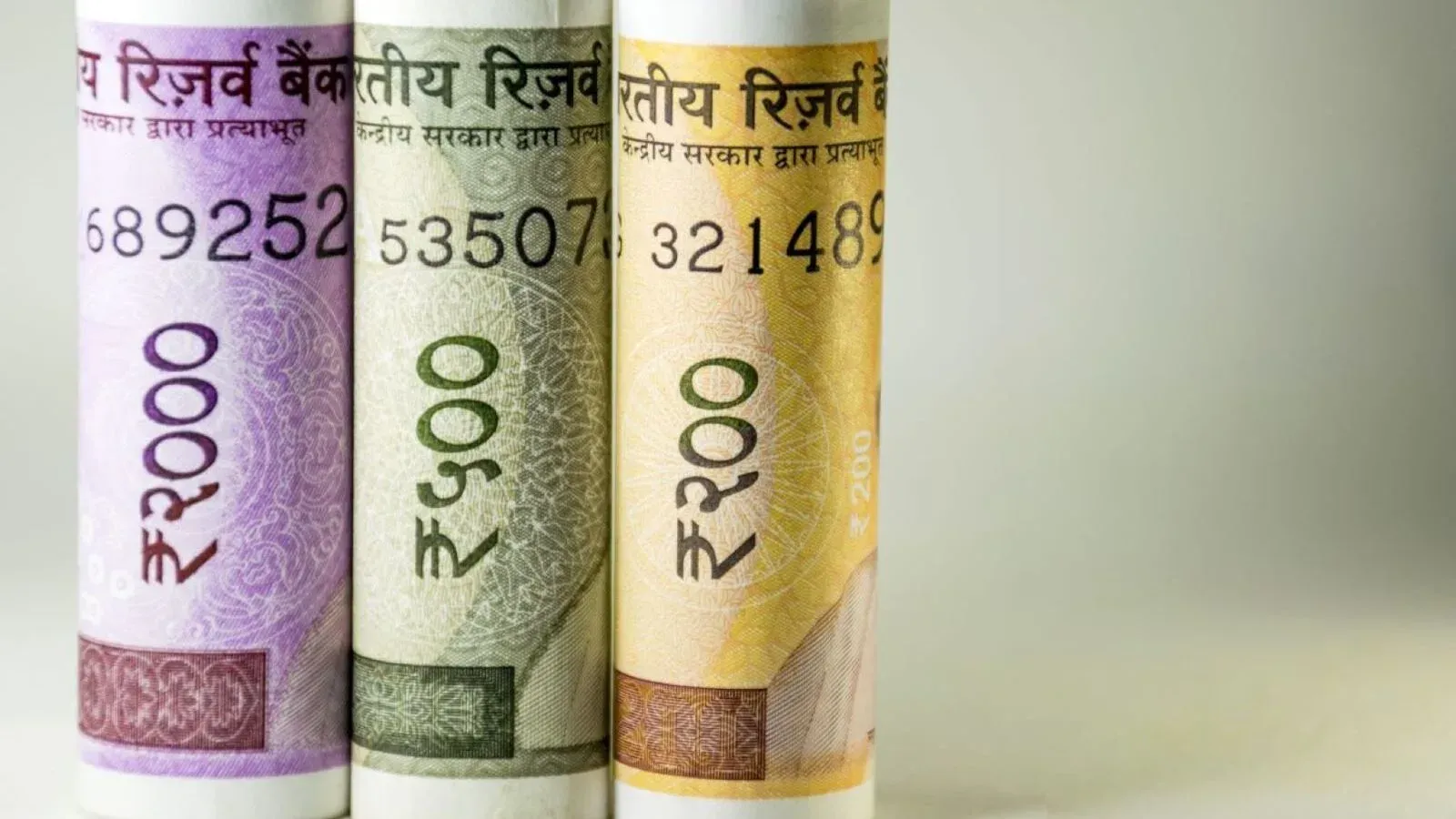
The Indian rupee gained 16 paise to close at 96.72 against the US dollar on October 9, 2026. This increase reflects a combination of factors including a softer US dollar, easing crude oil prices, and potential support from the central bank.
- The rupee opened at 96.74 and traded between 96.51 and 96.77 during the day.
- The US dollar weakened following remarks by US President Donald Trump about avoiding military action against Iran.
- Crude oil prices declined, with Brent crude futures down 1.28% to $102.95 per barrel.
- India's stock markets advanced, with the SENSEX up 1.23% and the NIFTY50 rising 1.30%.
- Foreign institutional investors sold shares worth ₹3,568.90 crore, while domestic institutional investors bought ₹4,743.26 crore.
- India's foreign exchange reserves fell by $12.952 billion to $734.606 billion for the week ending October 2.
What caused the rupee to strengthen against the US dollar?
The rupee's appreciation was mainly due to a slight weakening of the US dollar and a drop in crude oil prices. US President Donald Trump's statement that the US would avoid military action against Iran helped ease geopolitical tensions, which in turn softened the dollar. Lower crude prices also reduced import costs for India, supporting the rupee.
Additionally, forex traders noted likely intervention by India's central bank, which provided further support to the domestic currency.
How did the rupee perform during the trading day?
At the interbank foreign exchange market, the rupee opened at 96.74 against the US dollar. It reached an intraday high of 96.51 and a low of 96.77. By the end of the session, the rupee closed at 96.72, marking a 16 paise gain compared to the previous day’s close of 96.88.
What was the trend in the Indian stock market on October 9?
The Indian stock market showed positive momentum. The SENSEX rose by 879.09 points, or 1.23%, to close at 72,472.33. The NIFTY50 index increased by 288.65 points, or 1.30%, ending at 22,520.45.
What was the activity of foreign and domestic investors?
On October 9, foreign institutional investors (FIIs) sold shares worth ₹3,568.90 crore. In contrast, domestic institutional investors (DIIs) purchased equities worth ₹4,743.26 crore on a net basis. This mixed activity reflects differing investment strategies amid market conditions.
How did India's foreign exchange reserves change recently?
India's foreign exchange reserves declined by $12.952 billion to $734.606 billion during the week ending October 2, 2026. This followed a previous drop of $18.343 billion the week before. The reserves had reached an all-time high of $785.706 billion in early September due to a large concessional swap for deposits from the Indian diaspora.
Breaking down the reserves, foreign currency assets decreased by $10.664 billion to $604.747 billion. Gold reserves fell by $2.288 billion to $106.413 billion. Special Drawing Rights (SDRs) increased slightly by $15 million to $18.656 billion, while India's reserve position with the International Monetary Fund (IMF) decreased by $15 million to $4.789 billion.