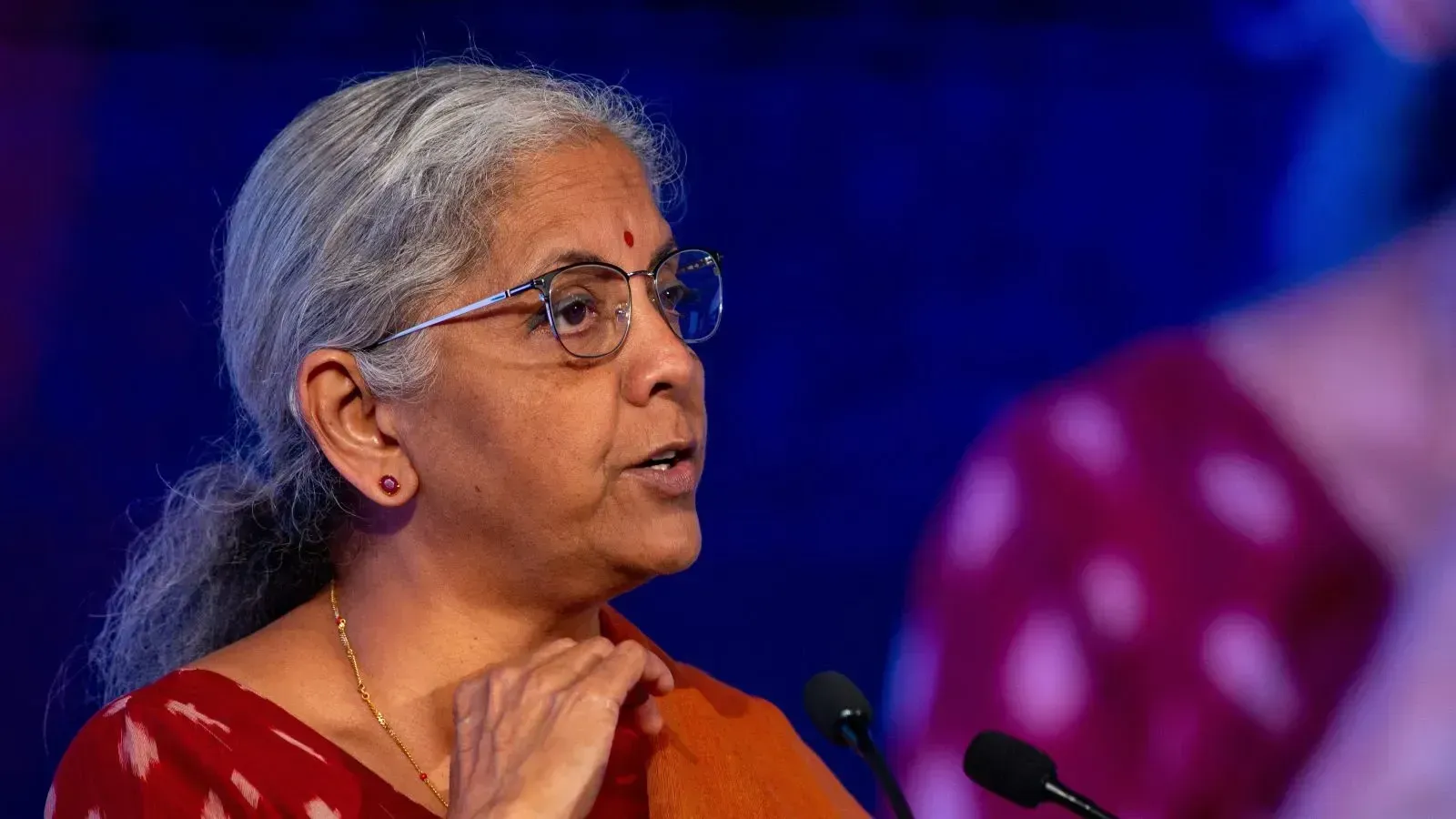
The Reserve Bank of India (RBI) will continue taking steps to prevent excessive volatility in the rupee, said Finance Minister Nirmala Sitharaman at the Bloomberg New Economy Forum 2026. She explained that while the rupee has depreciated significantly against the US dollar over the past year and a half, this is mainly due to external global factors. India’s economic fundamentals, including strong foreign exchange reserves, remain solid.
- The RBI aims to reduce rupee volatility, not fix its exchange rate.
- Rupee depreciation is driven primarily by global uncertainties.
- Recent RBI measures include a special window for oil companies and tighter forex derivative rules.
- India’s macroeconomic fundamentals and fiscal discipline remain strong.
- Private and foreign investments are increasing in sectors like renewable energy and pharmaceuticals.
Why is the rupee depreciating against the US dollar?
The rupee has fallen significantly in value mainly because of global uncertainties affecting currency markets worldwide. Despite this, India’s economic fundamentals are strong, with ample foreign exchange reserves. The depreciation is not due to domestic economic weakness but external factors beyond India’s control.
What is the RBI doing to manage rupee volatility?
The RBI is actively working to prevent excessive fluctuations in the rupee’s value. It recently introduced a special window for oil marketing companies to reduce demand for US dollars in the spot market. Additionally, the RBI tightened rules on forex derivatives to curb speculative trading against the rupee. These measures helped the rupee appreciate by about one percent shortly after their announcement.
Is the RBI trying to fix the rupee’s exchange rate?
No, the RBI’s goal is not to fix the rupee at a specific level but to reduce sharp volatility. Finance Minister Sitharaman emphasized that the RBI prefers the rupee to find its own level naturally while ensuring stability. This approach helps maintain confidence in the currency without artificial manipulation.
How is the government supporting foreign investment amid currency challenges?
To attract foreign investment and support the rupee, the government expanded the Fully Accessible Route (FAR) for foreign portfolio investors to include new government securities. Income from interest and capital gains on these securities is exempt from income tax for foreign investors. The RBI also allowed banks to use a swap facility for foreign currency deposits to manage currency risks. These steps encourage foreign capital inflows, helping stabilize the rupee.
What sectors are attracting private and foreign investment in India?
India is seeing increased investment in renewable energy, semiconductors and chip design, biosimilars, pharmaceuticals, generic drug manufacturing, and aircraft maintenance and repair. Both domestic private capital and foreign investors are funding these sectors, which are important for India’s economic growth and technological advancement.
What about tax reforms related to the securities market?
Finance Minister Sitharaman acknowledged ongoing debates about rationalizing the Securities Transaction Tax (STT) and long-term capital gains tax. She described these discussions as healthy and said she is listening carefully. However, she noted that the government is close to preparing the Union Budget 2027-28, so detailed announcements will come later.
Frequently Asked Questions
Q: What caused the recent rupee depreciation?
A: The rupee’s fall is mainly due to global uncertainties and external factors, not domestic economic problems.
Q: Will the RBI fix the rupee’s exchange rate?
A: No, the RBI aims to reduce volatility but allows the rupee to find its natural level.
Q: How is the government encouraging foreign investment?
A: By expanding access to government securities under the Fully Accessible Route and offering tax exemptions on income from these investments.
Q: What recent measures has the RBI taken to support the rupee?
A: The RBI created a special dollar window for oil companies and tightened forex derivative rules to reduce speculative pressure on the rupee.
Source: Statements by Finance Minister Nirmala Sitharaman at the Bloomberg New Economy Forum 2026 and recent RBI announcements.