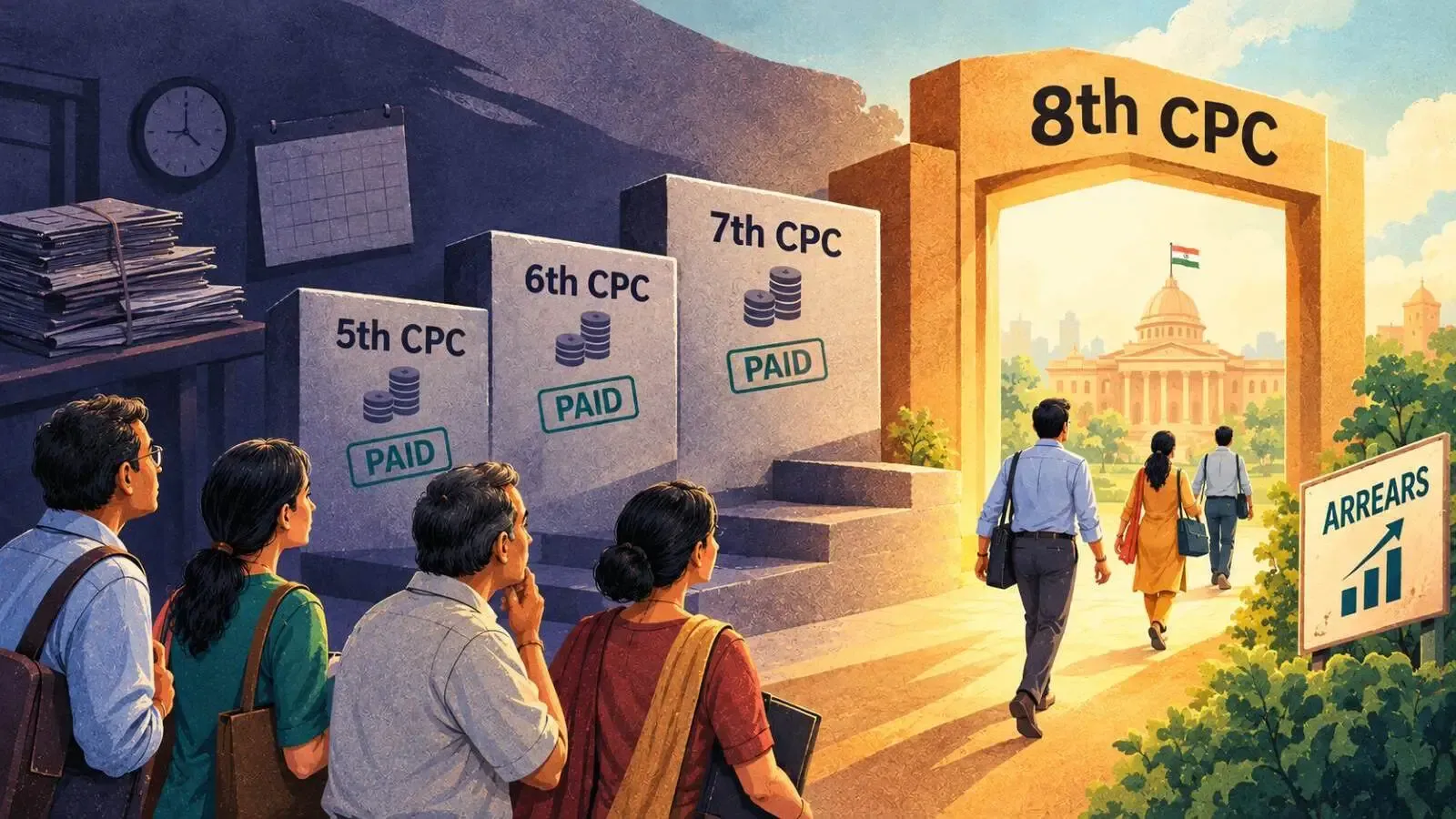
The 8th Pay Commission arrears are a key concern for government employees, especially as the 10-year cycle since the 7th Pay Commission ended on December 31, 2025. Understanding what the 5th, 6th, and 7th Central Pay Commissions (CPCs) did regarding arrears helps explain current expectations and challenges.
- The 5th and 6th CPCs caused large arrears payments, leading to short-term economic stress.
- The 7th CPC avoided major arrears shocks by choosing January 1, 2016, as the effective date.
- The fitment factor in the 7th CPC included merging basic pay with Dearness Allowance (DA), reducing real increases.
- The 8th CPC is expected to submit its report by May 2027, with arrears likely from January 1, 2026.
- Employees await official confirmation on the 8th CPC implementation and arrears payments.
What arrears issues did the 5th and 6th Pay Commissions cause?
The 5th and 6th CPCs led to the payment of large arrears to government employees. These arrears caused short-term macroeconomic stress by temporarily increasing government expenditure on pay and allowances. The 7th CPC report noted that such arrears payments can impact fiscal stability and price levels through demand and supply channels. For example, during the 5th CPC implementation, arrears were paid in two installments in 1997-98 and 1998-99, which increased the share of pay and allowances in defence revenue expenditure from around 40-41% to about 45%.
How did the 7th Pay Commission handle arrears differently?
The 7th CPC aimed to avoid large economic shocks caused by arrears. It recommended an effective date of January 1, 2016, rejecting staff demands for an earlier date like January 1, 2014. This choice reduced the amount of arrears payable. The 7th CPC's fitment factor was 2.57, which was not a simple flat raise. Of this, 2.25 accounted for merging basic pay with DA, assumed at 125% on January 1, 2016, and the remaining 0.32 represented a real increase of about 14.2%. This approach meant that a significant part of the fitment was neutralisation of DA rather than a pure salary hike.
Why is the effective date important in pay commission arrears?
The effective date determines from when the revised pay and arrears are calculated. A later effective date means fewer arrears but delays salary increases. The 7th CPC's choice of January 1, 2016, balanced these factors. Since the Dearness Allowance increases over time, merging it with basic pay at a higher DA level means a larger portion of the fitment factor is neutralisation, not a real raise. This relationship makes the effective date and arrears inseparable from the pay revision debate.
What are employees expecting from the 8th Pay Commission?
The 10-year cycle since the 7th CPC ended on December 31, 2025. The staff side has requested that the 8th CPC's effective date be January 1, 2026, following the precedent set by the 7th CPC. However, the 8th CPC is expected to submit its report by May 2027, and the government may take additional time to approve or modify the recommendations. If the government approves the report later in 2027, employees may still receive arrears dating back to January 1, 2026. Until then, employees await official confirmation on the implementation timeline and arrears payments.
Frequently Asked Questions
Q: Why did the 7th Pay Commission choose January 1, 2016, as the effective date?
A: The 7th CPC was constituted in 2014 and followed a 10-year cycle ending on January 1, 2016. It rejected earlier effective dates to avoid large arrears and economic shocks.
Q: How did the 7th CPC reduce the impact of arrears compared to earlier commissions?
A: By merging basic pay with a higher DA level and choosing a later effective date, the 7th CPC limited arrears payments and avoided significant fiscal shocks.
Q: When can employees expect the 8th Pay Commission arrears?
A: The 8th CPC report is expected by May 2027, but arrears may be paid from January 1, 2026, depending on government approval and implementation timing.