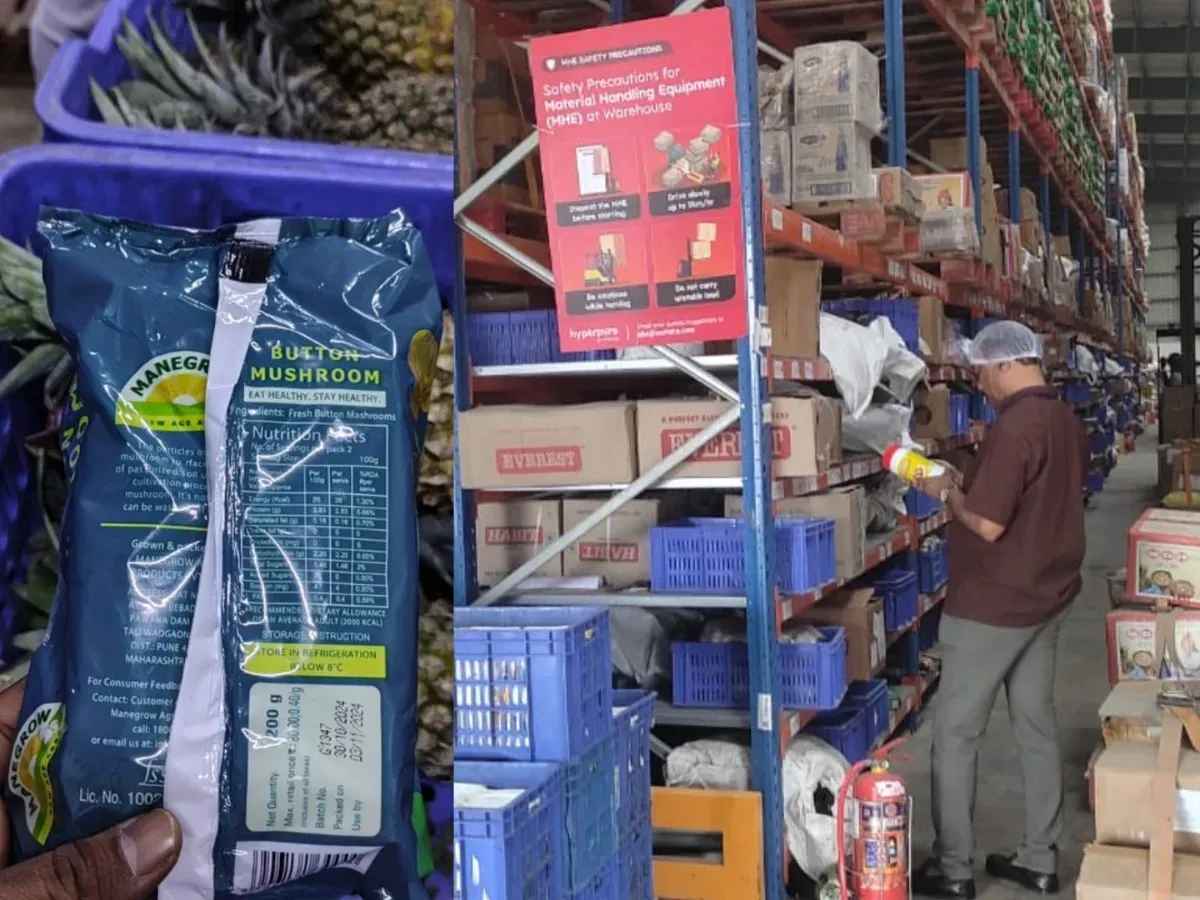
India's warehouse economy is expanding rapidly as more goods are made, stored, and moved across the country. This growth is reflected in record leasing volumes and increased investment in industrial and warehousing real estate, making warehouses a vital part of India's economy.
- Leasing of industrial and warehousing space reached 72.5 million sq ft in 2025, a 29% increase from the previous year.
- Manufacturing accounted for 46% of leasing demand in the first half of 2026.
- Institutional investors contributed to 33% of new warehousing supply in early 2026.
- Demand is driven by GST reforms, improved transport infrastructure, e-commerce, and government manufacturing initiatives.
- Quality of warehouses is improving, with Grade-A facilities now making up 47% of the stock.
What is driving the growth of India's warehouse economy?
The rise in India's warehouse economy is linked to several economic and infrastructural changes. The introduction of a uniform Goods and Services Tax (GST) reduced the need for multiple state-level warehouses, allowing companies to streamline their storage. Improved highways and freight corridors have made transporting goods over long distances more efficient and cost-effective.
E-commerce growth has created demand for large fulfillment centers, while quick commerce has increased the need for smaller warehouses closer to consumers. Additionally, government policies promoting domestic manufacturing have boosted industrial demand for warehousing.
Which sectors are the main users of warehouse space?
Manufacturing remains the largest user, responsible for 46% of leasing in the first half of 2026, with a 17% year-on-year increase. Third-party logistics (3PL) companies are also growing rapidly as manufacturers outsource warehousing and distribution to specialists. Surprisingly, e-commerce leasing declined by 44% in early 2026, mainly due to consolidation rather than reduced demand.
How are warehouse facilities evolving in quality and capacity?
Warehouse facilities are upgrading to meet modern needs such as automation, faster goods movement, and sustainability standards. Grade-A warehouses, which offer high-quality infrastructure and operational efficiency, now comprise 47% of India's industrial and warehousing stock, up from 41% in 2025.
Developers are investing heavily in new projects, with institutional investors backing a significant portion of new supply. Companies like NDR InvIT, Horizon Industrial Parks, and TVS Infrastructure Trust are expanding their portfolios, signaling confidence in long-term demand.
Who are the key players in India's warehouse economy?
Major players include warehouse owners, developers, and logistics operators. NDR InvIT owns 22 million sq ft of warehouse space and industrial parks, while Horizon Industrial Parks manages 28.5 million sq ft with plans to double capacity. TVS Infrastructure Trust aims to grow its portfolio to 20 million sq ft by 2028.
Logistics companies like TVS Supply Chain Solutions operate large warehouse networks without owning all assets, using an asset-light model. Snowman Logistics combines ownership and leasing, focusing on temperature-controlled storage for pharmaceuticals and food.
What is the current balance of supply and demand in the warehouse market?
By mid-2026, total warehouse stock across eight major cities reached 584.9 million sq ft, a 14% increase from the previous year. Vacancy rates have decreased slightly to 11.4%, indicating healthy demand. However, developers are cautious to avoid oversupply, focusing on quality locations and Grade-A standards to meet occupier expectations.
How does the warehouse segment compare to other real estate sectors?
While industrial and warehousing real estate is growing, it still represents a smaller share of investment compared to offices and residential properties. In the first half of 2026, industrial and logistics accounted for a minor portion of the $8.5 billion equity capital invested in India's real estate market. This indicates that the warehouse sector is still developing with significant growth potential ahead.
Frequently Asked Questions
Q: Why is warehousing important for India's economy?
A: Warehousing supports the storage and movement of goods, which is essential for manufacturing, retail, and e-commerce. Efficient warehouses help reduce costs and improve supply chain speed.
Q: What factors have contributed to the rise in warehouse demand?
A: Key factors include GST reforms, better transport infrastructure, growth of e-commerce and quick commerce, and government initiatives promoting domestic manufacturing.
Q: Are warehouses becoming more technologically advanced?
A: Yes, many warehouses are upgrading to Grade-A standards, incorporating automation, faster handling systems, and sustainability features to meet modern business needs.
Q: Who are the main users of warehouse space?
A: Manufacturing companies, third-party logistics providers, and e-commerce businesses are the primary users, with manufacturing leading in leasing demand.
As India continues to produce and move more goods, the warehouse economy will remain a crucial part of the country's infrastructure, supporting growth across multiple industries and regions.