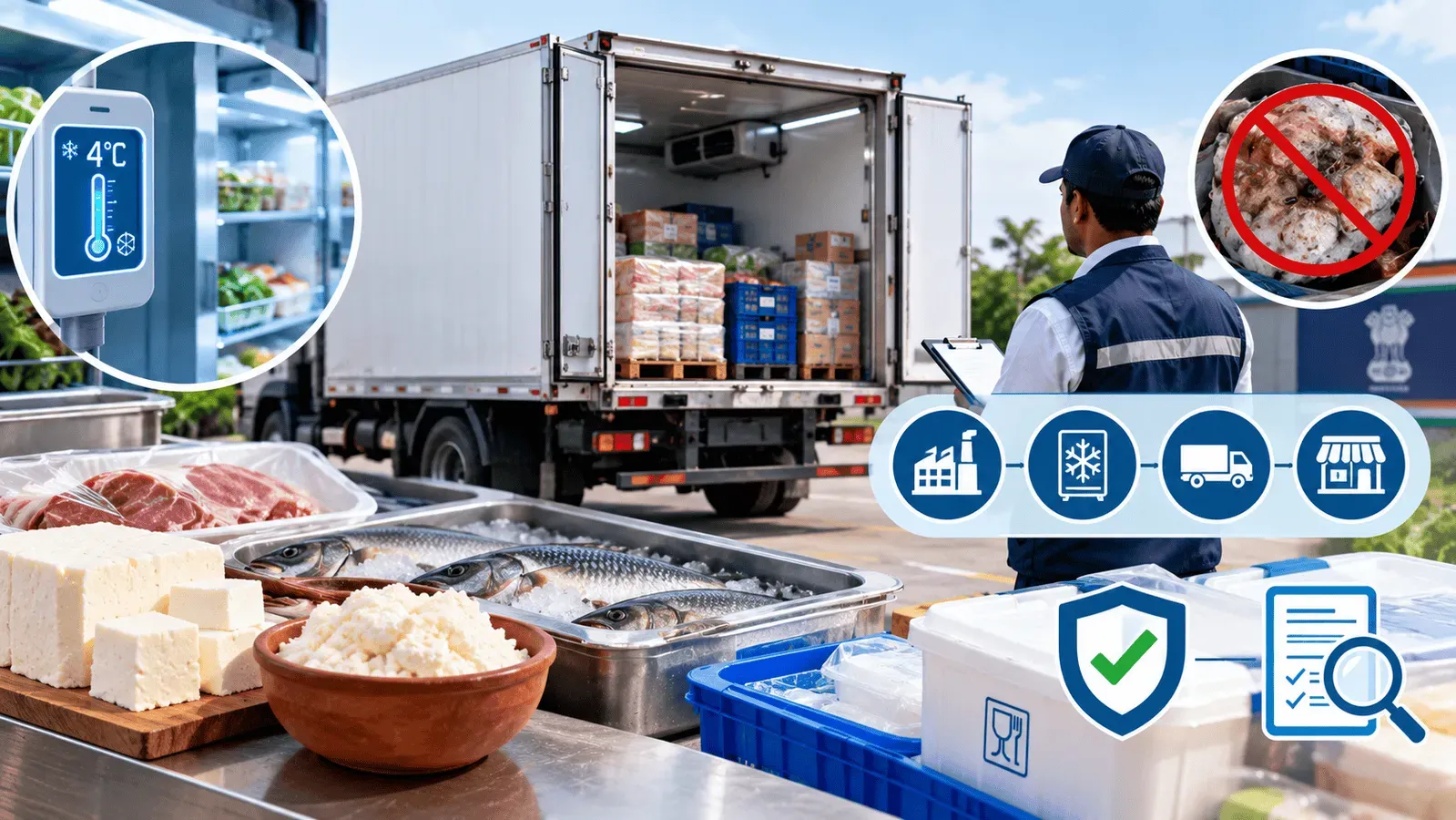
The Food Safety and Standards Authority of India (FSSAI) has issued a new advisory to improve the transportation and handling of perishable food items such as paneer, meat, fish, and khoa. The advisory focuses on maintaining proper temperature conditions, using hygienic vehicles, and employing food-grade packaging to prevent spoilage and ensure public health safety.
- Businesses must maintain prescribed temperatures during handling, storage, and transport of perishable foods.
- Only clean, covered, and hygienic vehicles suitable for food transport should be used.
- Food-grade packaging and appropriate secondary packaging materials are mandatory.
- Protection against dust, moisture, pests, and cross-contamination is required.
- Non-compliance can lead to seizure and destruction of food products.
Why is FSSAI focusing on temperature control for perishable foods?
Perishable foods like paneer, meat, fish, and khoa are highly sensitive to temperature changes. If these items are not stored or transported under the right temperature conditions, they become vulnerable to microbial growth and spoilage. This can lead to foodborne illnesses and pose serious risks to public health. The FSSAI advisory emphasizes that maintaining the prescribed temperature throughout the supply chain—from procurement to delivery—is essential to keep these foods safe for consumption.
What are the packaging and vehicle requirements for transporting perishable foods?
The advisory requires food businesses to use clean, covered, and hygienic vehicles that are suitable for carrying food items. The use of food-grade packaging materials is mandatory to prevent contamination. Businesses should avoid using non-food-grade coverings such as gunny bags, which can compromise the safety and quality of the products. Additionally, secondary packaging materials should be appropriate to protect the food during transit.
How should food businesses protect perishable foods during transport?
Food business operators must take measures to protect perishable foods from dust, moisture, pests, physical damage, and cross-contamination during storage, loading, unloading, and transportation. These precautions help maintain the quality and safety of the food products until they reach the consumer.
What records and documentation are required from food businesses?
FBOs are required to maintain proper records and ensure traceability of consignments. They must be able to produce invoices or other relevant documents when requested by competent authorities. This helps in monitoring compliance and tracking the movement of perishable food items throughout the supply chain.
What enforcement measures will be taken for non-compliance?
The FSSAI has instructed licensing authorities and food safety officers across states, Union Territories, and Indian Railways to maintain strict vigilance during inspections and transportation checks. In cases where businesses fail to comply with the advisory, authorities may initiate actions including the seizure and destruction of the affected food products to protect public health.
By tightening the rules on how perishable foods are transported, the FSSAI aims to reduce food spoilage and contamination risks. This initiative supports safer food practices and helps ensure that consumers receive fresh and safe food products.