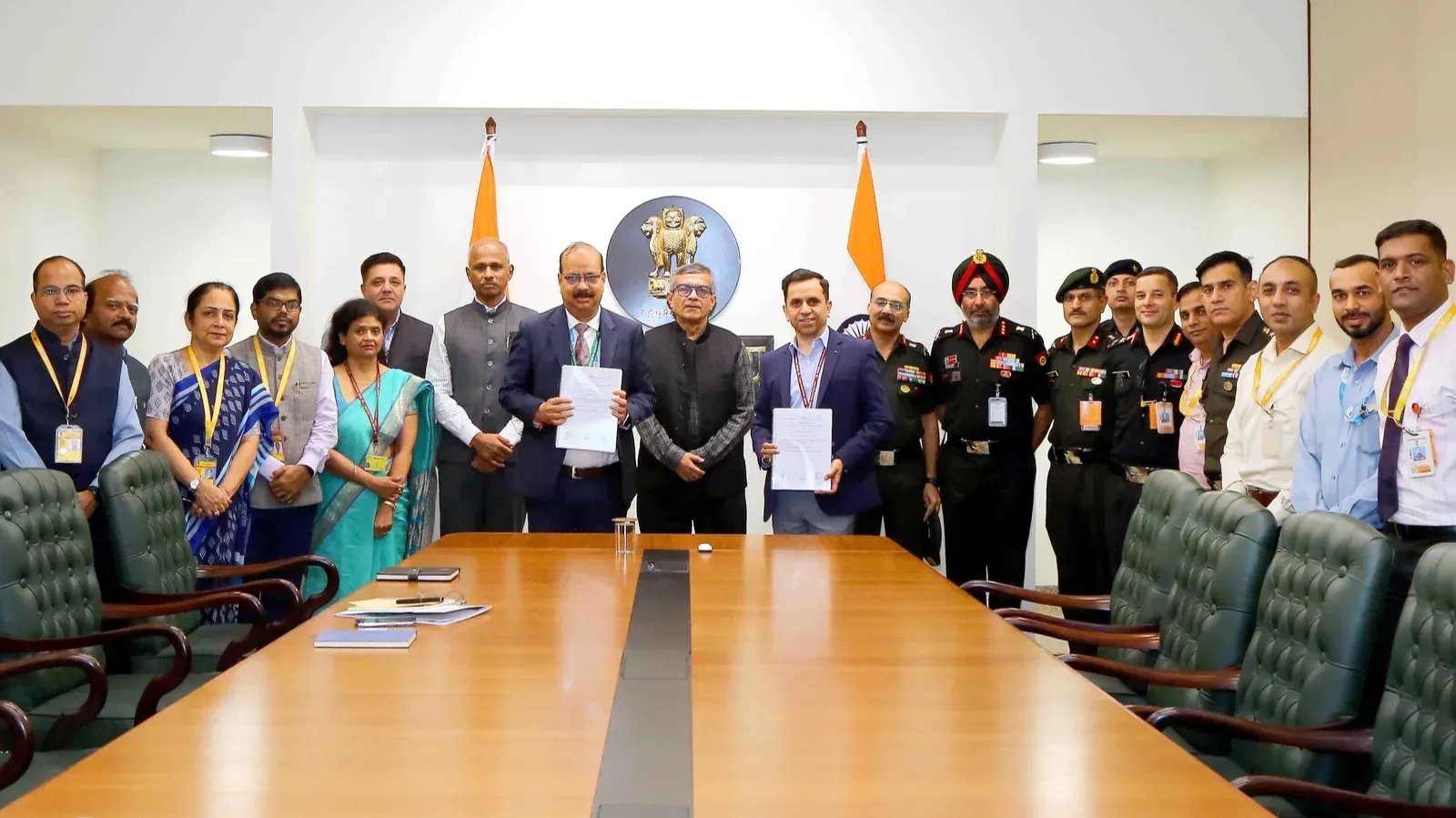
The Defence Ministry has signed a ₹770 crore contract with Bharat Electronics Ltd (BEL) to procure improved low-level lightweight radars for the Indian Army. These radars will help the Army detect and track aerial threats such as fighter-sized aircraft and mini or micro drones, strengthening air defence against unmanned aerial systems (UAS).
- The contract was signed in New Delhi in the presence of Defence Secretary Rajesh Kumar Singh.
- The radar system can detect and prioritize various aerial targets, including small drones.
- The procurement supports the indigenisation of air defence platforms and boosts India's defence manufacturing ecosystem.
- This initiative aligns with the government's vision of Viksit Bharat @2047 to build a self-reliant defence industry.
- The contract follows recent agreements for communication satellites and torpedoes for the Indian Air Force and Navy.
What are the features of the new lightweight radars?
The Improved Low Level Light Weight Radar (LLLR-I) system can detect and track fighter-sized aircraft as well as mini and micro drones. It has the ability to prioritize aerial targets, which helps the Army respond effectively to threats posed by unmanned aerial systems. The lightweight design makes it easier to deploy and operate in various terrains.
How will these radars benefit the Indian Army?
These radars will enhance the Army's capability to monitor and defend against aerial threats, especially the increasing use of drones in modern warfare. By detecting small and fast-moving targets, the radars improve situational awareness and allow timely countermeasures. This strengthens the overall air defence system of the Army.
What is the significance of this contract for India's defence industry?
The contract supports the indigenisation of defence technology by involving Bharat Electronics Ltd, a leading Indian defence manufacturer. It also promotes the participation of micro, small, and medium enterprises (MSMEs) in the defence manufacturing ecosystem. This aligns with the government's vision of Viksit Bharat @2047, aiming to build a resilient, self-reliant, and globally competitive defence industry.
What other recent defence contracts has the Ministry signed?
Recently, the Defence Ministry signed agreements worth ₹4,106 crore for a dedicated communication satellite for the Indian Air Force and Varunastra heavy-weight torpedoes for the Indian Navy. On October 15, contracts were signed with NewSpace India Ltd for the GSAT-7C satellite and with Bharat Dynamics Ltd for Varunastra torpedoes. These acquisitions enhance communication and anti-submarine warfare capabilities for the Air Force and Navy respectively.
How do these developments fit into India's broader defence strategy?
These contracts reflect India's focus on modernizing its defence forces with advanced indigenous technology. By investing in radar systems, communication satellites, and torpedoes, India aims to strengthen its defence preparedness across all domains—land, air, and sea. The emphasis on self-reliance and supporting domestic manufacturers is central to this strategy.