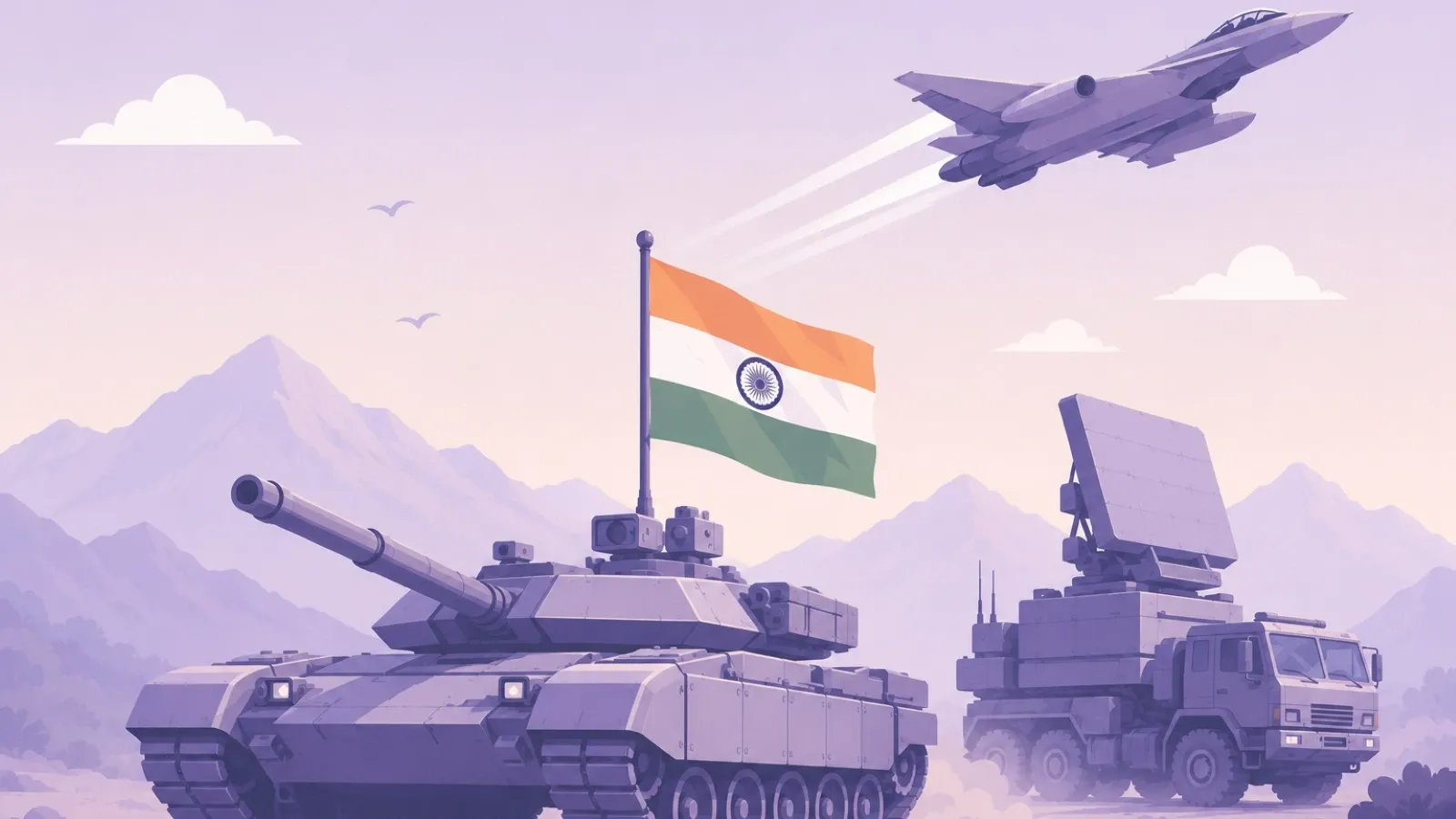
India's Defence Acquisition Council (DAC) has approved procurement proposals worth ₹2.12 lakh crore to strengthen the country's armed forces. This includes acquiring helicopters, drones, radars, and other advanced military equipment. The approval aims to enhance the combat capabilities of the Indian Army, Navy, and Air Force.
- The DAC granted Acceptance of Necessity (AoN) for capital acquisitions totaling about ₹2,12,000 crore.
- Procurement covers light multi-role helicopters, kamikaze drones, radars, and high mobility vehicles.
- Key defence companies like Bharat Electronics Limited (BEL), Hindustan Aeronautics Limited (HAL), and BEML are expected to benefit.
- About 82% of the procurement focuses on domestic manufacturing to boost Indian defence industries.
What equipment has the Defence Acquisition Council approved?
The DAC approved a wide range of military platforms and weapon systems. For the Indian Army, the list includes high mobility vehicles (HMVs), self-propelled tracked gun systems, gunshot response systems (GSRS), light multi-role helicopters (LMRH), very short-range air defence systems (VSHORADS), and counter unmanned aerial systems (C-UAS). Additionally, unmanned aerial surveillance vehicles, integrated surveillance and strike systems, and long-range kamikaze drones were approved.
How will these procurements improve India's defence capabilities?
The new equipment will enhance operational mobility, firepower, and surveillance. For example, HMVs will improve logistics and movement in difficult terrains, while self-propelled tracked guns will add firepower to mechanised units. The acquisition of drones and counter-drone systems will strengthen aerial surveillance and defence against unmanned threats. Radars and integrated surveillance systems will improve battlefield awareness.
Which defence companies are expected to benefit from the procurement?
Several Indian defence companies are likely to be in focus following the announcement:
- Hindustan Aeronautics Limited (HAL): Expected to play a key role in supplying light multi-role helicopters for the Army and Air Force.
- Bharat Electronics Limited (BEL): Involved in defence electronics, radars, and surveillance systems. BEL recently secured a ₹770 crore contract for improved light-weight radars.
- BEML: Known for defence mobility and specialised vehicles, potentially benefiting from the high mobility vehicles procurement.
- Other companies: L&T is linked to the manufacture of K9 Vajra-T artillery guns, Zen Technologies is relevant for counter-drone systems, Mazagon Dock for naval platforms, and Cochin Shipyard for indigenous naval shipbuilding.
What is the significance of domestic procurement in this deal?
Approximately 82% of the procurement proposals emphasize domestic manufacturing. This focus supports the Indian government's goal to strengthen local defence industries and reduce dependence on foreign suppliers. It also encourages technological development and job creation within the country.
What does Acceptance of Necessity (AoN) mean?
AoN is an in-principle administrative approval granted by the Defence Acquisition Council. It allows the government to proceed with procurement planning but does not confirm final contracts or orders. Detailed contracts and supplier selections will follow after this stage.
Frequently Asked Questions
Q: Does the approval mean the orders are finalized?
A: No, Acceptance of Necessity is an initial approval. Final contracts and supplier selections will be made later.
Q: Which branches of the military will receive the new equipment?
A: The Indian Army, Air Force, and Navy will receive various platforms including helicopters, drones, vehicles, and naval systems.
Q: Are foreign companies involved in this procurement?
A: The announcement highlights that about 82% of the procurement focuses on domestic manufacturing, supporting Indian defence companies.
Q: How will this procurement impact India's defence readiness?
A: The new equipment will improve mobility, firepower, surveillance, and counter-drone capabilities, strengthening overall combat effectiveness.
This procurement approval marks a significant step in modernizing India's armed forces and supporting the domestic defence industry. The involvement of key companies like HAL, BEL, and BEML reflects the government's focus on self-reliance in defence manufacturing.