India is actively encouraging South Korean companies to invest in its shipbuilding and marine equipment manufacturing sectors. Union Minister Sarbananda Sonowal made this call during a high-level ministerial roundtable on World Maritime Day in Busan, South Korea. This move aims to strengthen India's maritime industry and foster international cooperation.
- South Korea's Korea Marine Equipment Association (KOMEA) will open its first India office in Mumbai on October 30.
- India has enacted five maritime laws that came into effect in March 2026, improving regulatory frameworks.
- India's Maritime Single Window now covers 69 ports and terminals, simplifying processes.
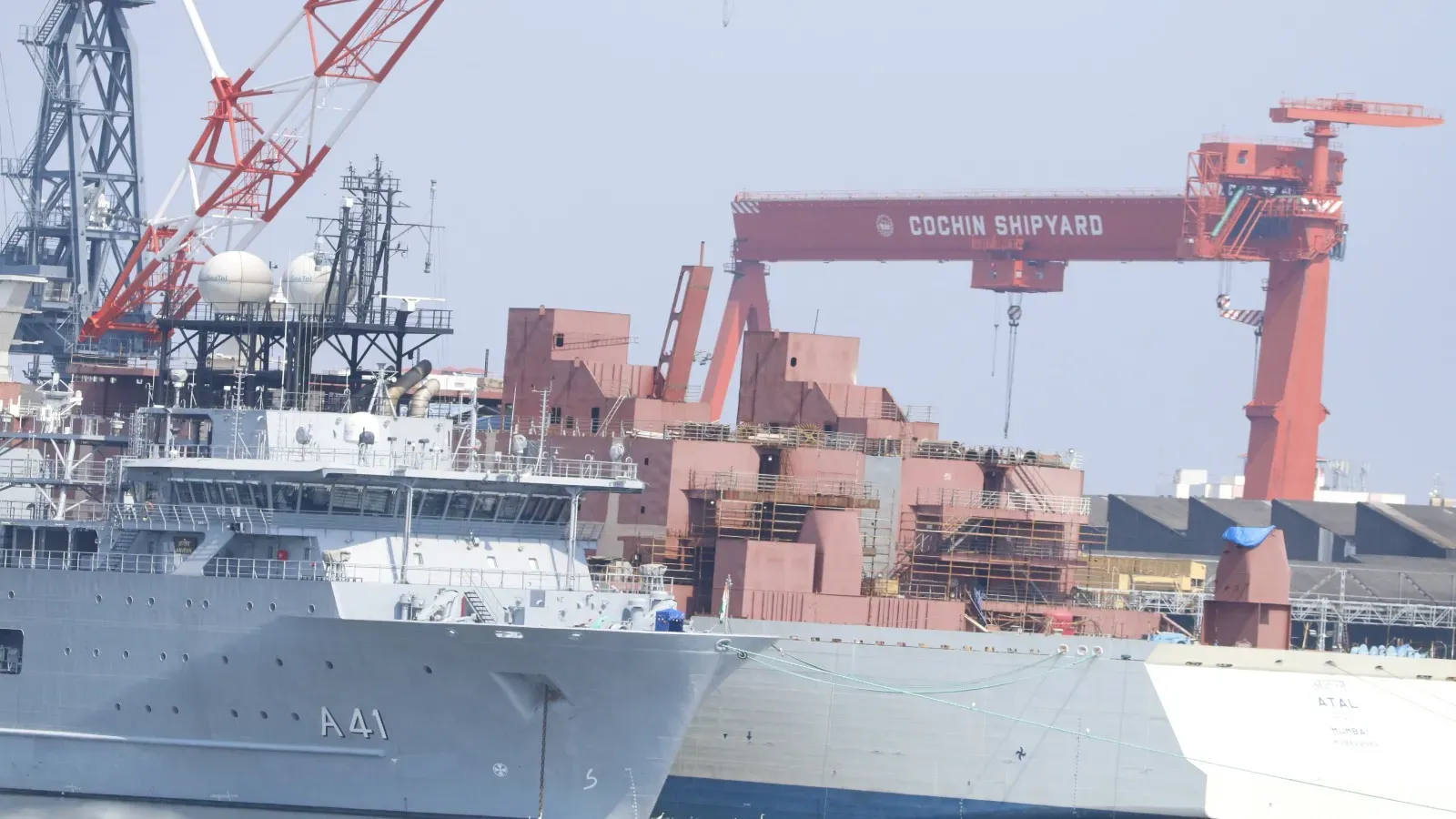
- Shipbuilding output in India grew over 80% in 2026 following a USD 7.8 billion shipbuilding package approved in 2025.
- More than 120 vessels worth over USD 1.27 billion are eligible for government assistance, with exports accounting for over 80% of this value.
Why is India inviting Korean firms to invest in shipbuilding?
Minister Sonowal highlighted that India’s shipbuilding industry needs advanced marine equipment such as engines, propulsion systems, deck machinery, and navigation systems. Currently, much of this equipment is imported. By inviting Korean manufacturers to set up production units in India, the country aims to develop local manufacturing capabilities and reduce dependence on imports. This collaboration will also support technology transfer and modernization of Indian shipyards.
What role does the Korea Marine Equipment Association (KOMEA) play?
KOMEA represents 304 companies involved in marine equipment manufacturing, shipbuilding, design, and repair. Its members include major firms like HD Hyundai, Hanwha Ocean, and Samsung Heavy Industries. KOMEA’s decision to open an office in Mumbai signals a strong interest in entering the Indian market. Earlier, in February 2025, KOMEA offered to collaborate with Indian shipyards on design, technology transfer, joint education programs, and local manufacturing of marine equipment and spare parts.
How has India progressed in maritime reforms?
India enacted five maritime laws in 2025, which came into effect in March 2026, to improve the regulatory environment. The Maritime Single Window system now covers 69 ports and terminals, streamlining administrative processes. Additionally, the Alang-Sosiya ship recycling yard has 115 facilities compliant with the Hong Kong Convention under the International Maritime Organization (IMO) framework, ensuring environmentally sound ship recycling practices.
What is the significance of the shipbuilding package approved in 2025?
The Indian government approved a shipbuilding package worth approximately USD 7.8 billion in September 2025. This package has stimulated growth in the sector, with shipbuilding output rising 40% year-on-year in 2025 and over 80% in 2026. The government supports over 120 vessels valued at more than USD 1.27 billion, with export orders making up more than 80% of this value. This demonstrates India’s ambition to become a global shipbuilding hub.
How does Sonowal view international maritime standards?
Sonowal emphasized that international maritime standards should be ambitious and universal but also flexible enough to consider different national circumstances, levels of development, technology access, and financing. He proposed forming joint working groups between countries that have implemented maritime conventions and those still developing their capabilities. These groups would help train surveyors and inspectors, draft legislation, and create time-bound implementation plans to build permanent national capabilities.
What challenges does the shipping industry face?
Sonowal described IMO conventions as an "operational lighthouse" amid challenges like geopolitical instability, piracy, and disruptions in key maritime routes such as the Red Sea. These issues threaten seafarers, trade, and global supply chains, making cooperation and strong regulatory frameworks essential for the industry’s safety and efficiency.