Sociology degrees in India are facing a decline in student enrollment, raising questions about the discipline's relevance in today's education and job markets. Students increasingly prefer professional and technical courses that promise clearer career paths, challenging sociology to demonstrate its practical value beyond academic theory.
- Enrollment in sociology courses is dropping in several Indian states, including Karnataka and Madhya Pradesh.
- Sociology offers valuable skills like research, data analysis, and understanding social behavior applicable in many sectors.
- The National Education Policy (NEP) 2020 encourages multidisciplinary education, providing opportunities for sociology's integration.
- Political associations and activism linked to sociology may affect its perception among students.
- Reforming teaching methods and expanding sociology beyond traditional departments can help restore its relevance.
Why is sociology enrollment declining in India?
Recent reports from Karnataka and Madhya Pradesh highlight a significant drop in admissions to sociology programs. For example, Karnataka scrapped hundreds of undergraduate course combinations, including sociology, due to poor admissions. Similarly, Mangalore University suspended admissions to several postgraduate programs, sociology among them, for failing to meet minimum enrollment thresholds. These trends reflect a broader student preference for courses perceived as more directly linked to employment opportunities.
What skills does sociology provide that are valuable today?
Sociology equips students with research abilities, interviewing techniques, data interpretation, and an understanding of social institutions and behaviors. These skills are applicable in public policy, health, education, journalism, social research, and program evaluation. Despite not leading to a single defined profession, sociology prepares graduates for diverse roles requiring critical social insight.
How does the National Education Policy 2020 support sociology?
The NEP 2020 promotes holistic and multidisciplinary education, encouraging research and practical engagement across fields. It identifies sociology as a discipline to be strengthened within multidisciplinary institutions. This policy framework offers sociology a chance to integrate with other areas of study, increasing its relevance and appeal to students.
What challenges does sociology face related to politics and activism?
Sociology's focus on inequality, power, and social change sometimes links it to political debates and activism. This association can create ideological conflicts and affect how students perceive the discipline. However, sociology's academic role is to investigate social phenomena through evidence and critical inquiry, independent of political bias.
How can sociology adapt to regain student interest?
Experts suggest sociology must reform its teaching methods by combining classical theory with practical skills like interviews, fieldwork, and data analysis. Connecting academic concepts to real social issues—such as migration, inequality, and digital society—can make learning more relevant. Additionally, sociology should expand beyond traditional departments, contributing to fields like technology, healthcare, management, urban planning, and public policy.
What opportunities exist for sociology in interdisciplinary research?
India's growing interest in Indian Knowledge Systems (IKS) presents new avenues for sociology. Since knowledge is socially produced and transmitted, sociology can examine who creates and accesses knowledge and how traditional knowledge interacts with modern institutions. Interdisciplinary research initiatives supported by organizations like the Indian Council of Social Science Research further enhance sociology's role in addressing national priorities.
What is the future outlook for sociology in India?
While current enrollment trends pose challenges, sociology remains vital for understanding communities, institutions, and social change. To thrive, the discipline must clearly communicate its value to students by demonstrating practical applications, offering research opportunities, and fostering interdisciplinary collaboration. The future of sociology depends on its ability to connect classroom learning with real-world social issues and career pathways.
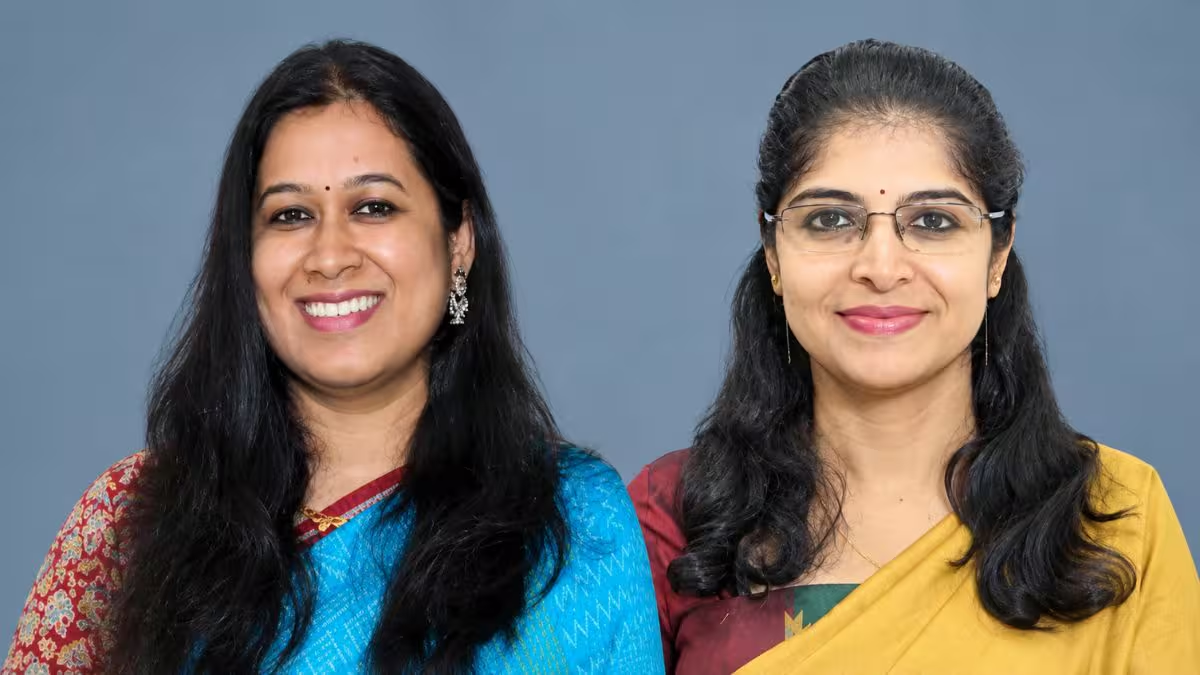
Dr. Sanjukta Bhaumik and Dr. Sudhansubala Sahu, faculty members at CHRIST (Deemed to be University), Bengaluru, emphasize that sociology's relevance has become more urgent as India navigates complex social realities. They advocate for sociology to evolve and engage actively with contemporary educational and societal needs.