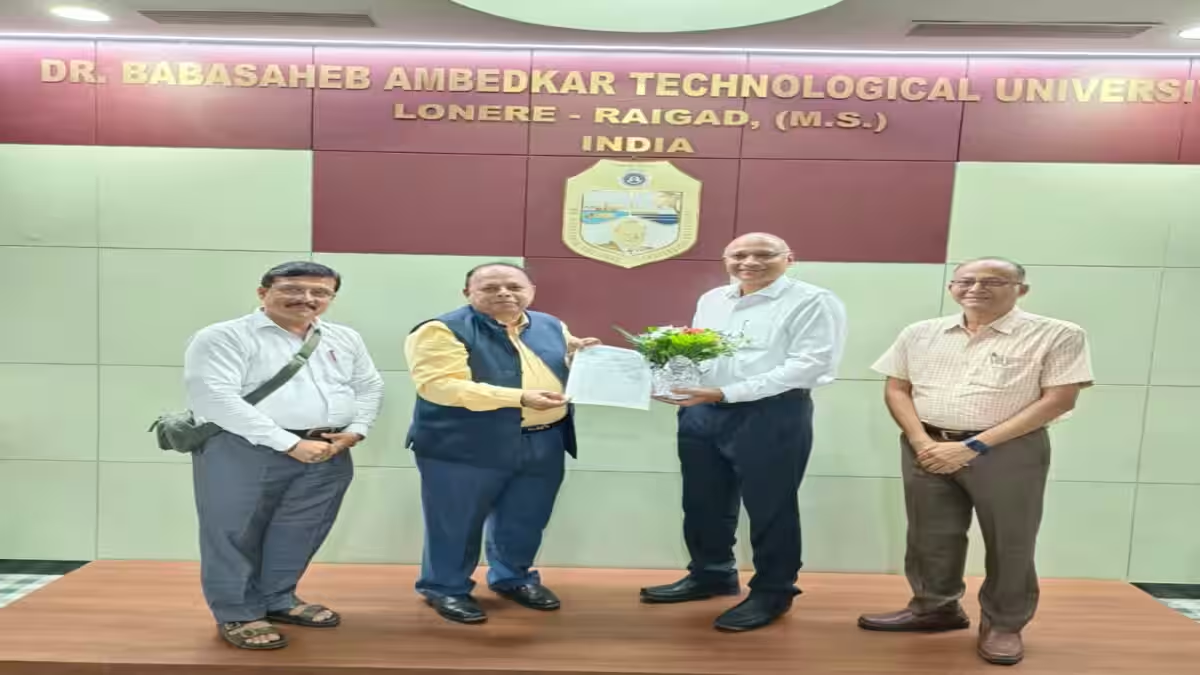
Vinod Mahadeorao Mohitkar will become the first pro-vice chancellor of Dr Babasaheb Ambedkar Technological University (BATU), Lonere, starting October 12, 2026. This new position was created to strengthen the university's administration and address ongoing challenges related to exams, results, and academic management.
- Mohitkar’s appointment follows an amendment to the DBTU Act 2014 introducing the pro-vice chancellor role.
- He has over 25 years of experience in technical education administration in Maharashtra.
- His priorities include timely exams and results, implementing the National Education Policy, and enhancing academic quality.
- The university aims to resolve delays and errors in exam processes and mark sheets.
- Mohitkar holds advanced degrees in engineering and technology and has served on various educational boards.
Why was the pro-vice chancellor position created at BATU?
The pro-vice chancellor role was introduced through an amendment to the DBTU Act 2014 to improve the university's academic administration. BATU had faced complaints about delays in conducting examinations, announcing results, and errors in mark sheets. The new position aims to provide stronger leadership to address these issues and enhance the university's academic standards.
What experience does Vinod Mohitkar bring to BATU?
Vinod Mohitkar has more than 25 years of administrative and academic experience in technical education. He previously served as director of technical education in Maharashtra and held roles such as assistant director, deputy director, secretary, and director of the Maharashtra State Board of Technical Education. He also coordinated the Rs 162.5 crore TEQIP programme and helped implement the National Education Policy 2020 and the National Credit Framework in autonomous engineering and diploma institutions.
What are Mohitkar’s academic qualifications?
Mohitkar holds a civil engineering degree from VNIT Nagpur. He earned a Master of Engineering with first rank from MS University, Baroda, and completed a PhD in Engineering and Technology from Sant Gadge Baba Amravati University.
How will Mohitkar contribute to improving BATU?
Mohitkar plans to focus on strict adherence to the academic calendar, ensuring timely examinations and results, and effectively implementing the National Education Policy. He also aims to enhance quality in affiliated colleges and build strong partnerships with industry and research institutions. His experience and connections with educational bodies and industry are expected to benefit BATU’s academic and administrative functions.
What has the university said about Mohitkar’s appointment?
Rajanish Kamat, the vice-chancellor (in-charge) of BATU, welcomed Mohitkar’s appointment, highlighting his deep understanding of examination and affiliation systems and his strong industry links. Kamat expressed confidence that Mohitkar’s leadership will help the university improve academic quality, deliver timely results, and advance research and innovation.
What steps is Maharashtra taking to address BATU’s exam delays?
In September 2026, Maharashtra’s higher and technical education minister Chandrakant Dada Patil stated that the government is taking measures to ensure timely declaration of exam results at BATU. These efforts aim to prevent further academic loss for students and improve the university’s administrative efficiency.
Frequently Asked Questions
Q: When will Vinod Mohitkar officially begin his role as pro-vice chancellor?
A: He will assume charge on October 12, 2026.
Q: What problems at BATU is Mohitkar expected to address?
A: He is expected to tackle delays in exams and results, errors in mark sheets, and other administrative challenges.
Q: What is Mohitkar’s background in education?
A: He has degrees in civil engineering and engineering technology, along with extensive experience in technical education administration in Maharashtra.
Q: How will Mohitkar improve academic quality at BATU?
A: By enforcing the academic calendar, ensuring timely exams and results, implementing the National Education Policy, and strengthening partnerships with industry and research institutions.