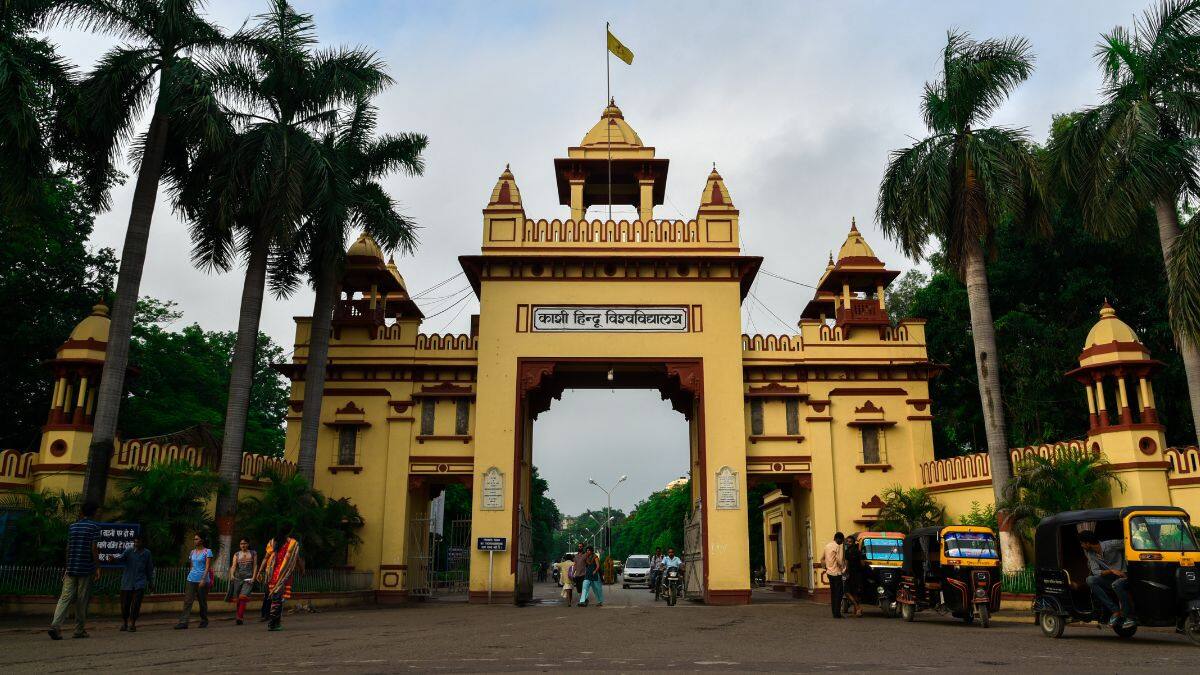
Banaras Hindu University (BHU) students have organized a march on October 28 to demand the restoration of elected student union elections, which have not been held for almost 30 years. The march, called the "March for Democracy," will start from Vishwanath Temple on campus and proceed to the Students’ Union Building. Several student organizations, including the National Students’ Union of India (NSUI), All India Students’ Association (AISA), Samajwadi Chhatra Sabha, and DISHA, have jointly called for this event.
- BHU has not had an elected student union since the mid-1990s.
- Students demand a time-bound schedule for union elections and better communication with the administration.
- Concerns include campus facilities, internet access, library services, and women's safety.
- Similar student movements at Aligarh Muslim University (AMU) and Jamia Millia Islamia (JMI) have inspired BHU students.
- Students request adherence to Lyngdoh Committee recommendations for elections.
Why have BHU students not had a union for 30 years?
The last full student union election at BHU took place in 1996. Following campus violence, the union was dissolved in February 1997. Since then, BHU has not held any elected student union elections. Attempts to introduce student councils in 2011-12 and 2014 were short-lived or not elected. Roshan Pandey, an AISA member and PhD scholar at BHU, explained that the absence of an elected union has left students without a formal platform to raise their concerns.
What are BHU students demanding in their protest?
Students have submitted a memorandum to the university administration requesting the restoration of student union elections with a clear, time-bound schedule. They also seek the formation of a student-administration committee to address immediate issues until elections are held. The memorandum highlights problems such as inadequate internet and Wi-Fi access, poor library quality and timings, and insufficient security arrangements in women’s hostels. Students emphasize the need for better communication with the administration to resolve these grievances.
How have other universities influenced BHU students?
Recent student protests at Aligarh Muslim University (AMU) and Jamia Millia Islamia (JMI) have encouraged BHU students to renew their demand for elected student unions. At AMU, the administration announced union elections for November 5 after a 20-day protest. At JMI, students have been protesting for the restoration of the union dissolved in 2006, with the university agreeing to hold elections after approving the union’s constitution. These developments have motivated BHU students to intensify their efforts.
What steps are BHU students taking to achieve their goals?
The students have organized the "March for Democracy" to raise awareness and show solidarity. They plan to decide further actions based on the response to this march. Vivek Rajput, an MA History student and NSUI member, stated that previous efforts to restore the union had failed, but this time they are determined to succeed. The students also urge the university to follow the Lyngdoh Committee recommendations, which provide guidelines for student union elections in Indian universities.
What is the significance of student unions in universities?
Student unions play a crucial role in representing student interests, facilitating communication between students and university administration, and addressing campus issues. Without an elected union, students often lack a unified voice to advocate for improvements in facilities, safety, and academic concerns. The absence of such a body at BHU has made it difficult for students to resolve grievances effectively.