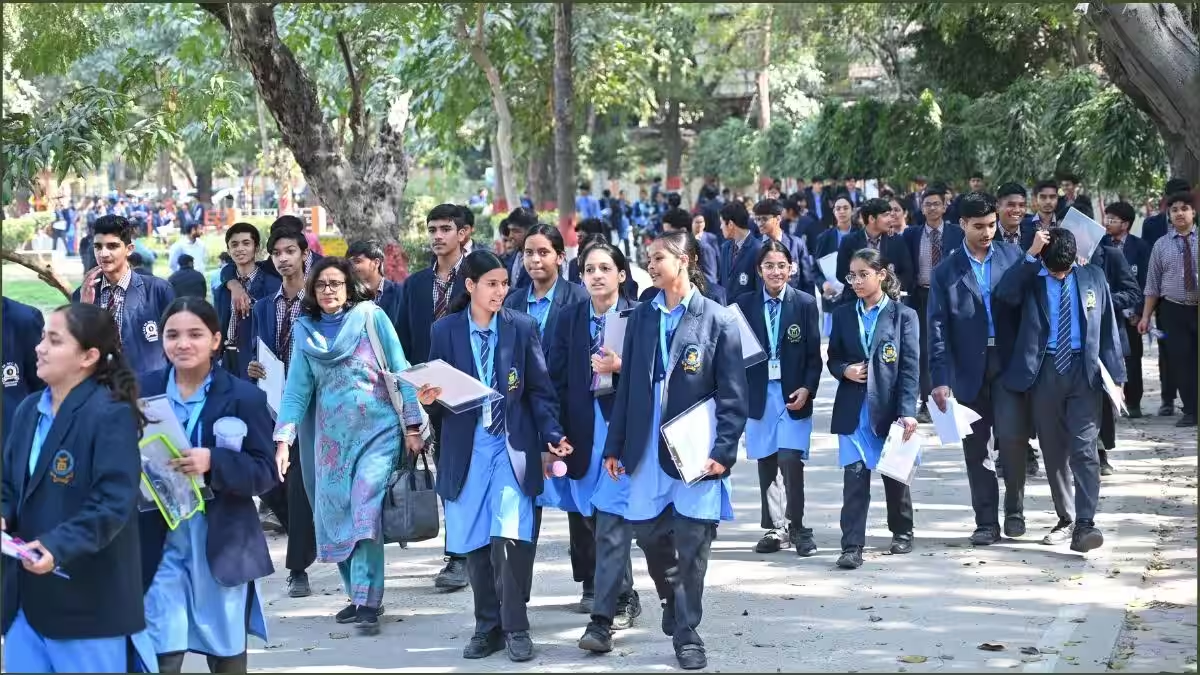
The Bihar government has decided to remove the word "fail" from the marksheets of students who do not meet the minimum passing marks in Class 10 and 12 board exams. Instead, these students will be labeled as "eligible for skill development." This change, announced on August 29 by Education Minister Mithlesh Tiwari, is set to begin in the current academic session and involves amending rules for the Bihar School Examination Board (BSEB).
The government says this move is designed to encourage students who do not pass their board exams to pursue vocational training through the Bihar Board of Open Schooling and Examination (BBOSE). Minister Tiwari emphasized that failing an exam does not mean a student lacks talent, and the new label aims to provide alternative pathways for skill development.
Understanding Bihar's Skill Development Initiative
In Bihar, board examinations for Classes 10 and 12 are critical milestones in a student's academic journey. Traditionally, students who do not achieve the required marks are marked as "fail," which can affect their future educational and career opportunities. The new policy replaces this with a more positive term, "eligible for skill development," signaling a shift toward vocational education as a viable alternative.
The state government has also introduced special one-month preparatory sessions for students taking supplementary exams for Class 10. These sessions aim to improve their chances of passing by providing focused support and additional learning opportunities.
Key Facts About the New Marksheets Policy
- The term "fail" will no longer appear on Class 10 and 12 marksheets for students who do not meet passing criteria.
- Students will be labeled as "eligible for skill development," encouraging them to explore vocational training options.
- The Bihar Board of Open Schooling and Examination (BBOSE) will facilitate these vocational programs.
- Special one-month sessions will be held for Class 10 supplementary exam candidates to help them prepare better.
- The policy aims to recognize diverse talents beyond traditional academic success.
Concerns Raised by Education Advocates
The decision has met criticism from the State Platform for Common School System-Tamil Nadu (SPCSS-TN), which argues that education should not be reduced to job readiness or vocational skills alone. The organization stresses that the primary goal of schooling is to nurture well-rounded individuals, not just prepare them for specific jobs.
SPCSS-TN's General Secretary, P B Prince Gajendra Babu, highlighted that students' exam results are influenced by many factors, including socioeconomic background, access to quality education, and support systems. Labeling students as "eligible for skills" could stigmatize them and imply they are only fit for vocational training rather than higher education.
The group also pointed out that students who do not pass initially have multiple options, such as supplementary exams and further academic or vocational studies. They argue that marksheets should simply record the marks obtained and passing criteria, allowing students to identify areas for improvement without being pigeonholed.
SPCSS-TN has called on educationists, teachers, and student organizations to consider the psychological effects of this change on young learners and has urged the Bihar government to reconsider the policy. They also warned against similar measures being adopted by other states or the central government, advocating for a more academic and equitable approach to student assessment.
Frequently Asked Questions
Q: What does "eligible for skill development" mean on Bihar board marksheets?
A: It means that students who do not pass their Class 10 or 12 board exams will be encouraged to pursue vocational training programs instead of being labeled as "fail."
Q: Why is Bihar replacing the term "fail" on marksheets?
A: The government aims to reduce the stigma of failing exams and provide alternative pathways for students to develop skills and improve their career prospects.
Q: What are the concerns about this new policy?
A: Critics worry it could stigmatize students by implying they are only suited for vocational training, potentially limiting their chances for higher education and affecting their self-esteem.