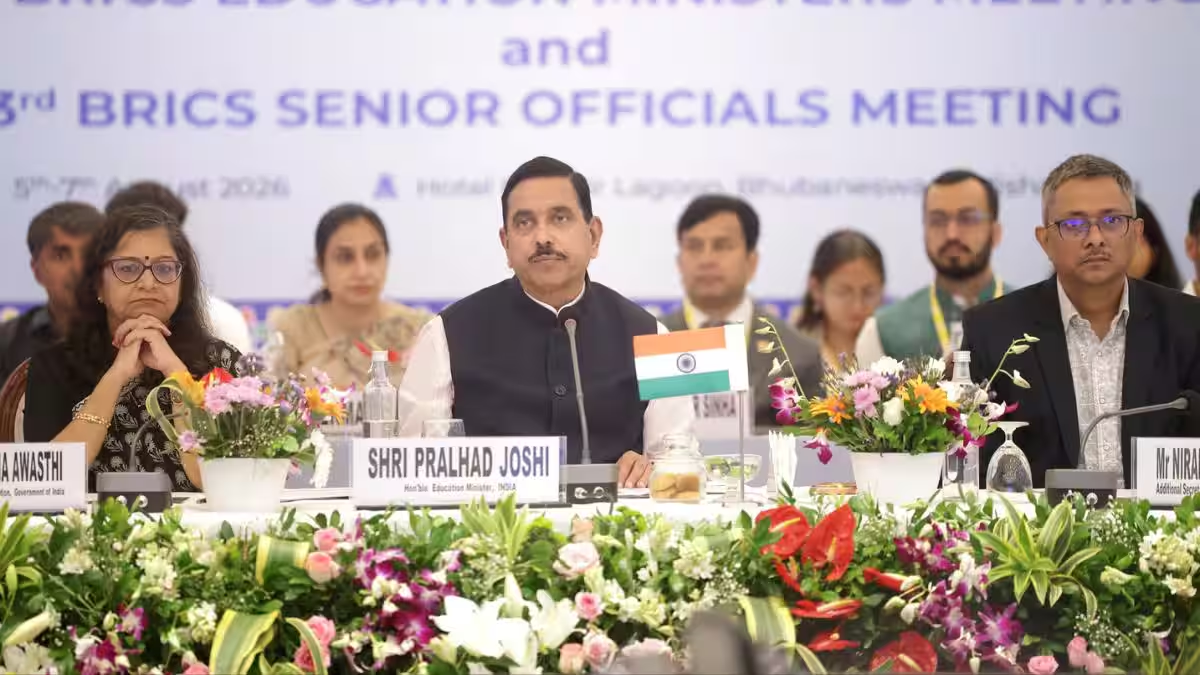
Union Education Minister Pralhad Joshi called on BRICS nations to strengthen cooperation in tackling shared education challenges during the 13th BRICS Education Ministers' Meeting held in Bhubaneswar. Joshi emphasized that issues like resilience, innovation, and sustainability in education cannot be addressed by any country alone. He highlighted that India’s current BRICS Chairship focuses on these four pillars to guide collective efforts in the education sector.
Why Resilience and Innovation Matter in Education
Joshi explained that resilience in education systems is crucial to withstand disruptions caused by pandemics, economic uncertainties, climate change, and rapid technological advancements. He pointed out that education must be adaptable to sudden changes and challenges that affect learners and institutions worldwide.
Innovation is equally important, Joshi said, because education cannot remain static in a fast-evolving world. Systems must continuously evolve to meet the aspirations of new generations and prepare students for future opportunities that may not yet exist. This forward-looking approach ensures that education remains relevant and effective in a changing global landscape.
Key Focus Areas Discussed at the Meeting
- The meeting brought together ministers, senior officials, and delegates from BRICS countries—Brazil, Russia, India, China, and South Africa—as well as representatives from Indonesia, Iran, Ethiopia, and the United Arab Emirates.
- Participants discussed priority topics including early childhood care and education (ECCE), skill development, research and innovation, mutual recognition of academic qualifications, and academic leadership.
- Prior to the ministerial meeting, the Ministry of Education hosted the 3rd BRICS senior officials' meeting on August 5 to prepare for these discussions under India’s BRICS Chairship for 2026.
Why Stronger BRICS Cooperation Is Vital for Education
Joshi stressed that cooperation and sustainability are essential to effectively address the complex challenges facing education systems globally. While more countries working together can better meet these challenges, no single nation can solve them independently. The knowledge created, technologies developed, and institutions strengthened through collaboration must benefit not only the current generation but also future ones.
This approach reflects a shared responsibility among BRICS countries and partner nations to build education systems that are resilient, innovative, and sustainable. Such cooperation can help ensure equitable access to quality education and prepare young people for an uncertain and rapidly changing world.
Frequently Asked Questions
Q: What is the main goal of the BRICS Education Ministers' Meeting?
A: The meeting aims to foster cooperation among BRICS countries to address common education challenges by focusing on resilience, innovation, cooperation, and sustainability.
Q: Which countries participate in the BRICS Education Ministers' Meeting?
A: The core BRICS countries—Brazil, Russia, India, China, and South Africa—participate, along with invited nations such as Indonesia, Iran, Ethiopia, and the United Arab Emirates.
Q: What are some priority areas discussed at the meeting?
A: Key topics include early childhood care and education, skill development, research and innovation, mutual recognition of academic qualifications, and academic leadership.