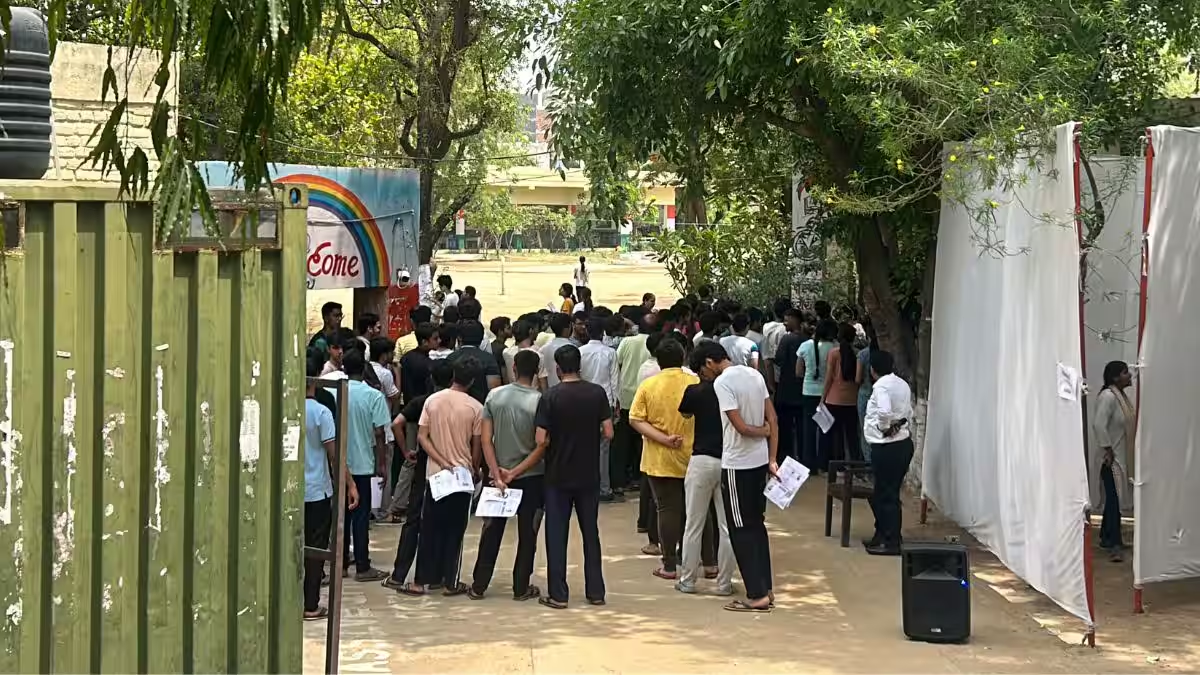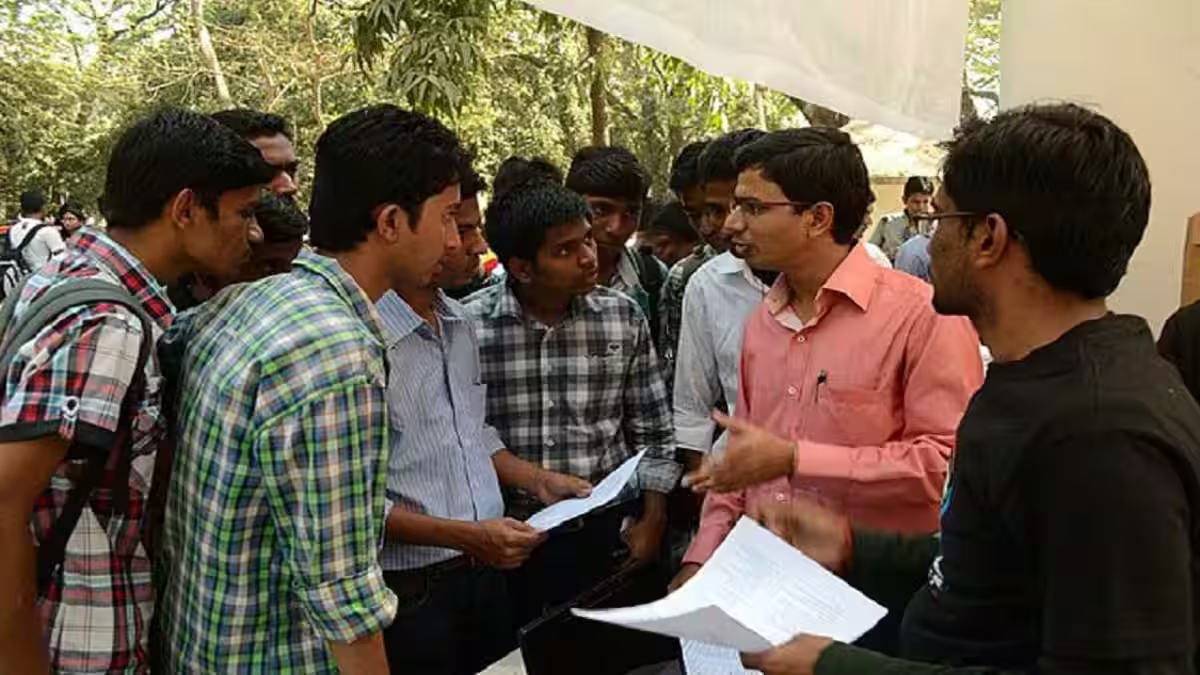
Students who appeared for the Central Board of Secondary Education (CBSE) Class 12 supplementary examinations on July 28 have voiced strong concerns about the difficulty level of the exam. Many claim the questions were harder than those in the main board exams, sparking widespread anxiety about their academic futures and college admission prospects. Approximately 1.63 lakh students took the supplementary exams this year.
Understanding CBSE Supplementary Exams and Their Purpose
The CBSE supplementary exams are designed as a second chance for students who did not pass one or more subjects in the main Class 12 board exams. These exams allow students to clear failed subjects and become eligible for higher education or other opportunities. The supplementary exams are crucial for many students, as passing them can determine whether they meet eligibility criteria for college admissions, which often require a minimum percentage in board exams.
In 2026, CBSE introduced the On-Screen Marking (OSM) system for evaluating answer sheets digitally. This system was intended to bring greater accuracy, consistency, and efficiency to the marking process. However, it has faced criticism from students who allege discrepancies and unexpectedly low scores, leading to demands for transparency, re-evaluation, and access to evaluated answer copies.
Key Concerns Raised by Students After the July 28 Exam
- Many students reported that the supplementary exam questions, particularly in subjects like Accountancy, were unexpectedly difficult compared to the main exams.
- There were allegations that the board did not adhere to the usual chapter-wise weightage while setting the question papers, causing confusion and unfairness.
- Students expressed fears that strict evaluation could negatively impact their chances of passing and securing college admissions.
- Calls for grace marks and lenient marking have gained momentum, with some students urging the board to pass all candidates or apply moderation of 15–20 marks in up to two subjects.
- Social media posts tagged high-ranking officials, including the Prime Minister and Union Education Minister, requesting intervention to support students.
- Education content creators and advocates have also appealed to CBSE to consider the students’ plight and avoid further injustice.
Why This Exam Controversy Matters for Students’ Futures
The controversy surrounding the CBSE Class 12 supplementary exams highlights the immense pressure students face when a single exam can significantly influence their academic and career paths. For many, passing these exams is essential to meet eligibility criteria for college programs that require a minimum of 75 percent marks.
The allegations of tougher questions and inconsistent marking methods have intensified worries about fairness and transparency in the evaluation process. If students receive unexpectedly low scores, it could derail their plans for higher education and limit their opportunities.
Moreover, the ongoing debate over the On-Screen Marking system underscores the challenges of implementing new digital evaluation methods in large-scale exams. While the system aims to improve efficiency, it must also maintain trust among students and educators by ensuring accuracy and fairness.
As CBSE prepares to announce the supplementary exam results, the board faces pressure to address these concerns and consider measures such as grace marks or moderation to support students who have already faced setbacks.
Frequently Asked Questions
Q: What are CBSE Class 12 supplementary exams?
A: These are exams conducted for students who did not pass one or more subjects in the main Class 12 board exams, giving them a chance to clear those subjects and qualify for higher education.
Q: Why are students demanding grace marks for the supplementary exams?
A: Students claim the supplementary exam questions were tougher than expected and that strict evaluation could harm their chances of passing and securing college admissions, so they are requesting grace marks or lenient marking.
Q: What is the On-Screen Marking system used by CBSE?
A: It is a digital evaluation process introduced in 2026 to improve accuracy and efficiency in marking answer sheets, but it has faced criticism from students over alleged discrepancies and low scores.