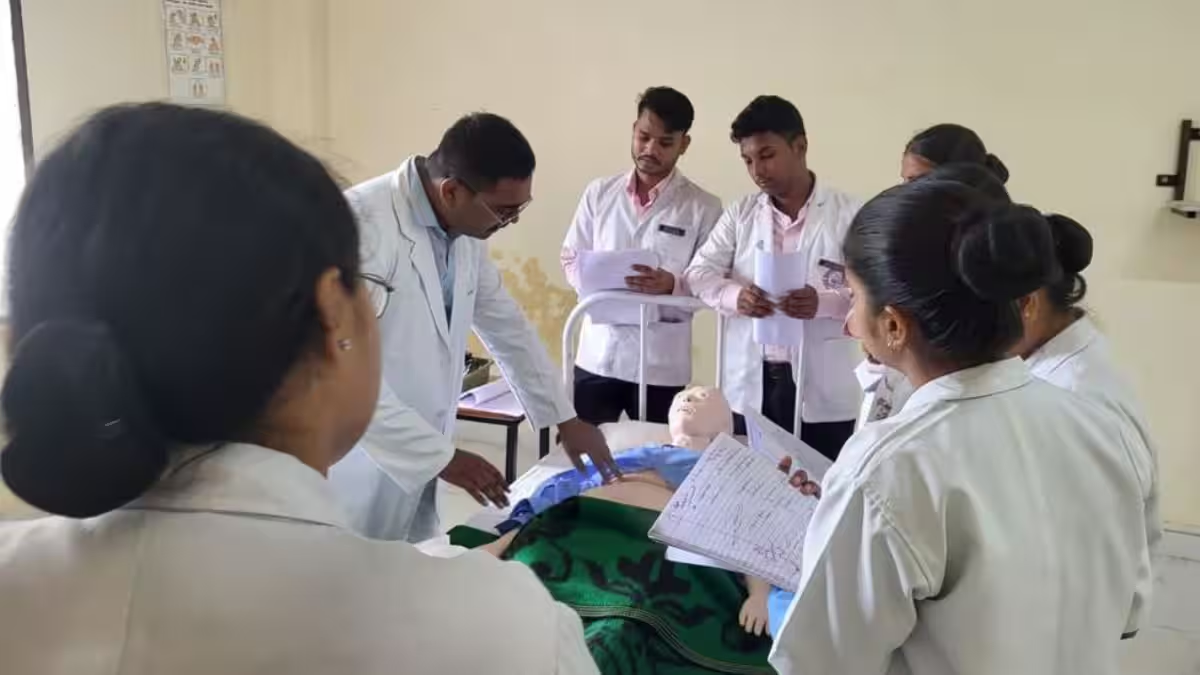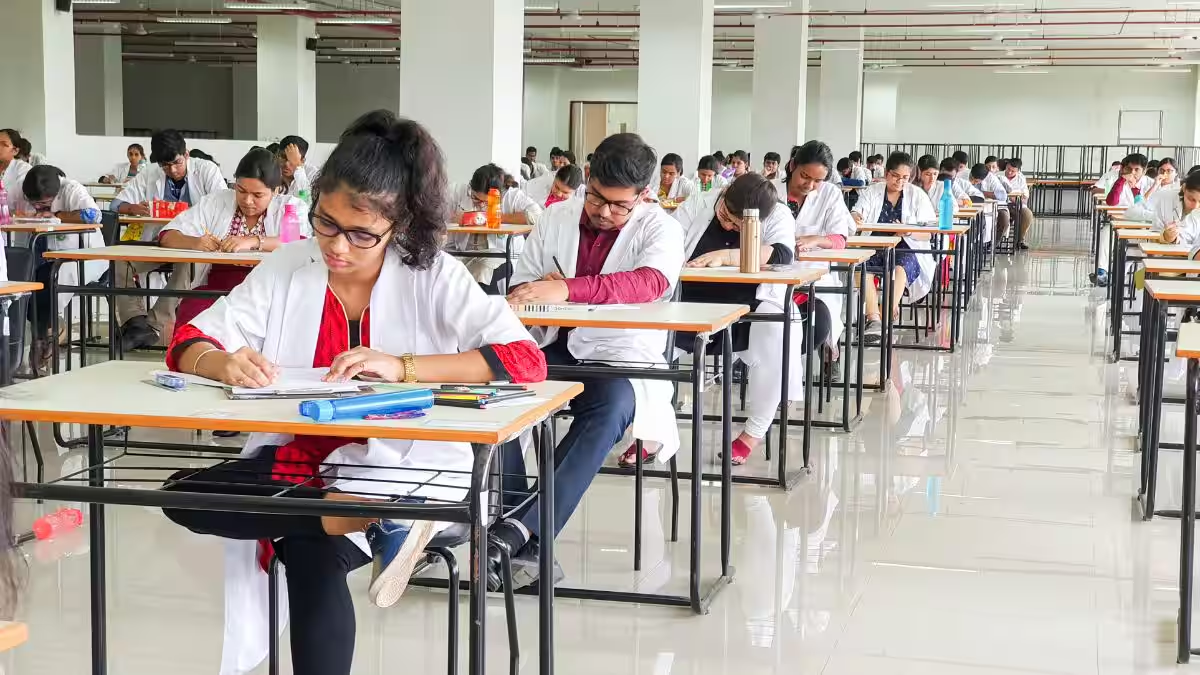
The Indian government has announced plans to increase the number of postgraduate (PG) medical seats by 5,000 between 2025 and 2029. Currently, the country has 86,360 PG medical seats, with Karnataka holding the largest share. This expansion is part of a broader initiative to strengthen medical education infrastructure and improve healthcare services across India.
Current Landscape of Postgraduate Medical Education in India
Postgraduate medical education in India is regulated by the National Medical Commission (NMC) and the National Board of Examinations in Medical Sciences (NBEMS). Together, they oversee the quality and distribution of PG medical seats across various states and institutions. At present, 86,360 PG medical seats are available nationwide, with Karnataka having the highest number. These seats include various courses such as Diplomate of National Board (DNB), Doctorate of National Board (DrNB), Fellow of National Board (FNB), and diploma programs.
Medical education fees vary significantly across states, as fee regulation for private medical colleges and deemed universities falls under the jurisdiction of respective state governments and Union Territories. However, fees for NBEMS courses are centrally regulated and uniform, set at Rs 1.25 lakh annually.
Details of the Expansion and Regulatory Measures
- The government has approved the third phase of a centrally sponsored scheme aimed at upgrading state and central government medical colleges, standalone PG institutes, and government hospitals.
- Under this scheme, 5,000 additional PG medical seats will be created during the period from 2025-26 to 2028-29.
- The cost ceiling for creating each new seat has been raised to Rs 1.50 crore, reflecting increased investment in infrastructure and faculty.
- There is currently no plan to convert all diploma seats into full-fledged DNB degree seats, as confirmed by NBEMS.
- The NMC has introduced updated regulations for postgraduate medical education, including the Post Graduate Medical Education Regulations (PGMER) 2023 and Post Graduate Minimum Standards Requirement 2024, to ensure quality and standardization.
- Proposals for new PG courses or additional seats are under review, with approvals contingent on meeting strict criteria related to faculty, infrastructure, and clinical material.
- NBEMS is working to ease accreditation criteria without compromising teaching quality, promote new PG courses, and encourage district hospitals to seek accreditation to expand training opportunities.
Why Expanding PG Medical Seats Matters for Healthcare in India
Increasing the number of postgraduate medical seats addresses the growing demand for specialized doctors in India’s healthcare system. With a rising population and expanding healthcare needs, more trained specialists are essential to improve patient care and reduce doctor shortages, especially in underserved areas.
The government’s investment in upgrading medical colleges and hospitals aims to enhance the quality of medical education and training facilities. By raising the cost ceiling per seat, authorities are ensuring that new seats come with adequate infrastructure and qualified faculty, which is crucial for maintaining high educational standards.
Uniform fee regulation for NBEMS courses also helps standardize access to postgraduate medical education across the country, while allowing states to manage fees for private institutions according to local conditions. The decision not to convert all diploma seats into degree seats reflects a balanced approach to maintaining diverse educational pathways.
Overall, these measures demonstrate a commitment to expanding and improving medical education capacity, which is vital for strengthening India’s healthcare workforce and meeting future medical challenges.
Frequently Asked Questions
Q: How many postgraduate medical seats are currently available in India?
A: India currently has 86,360 postgraduate medical seats across various states and institutions.
Q: When will the additional 5,000 PG medical seats be introduced?
A: The 5,000 new postgraduate medical seats will be created between the academic years 2025-26 and 2028-29.
Q: Are fees for postgraduate medical courses regulated uniformly across India?
A: Fees for NBEMS courses like DNB and diploma programs are centrally regulated and uniform at Rs 1.25 lakh annually, but fees for private medical colleges vary by state as they are regulated by respective state governments.