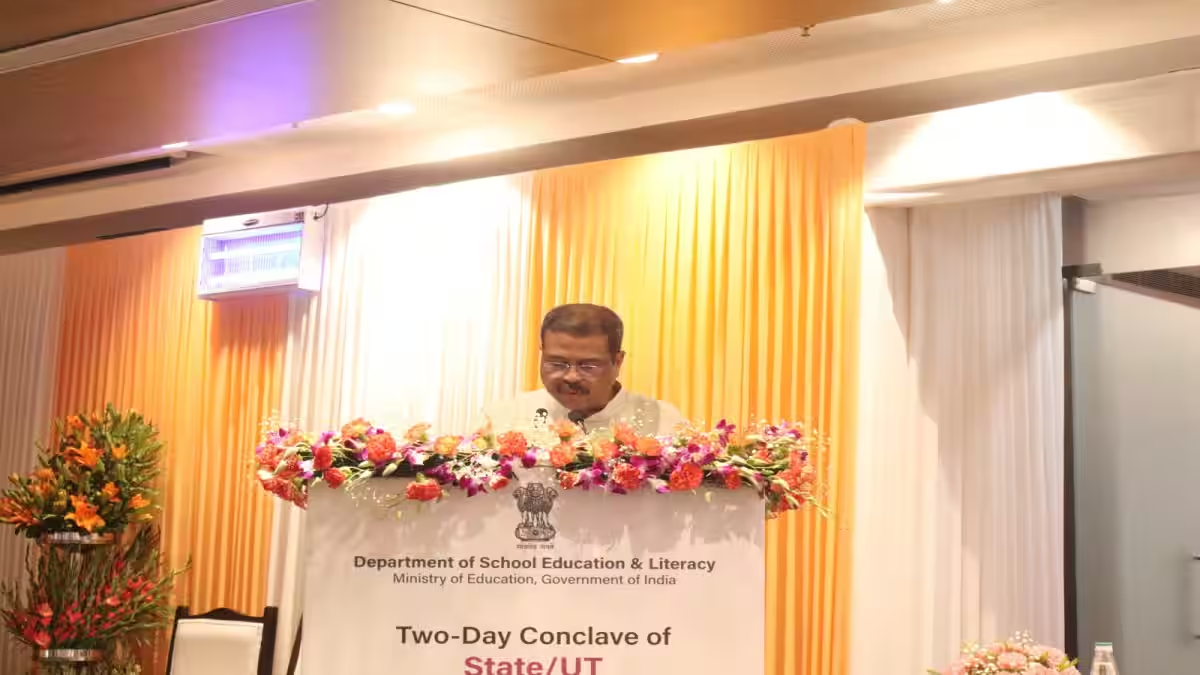
Union Education Minister Dharmendra Pradhan highlighted the importance of collaboration between the Centre and states to strengthen school education in India. Speaking on Wednesday at a two-day conclave in New Delhi, he called for united efforts to develop an education system that prepares students for the future, in line with the vision of Viksit Bharat 2047.
The conclave brought together education ministers from states and Union Territories (UTs) to review the progress of Centrally Sponsored Schemes under the Department of School Education and Literacy (DoSEL). The discussions focused on improving implementation and sharing best practices to enhance the quality of education nationwide.
Building a Future-Ready Education System
Pradhan emphasized that the partnership between the Centre and states is crucial for creating an inclusive and high-quality school education framework. He pointed out that the conclave serves as a platform to strengthen cooperation and align efforts with the National Education Policy (NEP) 2020. The goal is to ensure that the education system equips students with the skills and knowledge needed for the future.
The minister also linked these efforts to the upcoming PRAGATI review, chaired by Prime Minister Narendra Modi, which monitors progress across various government initiatives. He stressed that the collective commitment of all stakeholders will be key to achieving the vision of a developed India by 2047.
Progress and Priorities in School Education
Several flagship schemes were highlighted during the conclave, showcasing the government’s focus areas:
- Samagra Shiksha: A comprehensive program aimed at improving school education quality and infrastructure.
- PM SHRI: An initiative to develop model schools with modern facilities and innovative teaching methods.
- NIPUN Bharat: Focused on foundational literacy and numeracy for young learners.
- PM POSHAN: A scheme ensuring nutritional support through mid-day meals.
- ULLAS: A program promoting joyful and engaging learning experiences.
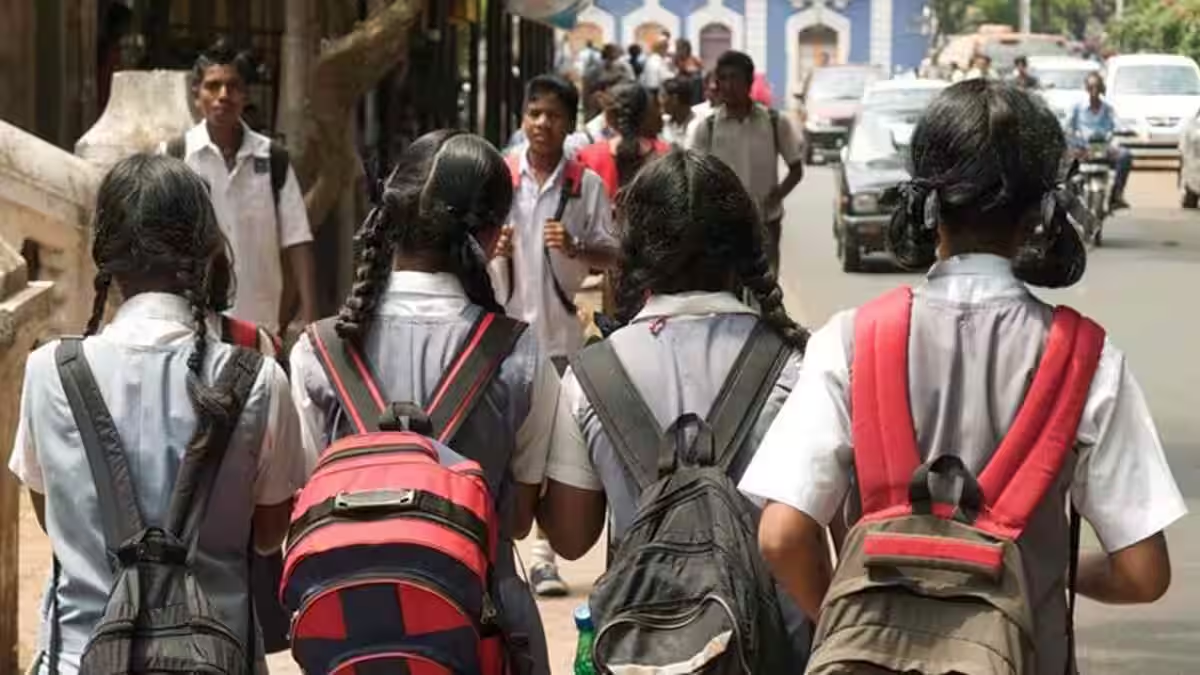
Pradhan urged states and UTs to continue working together to enhance foundational learning, empower teachers, and integrate technology and artificial intelligence in education. He also highlighted the importance of promoting children’s mother tongues and multilingualism to improve learning outcomes.
Why This Collaboration Matters for India’s Education Future
The partnership between the Centre and states is vital for addressing the diverse educational needs across India’s vast and varied regions. By sharing best practices and coordinating efforts, the government aims to reduce disparities and raise the overall standard of school education.
Empowering teachers and leveraging technology are seen as critical steps toward modernizing classrooms and making learning more effective. The focus on foundational skills ensures that students build a strong base for further education and lifelong learning.
Ultimately, the success of these initiatives will be measured by improved learning outcomes and the opportunities created for every child, aligning with the broader goal of Viksit Bharat 2047.
Frequently Asked Questions
Q: What is the vision of Viksit Bharat 2047 in education?
A: Viksit Bharat 2047 envisions a developed India with a future-ready, inclusive, and high-quality education system that equips students with essential skills and knowledge.
Q: What are some key schemes discussed at the conclave?
A: The conclave focused on schemes like Samagra Shiksha, PM SHRI, NIPUN Bharat, PM POSHAN, and ULLAS, which aim to improve infrastructure, foundational skills, nutrition, and learning experiences.
Q: How will technology and AI be used in school education?
A: Technology and artificial intelligence will be leveraged to empower teachers, personalize learning, and promote innovation, helping to create more effective and engaging educational environments.