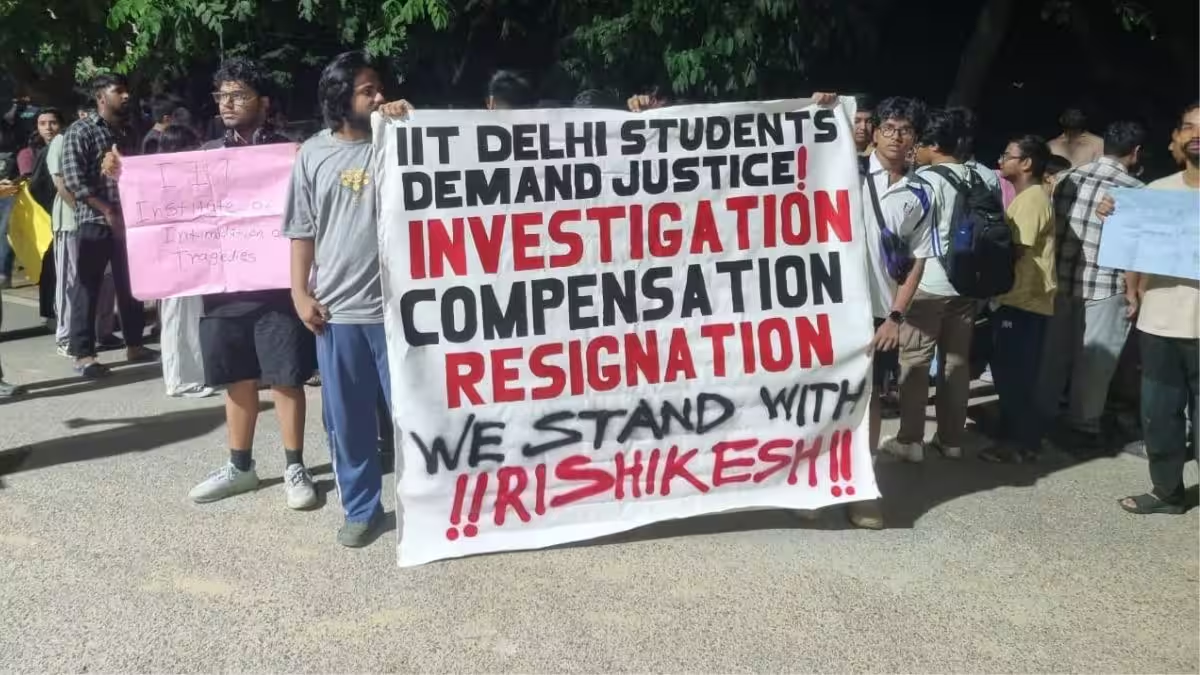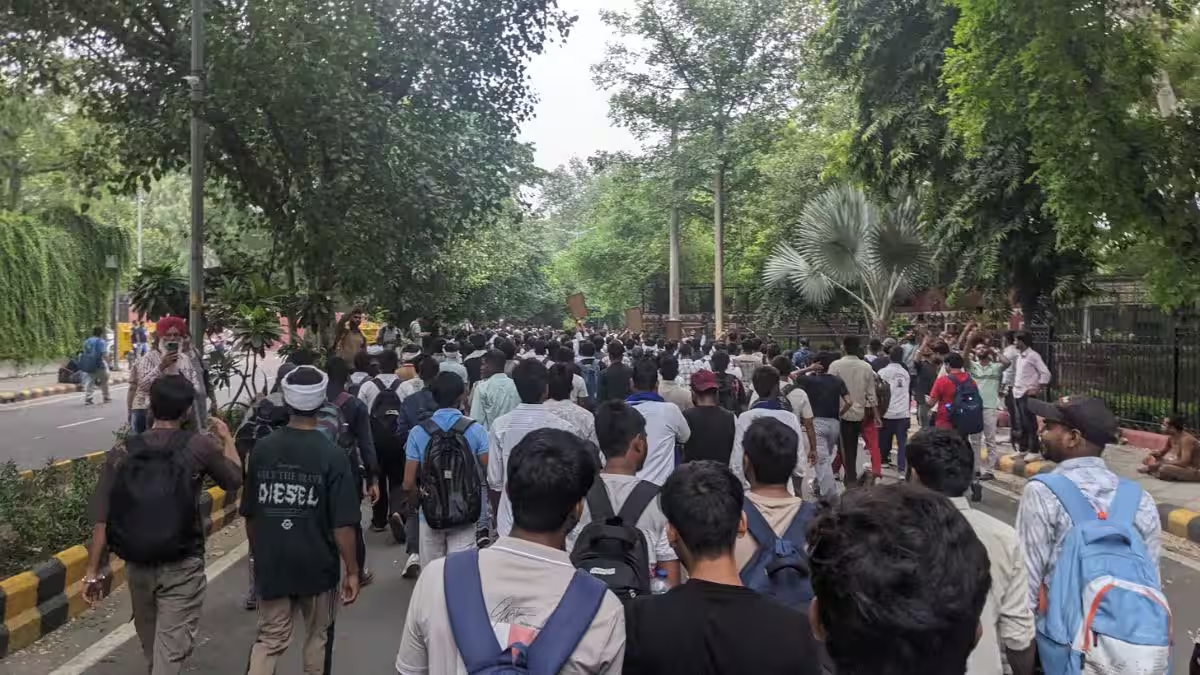
The Delhi government has issued a notification stating that no further legal action will be taken on First Information Reports (FIRs) filed in connection with the Cockroach Janta Party's (CJP) 36-day protest. However, the CJP insists that these FIRs should be formally withdrawn rather than merely closed, warning that failure to fully honor the July 25 Jantar Mantar agreement could lead to renewed protests.
CJP spokesperson Saurav Das expressed dissatisfaction with the government's wording, emphasizing that the FIRs should be withdrawn, not just left inactive. He also challenged the government's claim that the Supreme Court mandates the continuation of these FIRs, stating that the court has not prohibited their withdrawal.
Understanding the Protest and FIRs
The Cockroach Janta Party led a prolonged agitation in Delhi, culminating in a march titled 'Chalo Sansad' on July 20, which saw clashes and subsequent FIRs filed by Delhi Police. The protest lasted 36 days, focusing on various demands and grievances. The Delhi government's recent order aims to ease tensions by halting further legal proceedings against most participants.
Despite this, the government clarified that individuals with criminal backgrounds identified during the protest would still face legal action. Over 2,800 such participants were reportedly identified. The police had registered 13 FIRs related to violence during the protest march.
Key Points from the Delhi Government's Notification
- Delhi Police will not pursue further legal action against most individuals involved in the CJP protest.
- Those with prior criminal records identified among the protesters will still be subject to legal proceedings.
- Any arrests or detentions already made will be reviewed promptly, with efforts to release those detained where appropriate.
- The government’s order stops short of formally withdrawing the FIRs, instead stating they may be treated as closed.
Why the Formal Withdrawal of FIRs Matters to Protesters
Saurav Das highlighted that the government's notification does not fully reflect the assurances made during the July 25 Jantar Mantar agreement, which promised a more definitive resolution. The CJP argues that merely closing FIRs without withdrawing them leaves a legal cloud over protesters, potentially deterring future activism.
Das also criticized the use of criminal law against protesters, especially regarding alleged derogatory remarks, suggesting civil defamation processes would be more appropriate. He condemned the use of pellet guns and other forceful measures during the protests, calling them unconstitutional and unacceptable.
The CJP warns that if the government fails to honor its commitments in full, the youth may be compelled to return to the streets in protest. The group also urged the police to avoid misuse of power for political purposes and to maintain calm.
Frequently Asked Questions
Q: What is the Cockroach Janta Party protesting about?
A: The CJP led a 36-day agitation in Delhi focusing on various social and political issues, culminating in a protest march that resulted in clashes and FIRs.
Q: What does the Delhi government's recent order say about the FIRs?
A: The order states that no further legal action will be taken on FIRs related to the protest, but it does not formally withdraw them. Individuals with criminal records will still face action.
Q: Why does the CJP want the FIRs withdrawn rather than just closed?
A: The CJP believes that only formal withdrawal of FIRs fully honors the promises made and prevents legal uncertainty for protesters, encouraging peaceful activism in the future.