On August 15, the Cockroach Janta Party (CJP) will begin a nationwide campaign aimed at improving government schools in villages across India. The party's founder, Abhijeet Dipke, called on parents to conduct social audits of school facilities and urged village sarpanches to lead efforts in upgrading these institutions. The campaign highlights long-standing neglect of rural educational infrastructure and seeks to ensure better learning environments for children in villages.
Why Rural Schools Need Attention
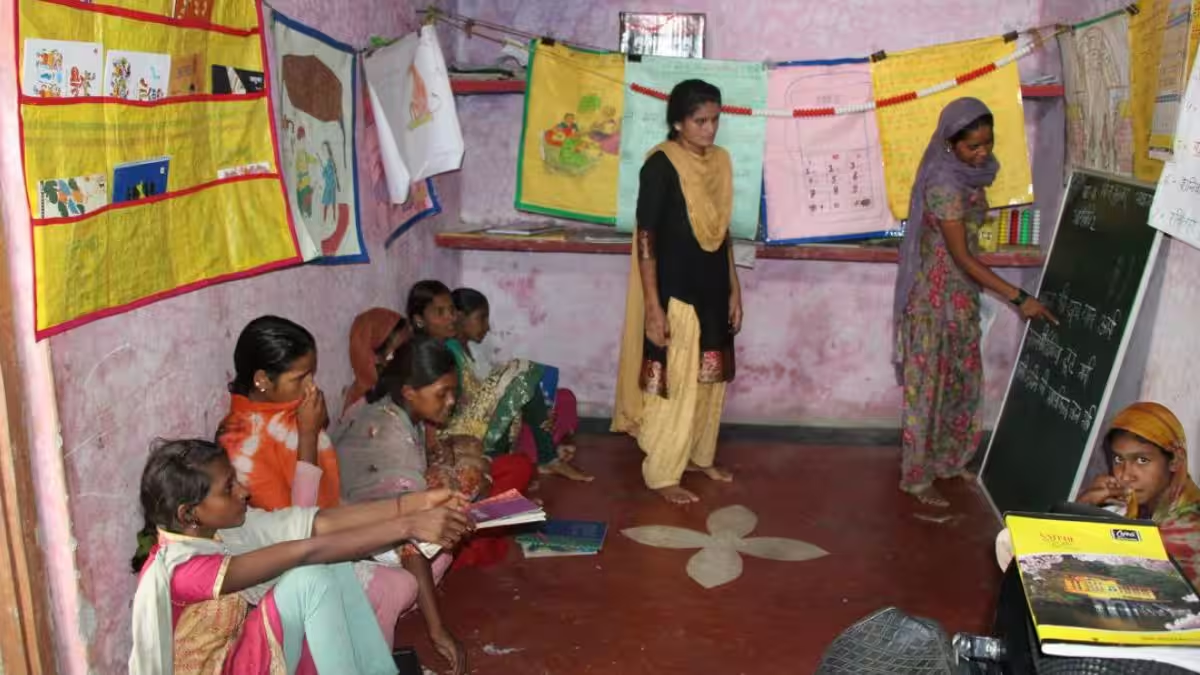
India's rural government schools have faced persistent challenges for decades. Many schools lack basic amenities such as clean drinking water, functional toilets, and electricity. Children often travel long distances to attend these schools, and girls, in particular, face difficulties due to inadequate sanitation facilities. Dipke emphasized that despite India’s progress in building new government buildings and infrastructure, rural schools have not received comparable attention. He questioned why the children of farmers and laborers have been overlooked when it comes to educational development.
Key Elements of the Campaign
- The campaign officially launches on August 15, India's 80th Independence Day.
- Dipke will personally start the initiative in his home village, Hingoli, Maharashtra, by engaging the local sarpanch.
- The CJP has introduced a "Sarpanch Challenge," encouraging village heads nationwide to improve their schools and share before-and-after photos on social media.
- Parents are urged to perform social audits by visiting schools to check for electricity, clean water, washroom facilities, and mid-day meal availability.
- The party will provide a printable audit form for parents to document school conditions and collect video evidence if facilities are lacking.
- Completed audit forms and videos can be submitted to the CJP for review and public awareness.
What This Campaign Could Mean for Rural Education
The CJP’s campaign aims to mobilize local communities to take ownership of their schools’ conditions. By involving parents and village leaders directly, the initiative hopes to create accountability and prompt tangible improvements. Public recognition of sarpanches who upgrade schools may inspire others to follow suit, potentially sparking a wider movement to enhance rural education. The focus on basic facilities addresses immediate barriers to attendance and learning, especially for girls, who are disproportionately affected by poor sanitation.
Moreover, the campaign underscores the fundamental right of children in villages to receive quality education comparable to that in urban areas. By spotlighting these issues on social media and encouraging citizen participation, the CJP seeks to build pressure on local governments and communities to prioritize school infrastructure.
The party’s ongoing youth activism, including recent protests against examination irregularities, reflects its commitment to educational reform and youth engagement. This new campaign aligns with those efforts by targeting the foundational level of education in rural India.
Frequently Asked Questions
Q: What is the main goal of the CJP’s campaign?
A: The campaign aims to improve basic facilities in government schools in villages, such as water, toilets, electricity, and mid-day meals, by involving parents and village leaders in monitoring and upgrading these schools.
Q: How can parents participate in the campaign?
A: Parents are encouraged to visit their children’s schools to check for essential facilities, document any shortcomings through videos, and fill out an audit form provided by the CJP to report their findings.
Q: What is the "Sarpanch Challenge"?
A: It is an initiative inviting village heads to take responsibility for improving schools in their areas. The CJP will publicly recognize sarpanches who make significant improvements by sharing before-and-after photos on social media.