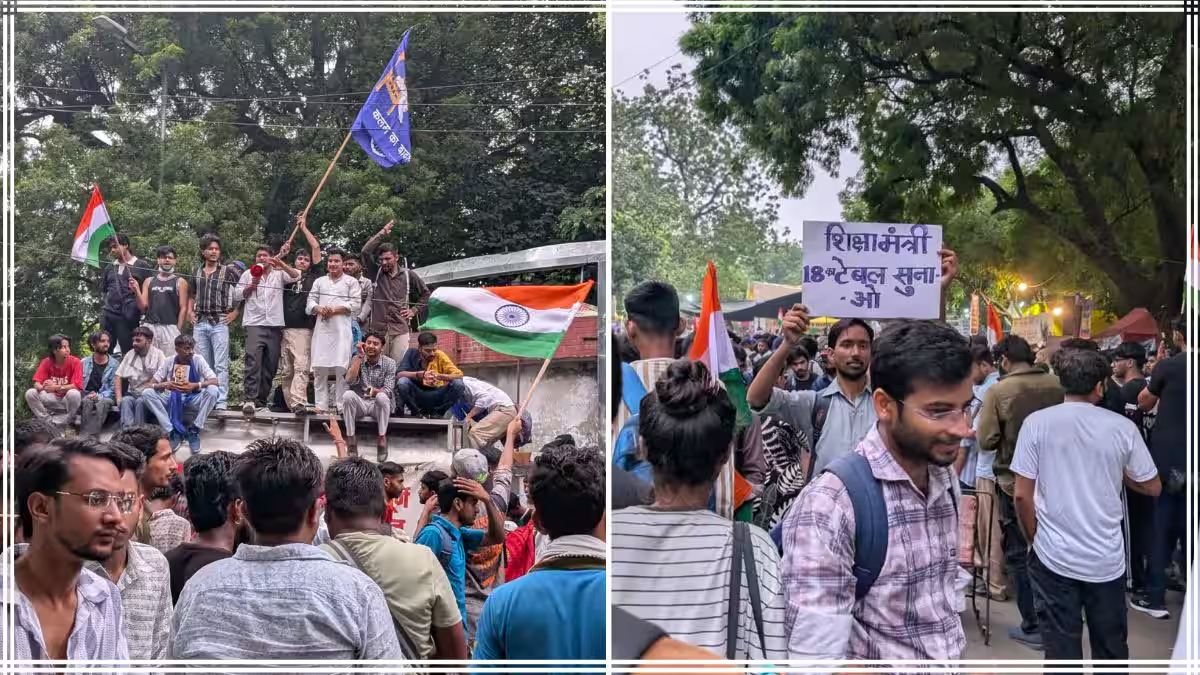
Thousands of protesters have assembled at Jantar Mantar in Delhi ahead of the Cockroach Janta Party's (CJP) planned march to Parliament, scheduled for 9 am on the opening day of the Monsoon Session. The protest focuses on alleged irregularities in competitive exams, especially the National Eligibility cum Entrance Test (NEET UG) 2026. Demonstrators are calling for the resignation of Union Education Minister Dharmendra Pradhan, reforms in the examination system, and justice for students affected by these issues.
Why the Protest Has Gained Momentum
The CJP's march comes amid growing discontent over the transparency and fairness of India's competitive examination system. NEET UG is a highly competitive medical entrance exam, and allegations of irregularities have sparked widespread outrage. The protest is part of a broader movement demanding accountability from the National Testing Agency (NTA) and the government. This is not the first demonstration; the turnout at Jantar Mantar today is significantly larger than the gathering held just a few days ago.
Sonam Wangchuk, a prominent activist and education reform advocate, has been on a hunger strike for over 22 days to highlight these issues. Recently, he was moved to Safdarjung Hospital for medical care. His wife, Gitanjali Angmo, announced that he is willing to end his hunger strike if political leaders meet him and commit to addressing education accountability during the Parliament session.
Key Facts About the Protest and Security Measures
- The Delhi Police have not granted permission for the march to Parliament and have imposed prohibitory orders in the New Delhi district.
- Security is heightened around Parliament, Central Vista, Jantar Mantar, and other sensitive locations.
- One side of the protest area at Jantar Mantar has been sealed by authorities.
- Janpath Metro Station remains open, allowing protesters to reach the venue from that side.
- Protesters are allowed to carry only the national flag, copies of the Constitution, or photographs of national icons to ensure the demonstration remains peaceful.
- Several political leaders and public figures, including Mahua Moitra, Brinda Karat, Manish Sisodia, and Shabana Azmi, have expressed support for the protest.
- The CJP has urged participants to maintain discipline and non-violence during the march.
What the Protest Means for Education Reform
The CJP's sustained agitation highlights deep concerns about the integrity of India's examination system. The demand for the resignation of Education Minister Dharmendra Pradhan underscores the protesters' belief that leadership must be held accountable for systemic failures. Calls for reforming the National Testing Agency aim to introduce greater transparency and fairness in entrance exams, which are critical gateways to higher education and professional careers.
Sonam Wangchuk's hunger strike has drawn national attention to these issues, putting pressure on political leaders to respond. The protest also reflects wider frustrations among students and families who feel disadvantaged by alleged irregularities and opaque processes. The outcome of this movement could influence future policies on examination governance and student rights.
Frequently Asked Questions
Q: What is the main reason for the CJP's protest?
A: The protest focuses on alleged irregularities in competitive exams, especially NEET UG 2026, and demands reforms in the examination system and the resignation of the Education Minister.
Q: Has the Delhi Police allowed the march to Parliament?
A: No, the Delhi Police have not granted permission for the march and have imposed prohibitory orders in the New Delhi district to maintain security.
Q: What is the condition of Sonam Wangchuk, the activist on hunger strike?
A: Sonam Wangchuk is currently under medical care at Safdarjung Hospital. His condition is stable but requires constant monitoring due to the prolonged hunger strike.