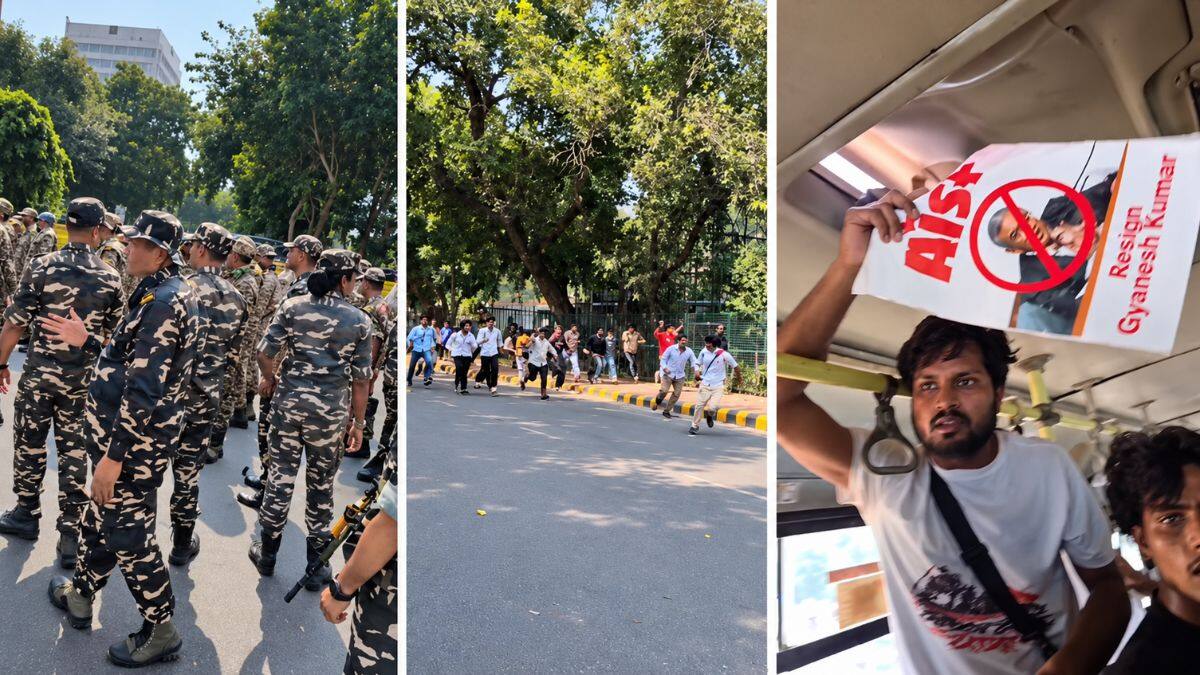
Delhi Police detained more than 200 students and activists who tried to reach Jantar Mantar for the Cockroach Janta Party (CJP) protest. The protest demanded the resignation of Chief Election Commissioner Gyanesh Kumar over alleged irregularities in electoral rolls. Security was heightened across central Delhi, causing heavy traffic and disruptions.
- Over 200 protesters detained across New Delhi.
- More than 600 people with criminal records detained preventively.
- Protest leaders arrested at Delhi airport.
- Schools and colleges shifted to online classes or postponed exams.
- Delhi Metro stations closed to control movement.
Why were students and activists detained during the CJP protest?
Delhi Police detained students and activists attempting to reach Jantar Mantar for the CJP protest. The protest aimed to demand the resignation of Chief Election Commissioner Gyanesh Kumar due to alleged electoral irregularities. Police used barricades, surveillance drones, and heavy deployment to prevent protesters from gathering.
How did Delhi Police manage the protest and security?
Police divided New Delhi into 20 sectors and deployed personnel at key intersections and roads. They detained protesters trying to regroup at different locations and used buses to transport detainees to various stadiums and grounds. Drones monitored the movement of people. Over 600 individuals with criminal records were detained as a preventive measure.
What happened to the CJP leaders during the protest?
CJP leaders Abhijeet Dipke, Saurav Das, and Ashutosh Ranka were detained at Delhi airport after arriving from Mumbai. The party claimed this was a pre-planned move to stop leaders from joining the protest. Abhijeet was taken to Gurugram, and Ashutosh to Dwarka Sector 23.
How did the protest affect schools, colleges, and public transport?
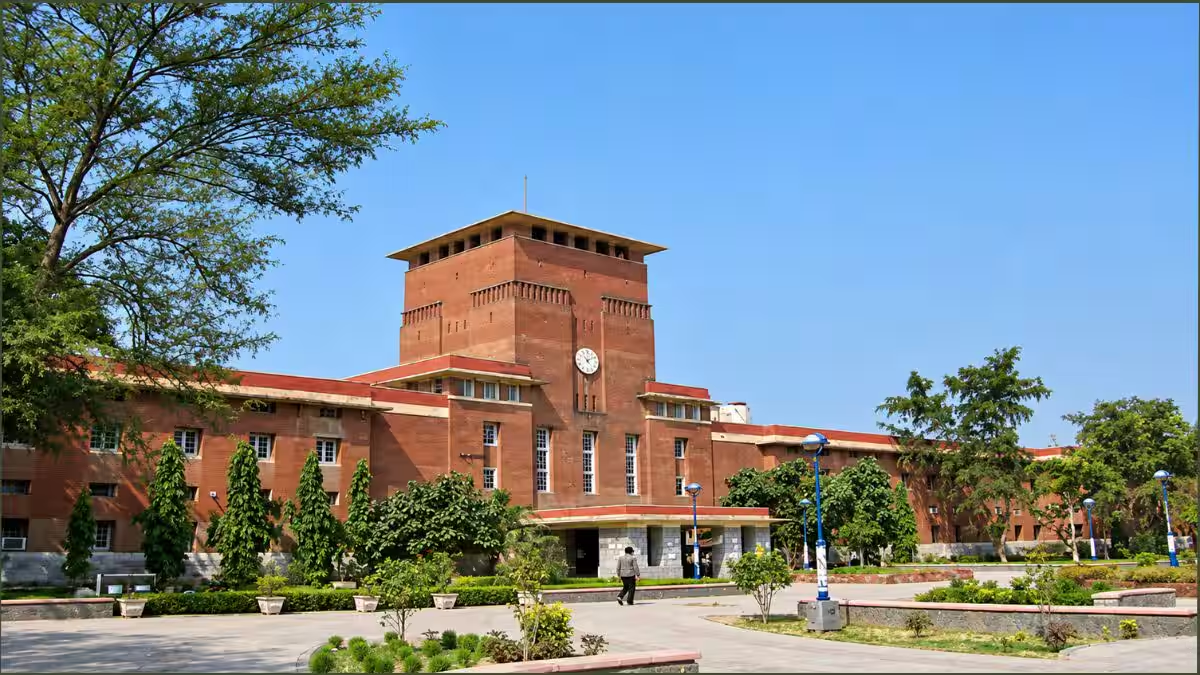
Several Delhi University colleges, including Shaheed Bhagat Singh College and Satyawati College, shifted to online classes. Some schools like Sardar Patel Vidyalaya moved Classes 6 to 12 online and postponed events. The Delhi Metro closed entry and exit gates at 45 stations from 9 pm Friday to 6 pm Saturday to maintain security.
What was the political response to the protest and security measures?
The Aam Aadmi Party (AAP) accused Delhi Police of creating a security cordon around party leader Arvind Kejriwal's residence. Kejriwal had announced his participation in the protest. AAP leaders said the heavy security created fear among peaceful protesters and emphasized the youth's right to express concerns non-violently.
Were there any legal actions related to the protest restrictions?
A plea was filed in the Supreme Court seeking contempt proceedings against authorities for allegedly violating court directions on Metro and train services during the protest. The petition claimed Metro station closures disrupted public life and caused hardship to commuters.
Frequently Asked Questions
Q: Why was the CJP protest held in Delhi?
A: The protest demanded the resignation of Chief Election Commissioner Gyanesh Kumar over alleged irregularities in electoral rolls.
Q: How did Delhi Police respond to the protest?
A: Police detained over 200 protesters, used drones for surveillance, deployed personnel across the city, and closed several Metro stations to maintain order.
Q: How did the protest affect education in Delhi?
A: Many schools and colleges shifted to online classes or postponed exams and events to ensure student safety amid the protest and security measures.
Q: Were any political leaders involved in the protest?
A: Yes, CJP leaders were detained at the airport, and Aam Aadmi Party leader Arvind Kejriwal announced his participation in the protest.