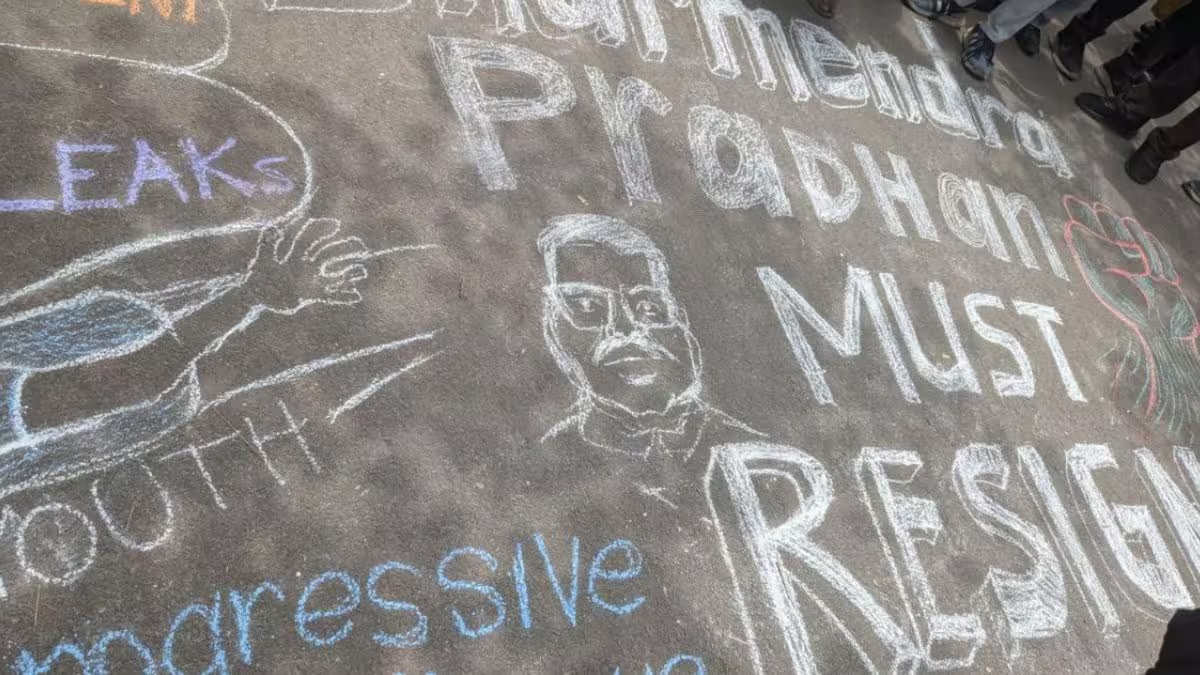
The Delhi Police have imposed stringent security measures in the capital ahead of the Cockroach Janta Party's (CJP) planned "Chalo Sansad" march scheduled for July 20. The protest aims to highlight alleged irregularities in the NEET 2026 examination and calls for the resignation of Union Education Minister Dharmendra Pradhan. With the Parliament's monsoon session commencing the same day, authorities have invoked Section 163 of the Bengal National Security Act (BNSS) to restrict public gatherings and maintain order.
Understanding the Protest and Legal Restrictions
The CJP has announced a march from Jantar Mantar to Parliament to voice concerns over the NEET 2026 exam and demand accountability from the education ministry. However, the Delhi Police have clarified that no permission has been granted for this procession. The Deputy Commissioner of Police (DCP) Sachin Sharma issued a public advisory emphasizing that a prohibitory order under Section 163 BNSS, previously known as Section 144 of the Criminal Procedure Code, is currently active in the New Delhi district.
This order prohibits any assembly of five or more people in the area, except at designated protest sites like Jantar Mantar, where prior permission is mandatory. The police have urged citizens to avoid unauthorized gatherings to ensure public safety during the sensitive period of the Parliament session.
Key Facts About the Security and Protest Arrangements
- The "Chalo Sansad" march is set to begin at 9 a.m. on July 20, starting from Jantar Mantar.
- The Delhi Police have deployed additional personnel and rapid response teams at critical locations including Jantar Mantar, Parliament Street, Central Vista, Connaught Place, and Shankar Chowk.
- Protesters are allowed to carry one flag (the Indian Tricolor), copies of the Constitution, and photographs of national icons such as Dr. B.R. Ambedkar, Mahatma Gandhi, or Bhagat Singh.
- The CJP has issued guidelines urging participants to maintain discipline, avoid violence, and follow specific dos and don'ts, such as not attending hungry, wearing a cap or dupatta, and not misusing the national flag.
- Visva Bharati University in Kolkata has invited the public to join a related march from Ratanpally to Bolpur Court on the same day.
- At the protest site, CJP founder Abhijeet Dipke continues an indefinite hunger strike, while activist Sonam Wangchuk was hospitalized due to health concerns.
Why This March and Security Matter Now
The timing of the CJP's march coincides with the start of the Parliament's monsoon session, a period when legislative activity intensifies and government accountability is under scrutiny. The protest reflects growing public dissatisfaction with the handling of the NEET 2026 examination, a highly competitive medical entrance test in India. By demanding the resignation of the education minister, the CJP seeks to spotlight alleged irregularities and push for reforms.
The Delhi Police's strict enforcement of prohibitory orders and enhanced security measures aim to prevent disruptions during this critical time. The authorities face the challenge of balancing citizens' right to protest with the need to maintain public order and safety. The presence of hunger strikes and large crowds at Jantar Mantar underscores the intensity of the protest movement.
Overall, the situation highlights the complexities of managing political demonstrations in a capital city during an important parliamentary session, reflecting broader tensions in India's education and political landscape.
Frequently Asked Questions
Q: What is the "Chalo Sansad" march about?
A: The march is organized by the Cockroach Janta Party to protest alleged irregularities in the NEET 2026 exam and to demand the resignation of Union Education Minister Dharmendra Pradhan.
Q: Why has the Delhi Police imposed restrictions on protests?
A: To ensure public safety and order during the Parliament's monsoon session, the police have invoked Section 163 BNSS, prohibiting unauthorized gatherings of five or more people in the New Delhi district.
Q: What guidelines has the CJP provided to protest participants?
A: The CJP advises protesters to maintain discipline, carry only permitted items like the national flag or Constitution copies, avoid violence, and follow specific dos and don'ts such as not attending hungry or misusing the flag.