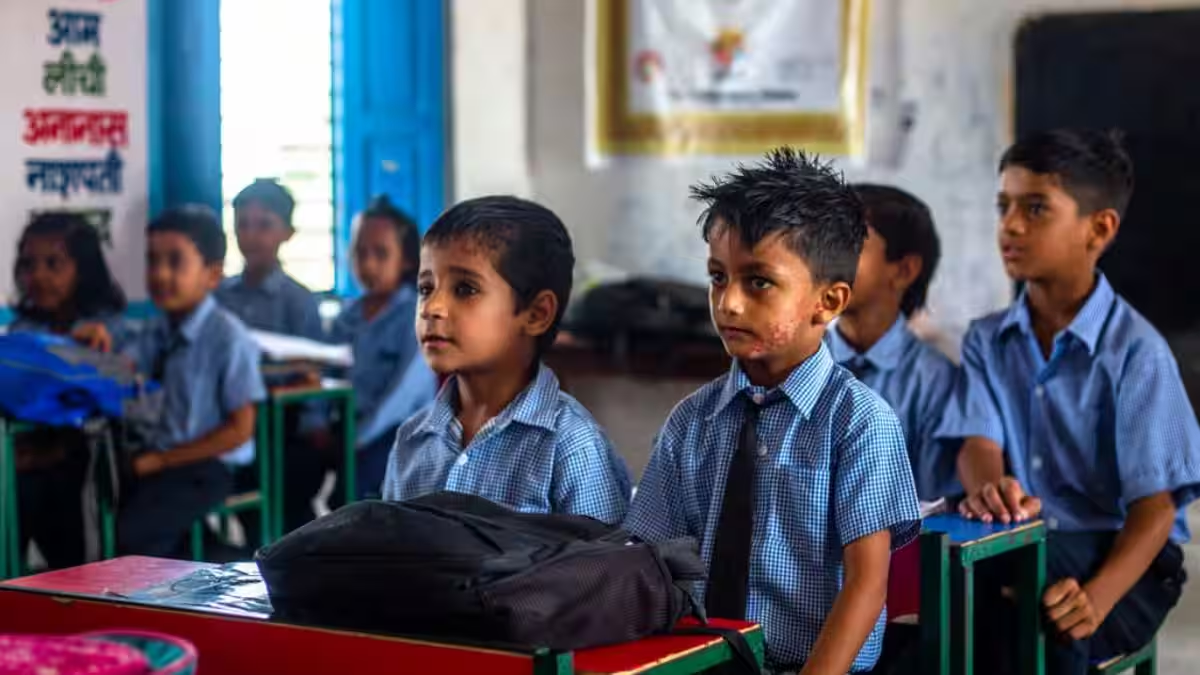
Abhijit Dipke, founder of the Cockroach Janta Party (CJP), called on ministers and politicians to send their children to village schools for at least one day. Speaking at a protest in Hingoli, Maharashtra, on Tuesday, Dipke emphasized the hardships rural students endure, including walking long distances to attend school. He criticized the Maharashtra government for failing to provide basic transportation for these children, contrasting this with the ease of arranging buses and trains for election campaigns.
Understanding Rural Education Challenges
Dipke launched the 'School Thik Karo' campaign last week from his native village in Hingoli district, aiming to highlight the neglect of rural schools. He pointed out that over the past decade, political debates have often focused on caste and religious divisions, while fundamental issues like education and employment remain unaddressed. Children in remote areas frequently walk between 7 to 10 kilometers to reach their schools, a journey made even more difficult during the monsoon season when roads become muddy and waterlogged.
Dipke questioned whether ministers would be willing to have their own children walk such distances. "Ministers, MLAs and MPs should send their children to village schools for one day and make them walk to school like village children. Then they will understand what these children have to face," he told reporters.
Key Facts About Rural School Conditions
- Many rural children walk 7 to 10 kilometers daily to attend school.
- During monsoon seasons, roads become muddy and difficult to navigate.
- The Maharashtra government has not provided dedicated transport for rural students.
- Recent student deaths have occurred in tribal residential schools in Melghat (Amravati) and Gadchiroli.
- Political debates have largely ignored education and employment issues in rural areas.
- Dipke’s campaign encourages collaboration with village leaders and residents to improve schools.
Why Dipke’s Call Matters for Rural Communities
Dipke’s demand for politicians to experience rural schooling firsthand is a push for empathy and accountability. By walking in the shoes of village children, leaders might better grasp the daily struggles these students face. He stressed that the lives of tribal and poor children should be valued equally to those of politicians’ children. Highlighting recent tragedies in tribal schools, Dipke underscored the urgent need for government action to improve safety and infrastructure.
He also challenged the political system that, in his view, benefits from dividing people along caste and religious lines while ignoring critical issues like education and jobs. Dipke’s campaign is not against village leaders but seeks their involvement in improving school conditions. He pointed out that even sarpanches’ children attend the same under-resourced schools, and if the government fails to act, villagers themselves must take the lead.
Dipke’s criticism extends to the stark contrast between the privileged education opportunities available to politicians’ children, often abroad, and the limited resources accessible to rural students. His campaign aims to bring attention to these disparities and push for tangible improvements in rural education.
Frequently Asked Questions
Q: What is the 'School Thik Karo' campaign?
A: It is an initiative launched by Abhijit Dipke and the Cockroach Janta Party to highlight and address the neglect of government schools in rural areas, focusing on infrastructure, transport, and safety issues.
Q: Why does Dipke want politicians to send their children to village schools?
A: He believes that by experiencing the challenges rural students face firsthand, politicians will better understand the need for improved facilities and transportation in these schools.
Q: What are some problems faced by rural schoolchildren in Maharashtra?
A: Many children walk long distances to school, often 7 to 10 kilometers, with poor road conditions especially during monsoons. There is also a lack of basic transport, inadequate infrastructure, and safety concerns in tribal residential schools.