About Coringa Wildlife Sanctuary
Coringa Wildlife Sanctuary is situated in Andhra Pradesh, where the Coringa River converges with the Bay of Bengal within the Godavari estuary. Established in 1978, it is famed for its diverse ecosystem, including the second-largest mangrove forest in India. The sanctuary features extensive mangroves along with patches of dry deciduous tropical forests.
Flora and Fauna Diversity
The sanctuary hosts a variety of plant species, especially mangroves like Rhizophora, Avicennia, and Sonneratia. It is home to endangered animals such as the smooth-coated otter and fishing cat. Many bird species, including the black-capped kingfisher, Brahminy kite, seabirds, and sandpipers, also inhabit this wetland ecosystem.
Olive Ridley Turtles and Nesting Behavior
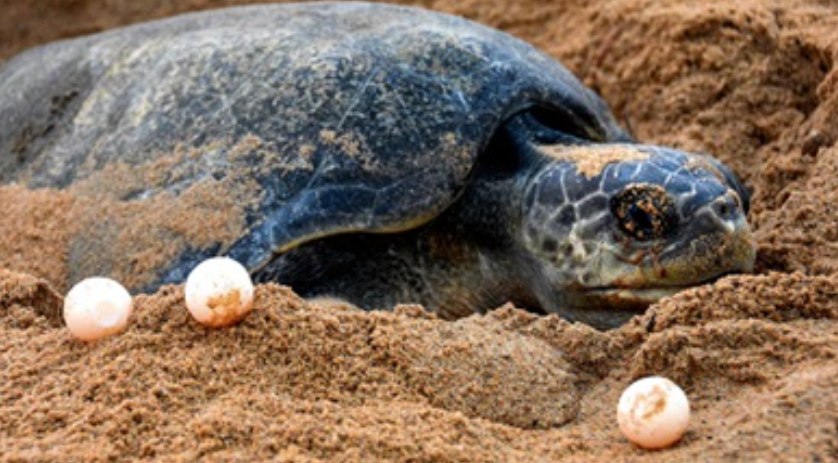
The coastal area of Coringa is a nesting site for Olive Ridley turtles. They are famous for their unique mass nesting called Arribada, where thousands of females come ashore simultaneously to lay eggs. These turtles are found in warm waters of the Pacific, Atlantic, and Indian Oceans.
Important Facts for Exams
- Coringa Wildlife Sanctuary is located in Andhra Pradesh within the Godavari estuary.
- It contains India’s second-largest mangrove forest.
- Olive Ridley turtles nest in large groups during Arribada.
- The IUCN status of Olive Ridley turtle is Vulnerable; it is listed in Schedule I of the Wildlife Protection Act, 1972.
Conservation Significance
Protecting Olive Ridley turtle eggs at Coringa highlights the need to conserve coastal ecosystems. Mangroves provide important habitat for wildlife and act as natural barriers against coastal erosion and climate impacts. Such conservation efforts are vital for ecological balance and survival of endangered species.