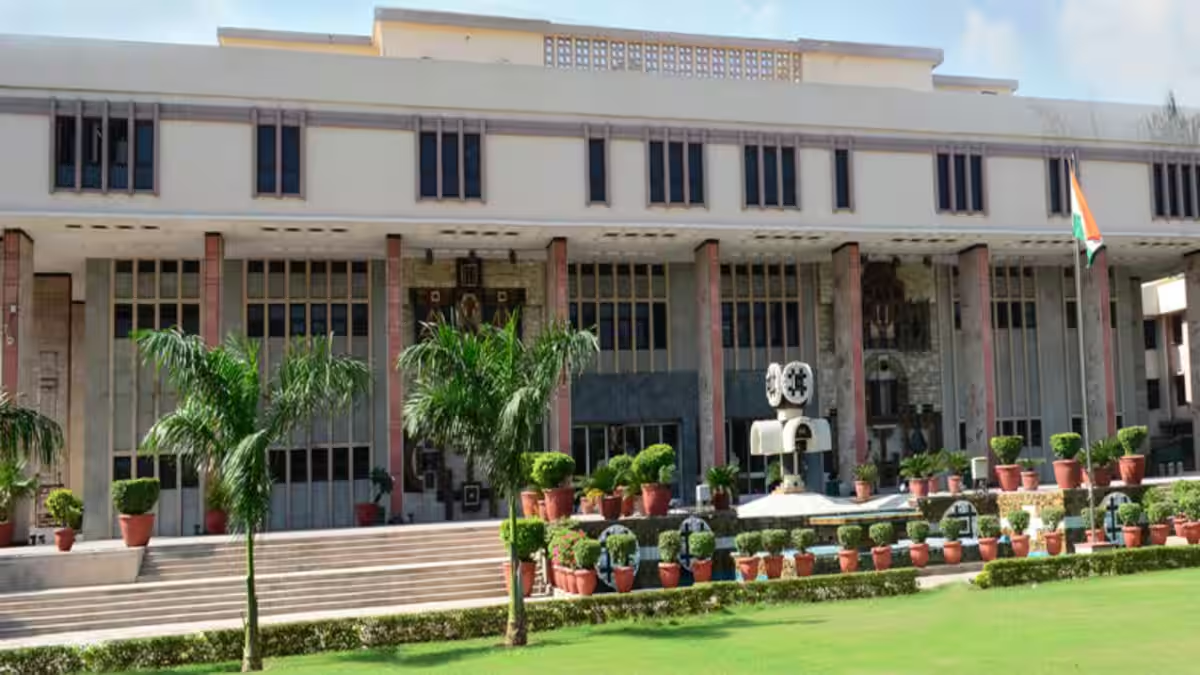
A Delhi court on Thursday revoked the non-bailable warrant issued against Aishe Ghosh, the joint secretary of the Students' Federation of India (SFI), in connection with a protest held outside Banga Bhawan in 2021. Judicial Magistrate Vijayshree Rathore cancelled the warrant after Ghosh appeared in court and was fined Rs 1,000. The case has been scheduled for further hearings on November 21.
Background of the Protest Case
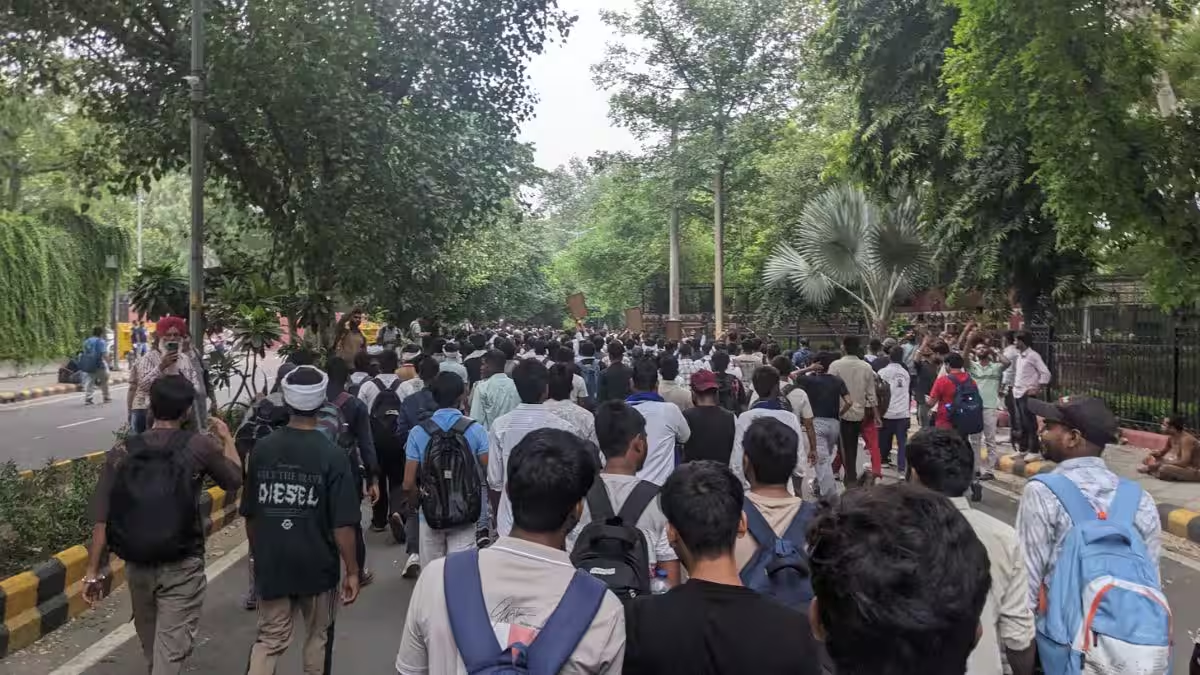
The case dates back to 2021 when Aishe Ghosh participated in a protest outside Banga Bhawan, a government guesthouse in Delhi. The protest led to an FIR being registered against her at the Barakhamba Road police station. The charges included disobeying a public servant's order (Section 188 of the Indian Penal Code), criminal trespass (Section 447), and acting with common intention (Section 34). These sections are commonly applied in cases involving unlawful assembly and protest-related offenses.
Such protests often arise from student groups voicing their concerns on various political and social issues. The SFI, known for its activism on campuses across India, has been involved in numerous demonstrations, some of which have led to legal action against its leaders.
Key Developments in the Court Proceedings
- On Wednesday, the court had stayed the non-bailable warrant after Ghosh's lawyer explained her absence at the previous hearing was due to unavoidable circumstances.
- The court ordered Ghosh to appear in person on Thursday, which she complied with, leading to the cancellation of the warrant.
- Despite the cancellation, the court imposed a fine of Rs 1,000 on Ghosh as a penalty for the earlier non-appearance.
- The case remains active, with the next hearing set for November 21 to continue legal proceedings.
What This Means for Student Activism and Legal Proceedings
The cancellation of the non-bailable warrant is significant for Aishe Ghosh and the SFI, as it removes an immediate legal hurdle. However, the continuation of the case highlights the ongoing scrutiny student protests face within the legal system. Activists often find themselves balancing their right to protest with the legal boundaries set by authorities.
This case also underscores the challenges student leaders encounter when participating in demonstrations that authorities may view as disruptive. The legal process can be lengthy and taxing, but the court's willingness to cancel the warrant upon Ghosh's appearance suggests a degree of judicial flexibility.
For the broader student community, this development may serve as a reminder of the importance of adhering to court orders and the potential consequences of protest actions. It also reflects the judiciary's role in managing protest-related cases with a balance between law enforcement and civil liberties.
Frequently Asked Questions
Q: What was the non-bailable warrant against Aishe Ghosh about?
A: The warrant was issued because Aishe Ghosh did not appear in court for a case related to a 2021 protest outside Banga Bhawan, where she faced charges including disobeying a public servant's order and criminal trespass.
Q: What charges does Aishe Ghosh face in this case?
A: She is charged under IPC sections 188 (disobeying order issued by public servant), 447 (criminal trespass), and 34 (common intention) related to the protest.
Q: What is the current status of the case?
A: The non-bailable warrant against Ghosh has been cancelled after her court appearance, with a fine imposed. The case is scheduled for further hearings on November 21.