The Delhi government has unveiled plans to significantly increase medical education capacity by proposing 300 new undergraduate MBBS seats, 103 postgraduate and Diplomate of National Board (DNB) seats, along with five fellowship positions across various government medical institutions. This phased expansion aims to tackle the shortage of trained medical and dental professionals in Delhi’s public hospitals and strengthen the city’s healthcare workforce.
Expanding Medical Education Infrastructure in Delhi
As part of this initiative, 150 MBBS seats are planned each at two new medical colleges attached to the Indira Gandhi Hospital in Dwarka, which is currently under construction, and the Guru Gobind Singh Hospital. Additionally, the government intends to increase the MBBS intake at Dr B S Ambedkar Medical College and Hospital from 125 to 200 seats. The Maulana Azad Institute of Dental Sciences (MAIDS) will also see its Bachelor of Dental Surgery (BDS) seats rise from 50 to 70.
These expansions are designed to create a larger pool of medical graduates who can serve in government hospitals, addressing the persistent shortage of healthcare professionals in the city.
Details of Postgraduate and Fellowship Seat Increases
- At Maulana Azad Medical College (MAMC), postgraduate (PG) seats are proposed to increase from 260 to 295.
- MAIDS’ PG seats will rise from 22 to 42.
- Dr B S Ambedkar Medical College will introduce 24 new MD/MS seats.
- Additional seats include 35 MD/MS at MAMC and 18 DNB seats at Indira Gandhi Medical College.
- Other hospitals receiving new seats include Deep Chand Bandhu Hospital (8 DNB), GTB Hospital (2 DNB and 4 MD/MS), Guru Gobind Singh Government Hospital (2 DNB), Sanjay Gandhi Memorial Hospital (4 DNB), Bhagwan Mahavir Hospital (2 DNB), and Delhi State Cancer Institute (4 MD).
- In total, 67 MD/MS seats and 36 DNB seats are proposed.
- Five fellowship seats are planned, with three at GTB Hospital and two at Delhi State Cancer Institute.
The government is also focusing on expanding super-speciality courses such as DM and MCh, alongside structured post-doctoral fellowship programs to further enhance advanced medical training.
Why This Expansion Matters for Delhi’s Healthcare
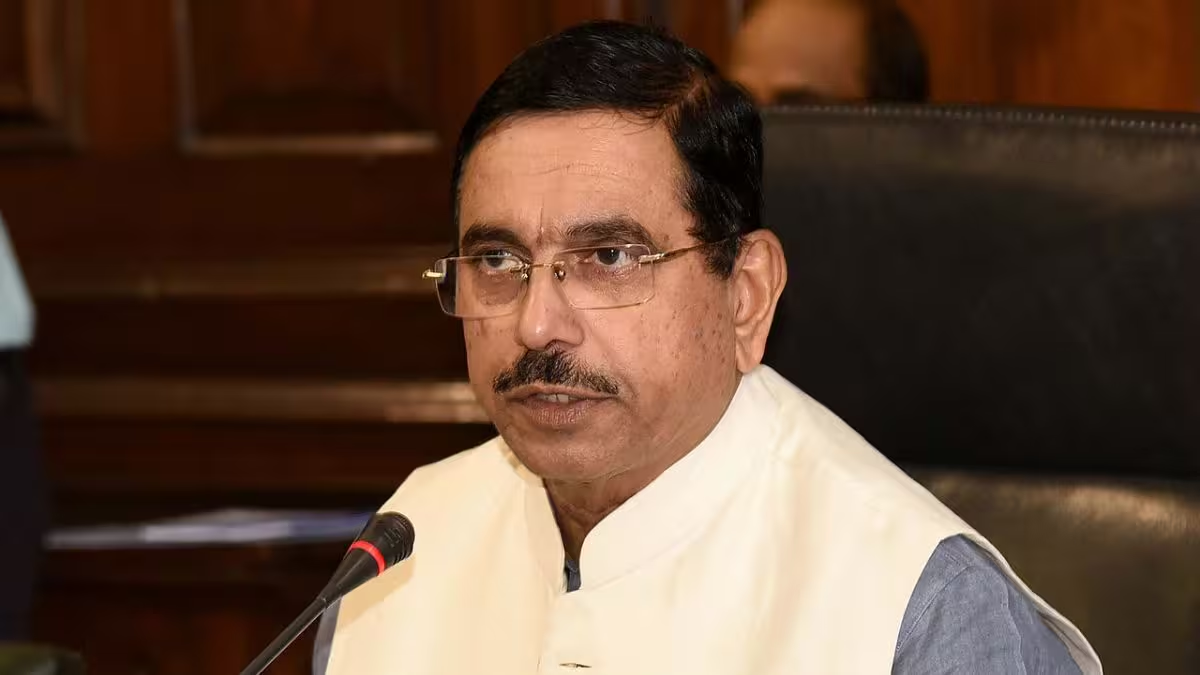
Health Minister Pankaj Singh emphasized that increasing medical seats is not just about numbers but about building a sustainable workforce of doctors, specialists, and super-specialists who can meet the healthcare needs of Delhi’s population. The shortage of trained medical professionals has long been a challenge for government hospitals, impacting the quality and accessibility of care.
By boosting the number of trained medical graduates and specialists, the government aims to improve patient care and reduce dependency on private healthcare. The proposal is currently awaiting approval from the National Medical Commission and other regulatory bodies before implementation.
Frequently Asked Questions
Q: How many new MBBS seats are being proposed in Delhi?
A: The Delhi government has proposed adding 300 new MBBS seats across various medical colleges.
Q: Which institutions will receive the new postgraduate and DNB seats?
A: Postgraduate and DNB seats will be added at MAMC, MAIDS, Dr B S Ambedkar Medical College, Indira Gandhi Medical College, and several government hospitals including GTB and Deep Chand Bandhu Hospital.
Q: What is the purpose of expanding medical education seats in Delhi?
A: The expansion aims to address the shortage of trained medical professionals in government hospitals and create a sustainable pool of doctors and specialists to serve Delhi’s healthcare system.