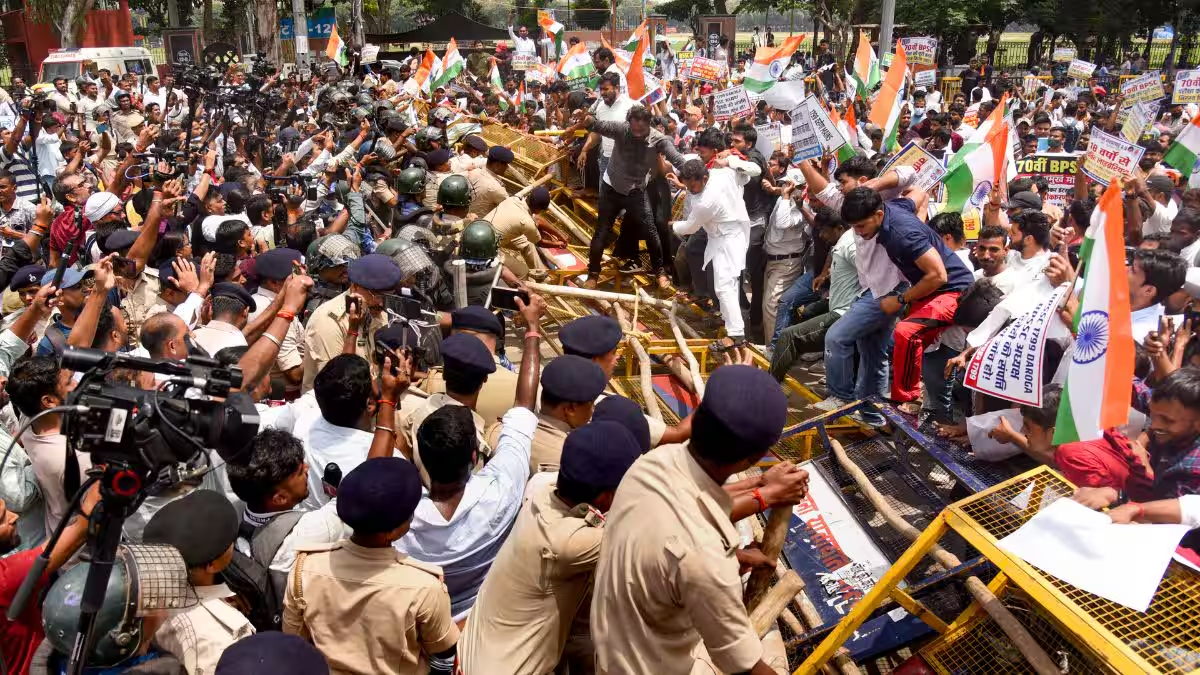
The Delhi Metro closed entry and exit at 11 stations on Friday in response to protests called by political and student groups at Jantar Mantar. The closure affected major stations such as Rajiv Chowk, Central Secretariat, and Jantar Mantar itself. The protests demand the resignation of Chief Election Commissioner Gyanesh Kumar, citing concerns over the Special Intensive Revision (SIR) of electoral rolls and alleged mass deletion of voters.
- Entry and exit closed at 11 key stations including Rajiv Chowk and Central Secretariat.
- Interchange facilities remain available at some stations despite closures.
- Protests organized by Aam Aadmi Party (AAP), All India Students' Association (AISA), National Students' Union of India (NSUI), and Indian Youth Congress (IYC).
- Protesters demand resignation of Chief Election Commissioner over electoral roll issues.
Why did Delhi Metro close 11 stations?
The Delhi Metro Rail Corporation (DMRC) announced the closure of entry and exit points at 11 stations to manage the large-scale protests planned at Jantar Mantar. The decision aimed to ensure public safety and prevent disruption caused by the gatherings. The affected stations include Janpath, Patel Chowk, Central Secretariat, Rajiv Chowk, Seva Teerth, Mandi House, Lok Kalyan Marg, INA, Chawri Bazar, Ramakrishna Ashram Marg, and New Delhi.
Despite the closures, interchange facilities remain operational at Rajiv Chowk, Mandi House, New Delhi, and Central Secretariat stations. This allows passengers to switch lines without exiting the metro system.
Who organized the protests at Jantar Mantar?
The protests were organized by several political and student groups. The Aam Aadmi Party (AAP), All India Students' Association (AISA), National Students' Union of India (NSUI), and Indian Youth Congress (IYC) jointly called for demonstrations. Their main demand is the resignation of Chief Election Commissioner Gyanesh Kumar.
What are the protesters demanding?
The protesters allege that the Special Intensive Revision (SIR) of electoral rolls has led to the mass deletion of voters. They claim this action undermines the democratic process and calls into question the integrity of upcoming elections. Therefore, they are demanding that the Chief Election Commissioner step down from his position.
What is the Special Intensive Revision (SIR)?
The Special Intensive Revision is a process conducted by the Election Commission to update and verify the electoral rolls. It involves adding new eligible voters and removing names of those who are no longer eligible. However, the protesters argue that this revision has resulted in the wrongful deletion of many voters, which they see as a serious issue.
How is the Delhi Metro managing the situation?
The Delhi Metro Rail Corporation has taken precautionary measures by closing entry and exit points at stations near the protest site. This helps control crowd movement and maintain safety. The DMRC also keeps interchange facilities open at select stations to minimize inconvenience for commuters.
What should commuters know?
Commuters should be aware that entry and exit at the specified 11 stations remain closed until further notice. However, they can still use interchange facilities at Rajiv Chowk, Mandi House, New Delhi, and Central Secretariat stations. Travelers are advised to plan their journeys accordingly and stay updated on any changes.
Frequently Asked Questions
Q: Which stations are closed due to the protests?
A: Entry and exit are closed at Janpath, Patel Chowk, Central Secretariat, Rajiv Chowk, Seva Teerth, Mandi House, Lok Kalyan Marg, INA, Chawri Bazar, Ramakrishna Ashram Marg, and New Delhi stations.
Q: Are interchange facilities available at any stations?
A: Yes, interchange facilities remain available at Rajiv Chowk, Mandi House, New Delhi, and Central Secretariat stations.
Q: Who is leading the protests?
A: The protests are led by the Aam Aadmi Party (AAP), All India Students' Association (AISA), National Students' Union of India (NSUI), and Indian Youth Congress (IYC).
Q: What is the main demand of the protesters?
A: They demand the resignation of Chief Election Commissioner Gyanesh Kumar over alleged mass deletion of voters during the Special Intensive Revision of electoral rolls.