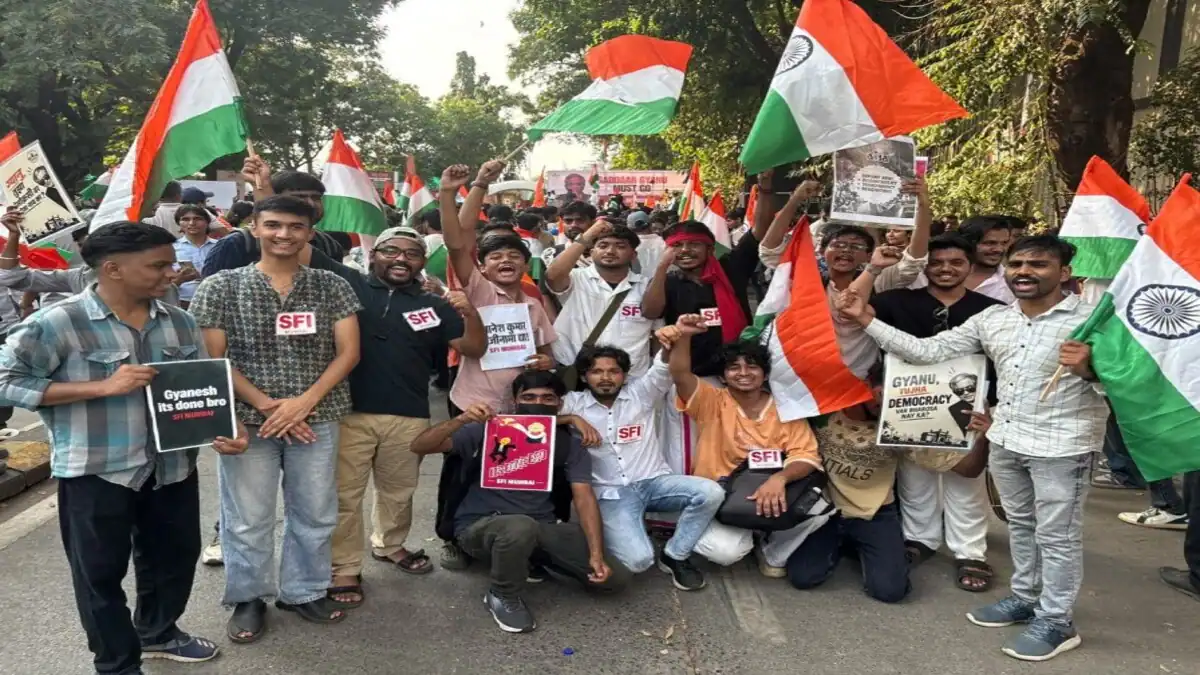
The Delhi Police detained over 1,000 protesters from the Students Federation of India (SFI) and the Democratic Youth Federation of India (DYFI) during a large demonstration at Jantar Mantar, New Delhi. The protesters demanded the resignation of Chief Election Commissioner Gyanesh Kumar, citing concerns about the Special Intensive Revision (SIR) process and its potential impact on citizens' voting rights.
- More than 1,000 SFI and DYFI activists were detained during the protest.
- The protest focused on the demand for the resignation of Chief Election Commissioner Gyanesh Kumar.
- The SIR process raised concerns about disenfranchisement of marginalized groups.
- Senior CPI(M) leaders were also detained during the demonstration.
- The SFI vowed to continue its struggle until accountability is ensured.
Why did the protesters demand the resignation of Gyanesh Kumar?
The protesters were concerned about the Special Intensive Revision (SIR) process implemented by the Election Commission. They argued that this process could disenfranchise large sections of the population, especially marginalized communities such as Dalits, Adivasis, women, and other vulnerable groups. The SFI and DYFI activists believe that the SIR process undermines democratic rights by limiting access to voting.
Who were involved in the protest and detention?
The protest included thousands of peaceful students and youth activists from the SFI and DYFI. Key leaders from the SFI, including Adarsh M Saji, Srijan Bhattacharyya, Aishe Ghosh, and S Shilpa, participated in the demonstration. DYFI leaders Himaghnaraj Bhattacharyya, AA Rahim, and Sanjeev Kumar were also involved. Additionally, senior Communist Party of India (Marxist) leaders such as general secretary MA Baby and Brinda Karat were detained during the protest.
How did the Delhi Police respond to the protest?
The Delhi Police carried out a mass crackdown on the protesters gathered at Jantar Mantar. According to official statements, over 1,000 activists were detained and transported to various police stations across the union territory. The police action was described as one of the largest mobilizations of students and youth in recent times. Despite the peaceful nature of the protest, many protesters were reportedly manhandled.
What is the stance of the SFI regarding democratic rights?
The SFI emphasized that as students and youth, they refuse to remain silent when democratic rights are threatened. They stated that India belongs to its students, youth, workers, peasants, farmers, women, and marginalized communities. The federation warned that any attempt to exclude people from democratic participation would be met with determined resistance. The SFI’s Central Executive Committee reiterated its demand for the resignation of Chief Election Commissioner Gyanesh Kumar and pledged to continue its struggle until accountability is ensured.
What are the broader implications of the protest?
The protest highlights ongoing concerns about electoral processes and the protection of voting rights in India. The SIR process, which the protesters oppose, is seen as a threat to the inclusivity of the electoral system. This event also reflects the active role of student and youth organizations in advocating for democratic rights and holding public officials accountable. The detention of senior political leaders alongside student activists underscores the political significance of the issue.
Frequently Asked Questions
Q: What is the Special Intensive Revision (SIR) process?
A: The SIR process is an electoral exercise aimed at revising voter lists. However, protesters argue that it risks disenfranchising marginalized communities by excluding eligible voters.
Q: Who are the main groups involved in the protest?
A: The main groups involved are the Students Federation of India (SFI) and the Democratic Youth Federation of India (DYFI), along with senior leaders from the Communist Party of India (Marxist).
Q: What actions did the Delhi Police take during the protest?
A: The Delhi Police detained over 1,000 protesters and transported them to various police stations. The police response was described as a mass crackdown on the peaceful demonstration.
Q: What is the demand of the protesters?
A: The protesters demand the resignation of Chief Election Commissioner Gyanesh Kumar, holding him accountable for the SIR process and its impact on voting rights.