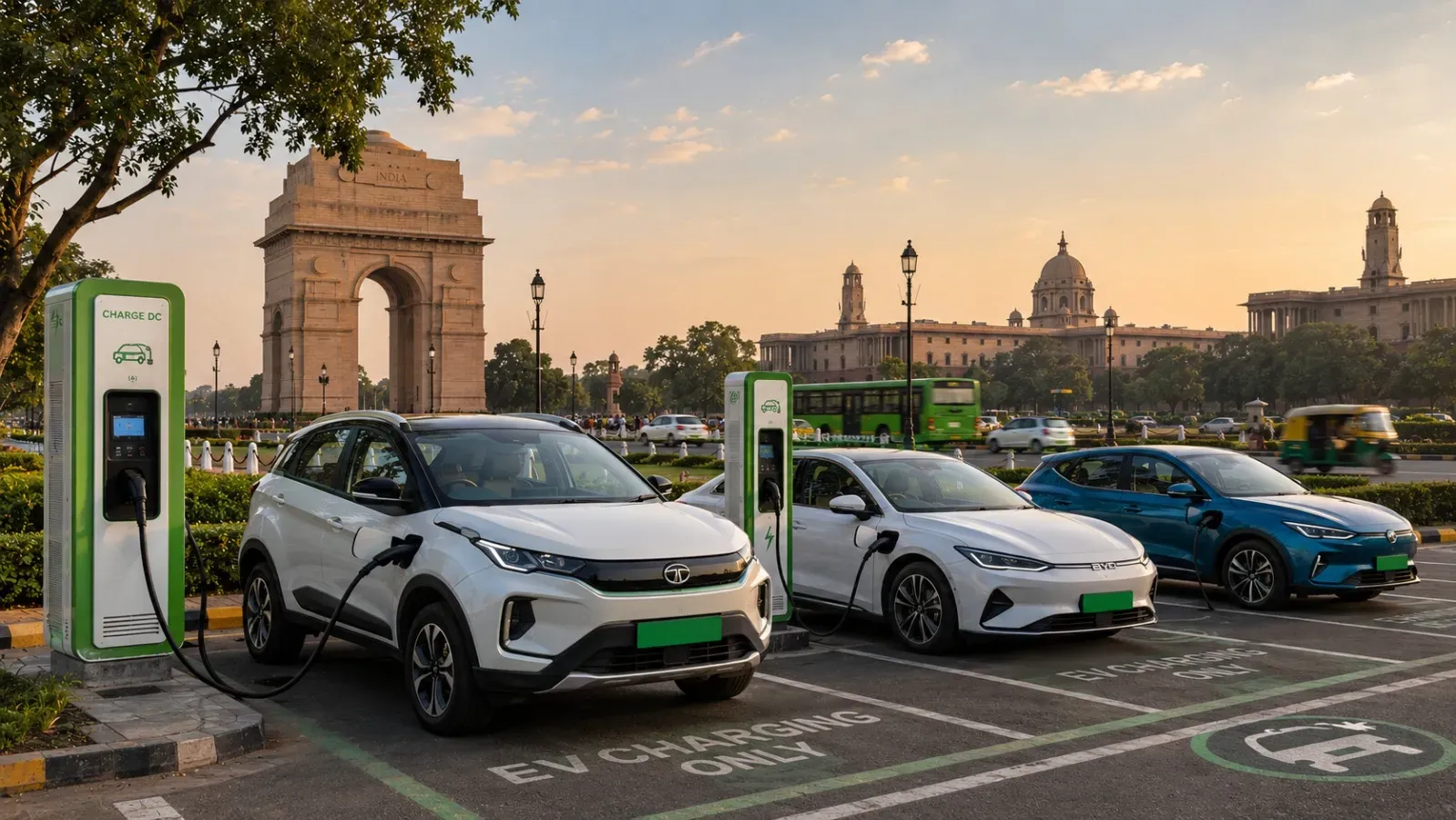
Delhi has unveiled an ambitious electric vehicle (EV) policy for 2026 that aims to accelerate the shift toward electric mobility more aggressively than several other Indian states. The policy sets a clear timeline for phasing out internal combustion engine (ICE) vehicles in certain categories and introduces a mix of mandates and financial incentives to promote EV adoption across the capital.
According to a recent report by domestic rating agency ICRA, Delhi’s EV policy stands out for its comprehensive approach, combining regulatory mandates with subsidies and tax exemptions. This approach is expected to significantly boost the uptake of electric two-wheelers, three-wheelers, commercial vehicles, and public transport in the city.
Delhi’s EV Policy: A Closer Look
The Delhi EV Policy 2026 lays out a four-year roadmap designed to transform the city’s vehicle landscape. Key elements include:
- From January 1, 2027, only electric three-wheelers and light goods carriers (below 3.5 tonnes) will be allowed new registrations.
- Registration of new petrol and diesel two-wheelers will be banned starting April 1, 2028.
- The policy offers subsidies, scrappage incentives for old vehicles, and exemptions from road tax and registration fees to encourage EV purchases.
- Mandates for electrification extend to school buses, delivery fleets, and government commercial vehicles, setting Delhi apart from states like Maharashtra, Tamil Nadu, Karnataka, and Gujarat.
- It also includes a detailed framework for battery swapping, traceability, and recycling to support sustainable EV infrastructure.
How Delhi’s Policy Compares Nationally
ICRA’s analysis highlights that Delhi’s policy is among the most interventionist in India, moving decisively from subsidy-led adoption to mandate-driven electrification. While other states have introduced incentives, Delhi’s approach includes firm deadlines to phase out ICE vehicles in specific segments, which is relatively unique.
The report rates Delhi’s policy framework as "very high" in overall strength, compared to "high" or "moderately high" ratings for Maharashtra, Tamil Nadu, Karnataka, and Gujarat. Delhi also offers some of the highest scrappage incentives in the country, further encouraging consumers to switch to EVs.
EV penetration in Delhi already exceeds the national average, with 8.7% of vehicles being electric in fiscal year 2026, rising to 12.9% in the current fiscal year. This compares to an all-India EV penetration rate of 9.4%. The new policy is expected to accelerate this growth significantly.
Challenges and Opportunities Ahead
Despite the ambitious targets, ICRA warns that several challenges could limit the pace of EV adoption. Affordability remains a major concern for many consumers, especially small fleet operators and individual buyers who may struggle to access financing.
Another hurdle is the continued reliance on imported battery cells, critical minerals, and EV components, which could affect supply chains and costs. However, the policy’s clear regulatory framework and incentives are seen as credit positive for EV manufacturers, charging infrastructure providers, battery-swapping operators, and financiers.
As Delhi pushes forward with its mandate-driven approach, demand for traditional internal combustion engine vehicles and related components is expected to decline over time, signaling a significant shift in the automotive market landscape.
Frequently Asked Questions
Q: What vehicles will be affected by Delhi’s EV policy starting 2027?
A: From January 1, 2027, only electric three-wheelers and light goods carriers under 3.5 tonnes will be eligible for new registrations in Delhi.
Q: When will petrol and diesel two-wheelers no longer be registered in Delhi?
A: New registrations of petrol and diesel two-wheelers will be banned starting April 1, 2028, under the Delhi EV Policy 2026.
Q: How does Delhi’s EV policy support battery sustainability?
A: The policy includes a detailed framework for battery swapping, traceability, and recycling to promote sustainable use and management of EV batteries.