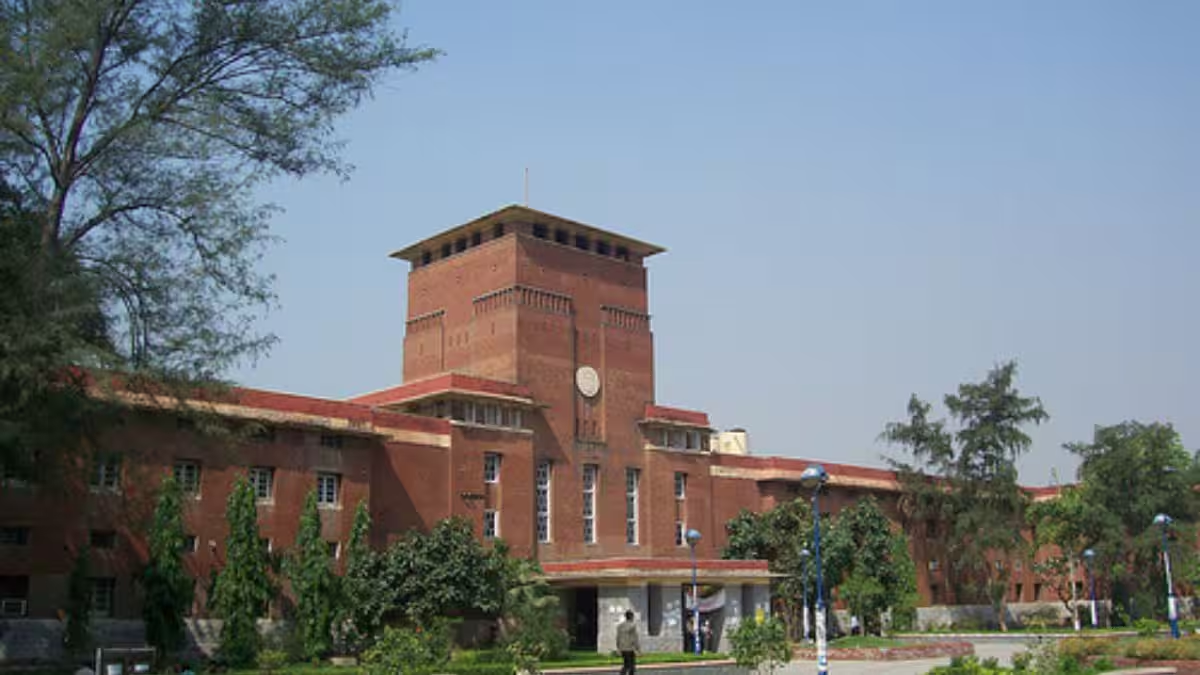
Delhi University has authorized two of its colleges, Aditi Mahavidyalaya and Bhagini Nivedita College, to admit undergraduate students through a merit-based system using Class 12 marks. This decision aims to fill seats that remained unoccupied despite multiple rounds of admissions conducted via the Common University Entrance Test (CUET).
The move represents a shift from the university's standard admission process, which relies on CUET scores and the Common Seat Allocation System (CSAS) to allocate undergraduate seats.
Why Merit-Based Admissions Were Introduced
Both colleges have faced persistent challenges in filling their undergraduate seats through the CUET-based system. Bhagini Nivedita College issued a notice on August 1 inviting applications for merit-based admissions in physical mode for courses such as BCom, BA, and BSc. The college stated that even after multiple CUET admission rounds, a significant number of seats remained vacant.
Aditi Mahavidyalaya, located in Bawana, reported that approximately 40 percent of its seats have gone unfilled in recent years under the CUET admission process. Officials attribute these vacancies to the colleges’ locations and the fact that they are women-only institutions, which limits the applicant pool.
Details of the Merit-Based Admission Process
- Admissions will be strictly based on Class 12 marks and seat availability.
- Applications were invited with a deadline of August 5.
- Document verification and fee payment were scheduled for August 6 and 7.
- This process is intended only to fill remaining vacant seats after CUET rounds conclude.
- CUET scores remain mandatory for the primary admission process.
College authorities highlighted that many students from nearby rural areas, especially girls, often do not register for CUET due to concerns about studying far from home. This results in capable candidates being excluded despite strong academic records in Class 12.
Reactions and Wider Implications
The Indian National Teachers Congress (INTEC) has criticized the decision, calling for a uniform policy across all Delhi University colleges to fill vacant undergraduate seats. INTEC has appealed to the university’s vice-chancellor to establish a common and transparent mechanism rather than allowing only two colleges to use merit-based admissions.
Despite the criticism, the colleges maintain that CUET will continue as the primary admission route. The merit-based system is a temporary measure to ensure that seats do not remain vacant, which could otherwise limit educational opportunities for eligible students.
Frequently Asked Questions
Q: Why did Delhi University allow merit-based admissions for these two colleges?
A: Both colleges had many vacant seats after multiple CUET admission rounds, so the university permitted them to admit students based on Class 12 marks to fill those vacancies.
Q: Does this mean CUET is no longer required for admission?
A: No, CUET remains the primary mode of admission. The merit-based process is only used to fill seats left vacant after the regular CUET-based admissions.
Q: What concerns have been raised about this decision?
A: The Indian National Teachers Congress has criticized the move, urging Delhi University to implement a uniform and transparent policy for filling vacant seats across all colleges rather than allowing exceptions for only two.