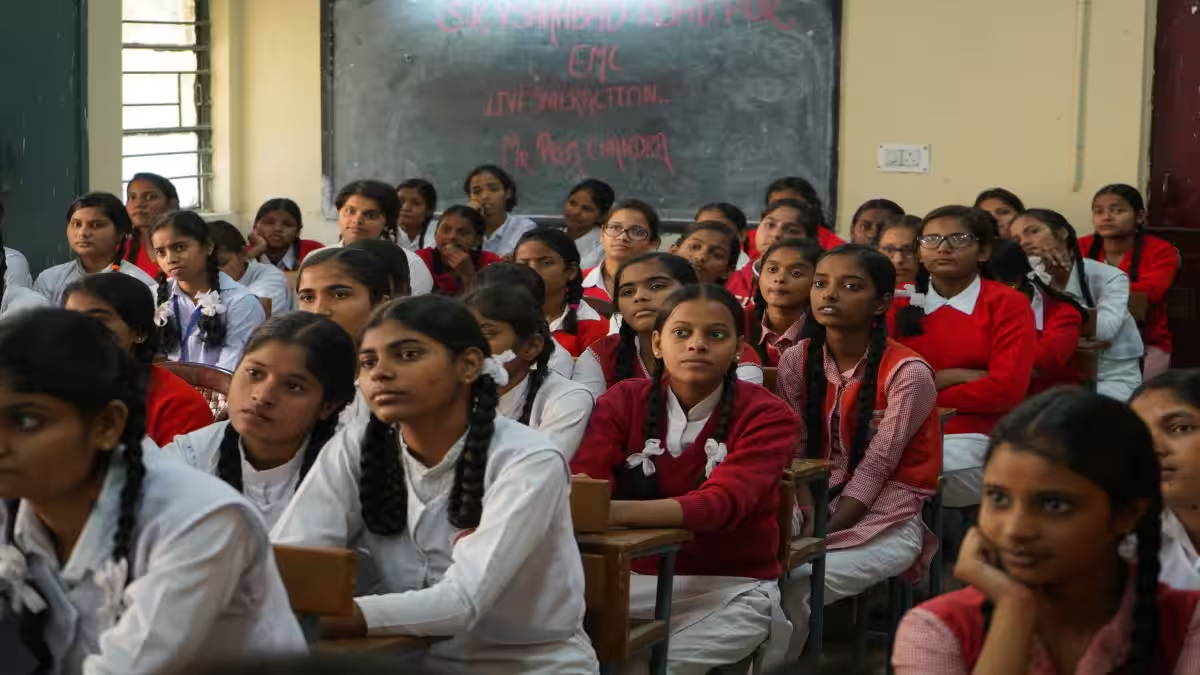
As the new academic session begins at Delhi University, first-year students are divided in their opinions about the recent student protests in the national capital. While some see the protests as a powerful form of dissent and a sign of student activism, others worry about the disruptions and safety issues that arose during the demonstrations.
Understanding the Student Protests at Delhi University
Student protests have long been a part of university life in India, often reflecting broader social and political issues. The recent protests in Delhi attracted widespread attention for their scale and intensity, with students rallying to voice their concerns on various matters. For many freshers, these protests marked their first direct encounter with student politics and collective action on such a large scale.
One first-year student from Ramjas College, Aman Kumar, 18, shared his experience of following the protests closely through social media and online content. Although he wanted to participate, he was unable to travel to Delhi due to ongoing admission procedures and parental concerns. Similarly, a student from Miranda House expressed admiration for the movement but also highlighted worries about the safety of participants, especially when communication networks were disrupted near protest sites.
Key Facts About the Protests and Student Reactions
- The protests were described by participants as one of the most intense student movements in recent years.
- Network shutdowns around protest areas made it difficult for families to stay in touch with participants.
- Some students, like Ishika Chakraborty from West Bengal, saw the protests as an eye-opening experience about the power of student activism.
- Others, including Rajeev Verma from Shri Ram College of Commerce, noted concerns from their families about the protest methods, citing disruptions such as metro station closures and prolonged network outages.
- There were mixed feelings about the effectiveness of the protests, with some questioning whether the disruptions were justified.
Why the Protests Matter to Delhi University Freshers
The contrasting views among freshers highlight a broader debate about how students should engage with political and social issues. For some, the protests represent a vital exercise in democracy and a chance to stand up for their rights. For others, the disruptions caused by the protests—such as transportation delays and communication blackouts—raise questions about the balance between activism and public inconvenience.
These differing perspectives also reflect the diverse backgrounds of Delhi University students, who come from across India with varying experiences and expectations. The protests have sparked conversations about the role of student voices in shaping university policies and the wider society. As the academic year progresses, many freshers are eager to see how student politics will evolve, especially with upcoming events like the Delhi University Students’ Union elections.
Frequently Asked Questions
Q: What were the main issues behind the recent Delhi University student protests?
A: The protests focused on various student concerns, including academic policies, campus safety, and broader social issues affecting students.
Q: How did the protests affect daily life in Delhi?
A: The protests led to disruptions such as metro station closures and network outages, which impacted commuters and communication around protest sites.
Q: Are student protests common at Delhi University?
A: Yes, student protests have a long history at Delhi University, often reflecting wider political and social debates in the country.