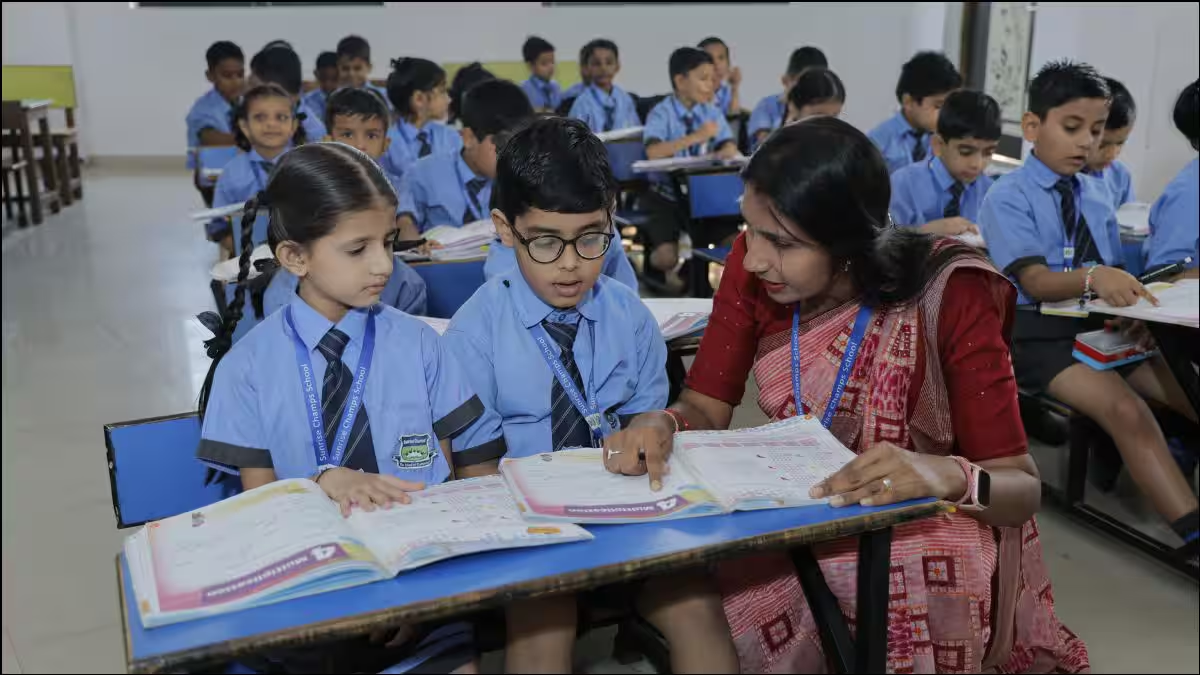
Union Education Minister Dharmendra Pradhan spoke out late on July 21 about the ongoing student protests concerning the National Eligibility-cum-Entrance Test (NEET) and other education issues. He accused Congress leader Rahul Gandhi and the opposition of exploiting students for political gain during the Monsoon Session of Parliament. Shortly after, Rahul Gandhi, detained during a protest outside Prime Minister Narendra Modi's residence, renewed calls for Pradhan's resignation and urged the Prime Minister to apologize to students.
Political Tensions Over NEET Protests
The protests have escalated as students demand reforms and clarity around NEET, a highly competitive medical entrance exam in India. Dharmendra Pradhan criticized the Congress party for prioritizing political spectacle over meaningful parliamentary debate. He emphasized that the government is fully prepared to discuss NEET and other student concerns in Parliament but accused the opposition of aiming to disrupt proceedings rather than find solutions.
Pradhan also condemned the opposition's decision to hold a dharna, or sit-in protest, outside the Prime Minister's residence, calling it disruptive to the public and a breach of security protocols. He stressed that students deserve certainty and responsible governance instead of being used as political props.
Key Facts About the Protests and Political Responses
- Dharmendra Pradhan posted on social media that the government is "100% committed" to addressing NEET and student issues through parliamentary debate.
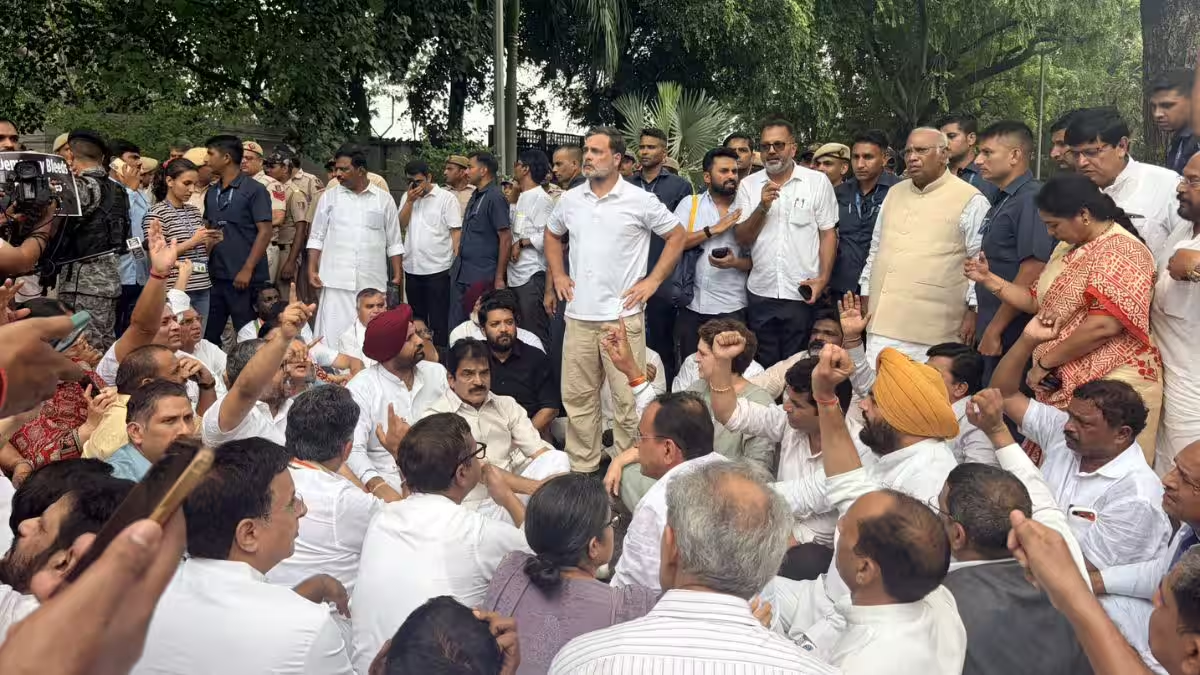
- Rahul Gandhi was detained at Delhi's Chhatrasal Stadium after protesting outside the Prime Minister's residence along with other opposition leaders.
- Opposition leaders, including Priyanka Gandhi Vadra and Akhilesh Yadav, participated in the dharna demanding action against police brutality toward students.
- Rahul Gandhi called for the resignation of Education Minister Dharmendra Pradhan and Home Minister Amit Shah, citing police violence during a July 20 march.
- The opposition demands withdrawal of cases against protesting students and a formal apology from Prime Minister Modi.
- Union Minister Jitendra Singh and Home Secretary Govind Mohan attempted to negotiate with opposition leaders to end the protest but were unsuccessful.
Why This Conflict Matters for Indian Students and Politics
The NEET protests highlight deep frustrations among students and families over the pressures and perceived inequities of India's medical entrance system. Education Minister Pradhan's insistence on parliamentary debate signals the government's willingness to engage, but the opposition's accusations of government inaction and police brutality have intensified political conflict.
This standoff reflects broader tensions between the ruling BJP and opposition parties, with students caught in the middle. The protests and political responses could influence upcoming parliamentary sessions and public opinion on education policy and governance. The demand for accountability and reform underscores the urgency of addressing student concerns in a way that balances fairness, security, and democratic process.
Frequently Asked Questions
Q: What is NEET and why are students protesting?
A: NEET is the National Eligibility-cum-Entrance Test, an exam for admission to medical colleges in India. Students are protesting due to concerns about exam fairness, accessibility, and the pressure it places on families.
Q: What has the government said about the protests?
A: Education Minister Dharmendra Pradhan stated the government is ready to discuss NEET and student issues in Parliament and accused the opposition of politicizing the protests.
Q: Why was Rahul Gandhi detained?
A: Rahul Gandhi was detained by Delhi Police after participating in a sit-in protest outside the Prime Minister's residence, demanding action over police treatment of student protesters.